
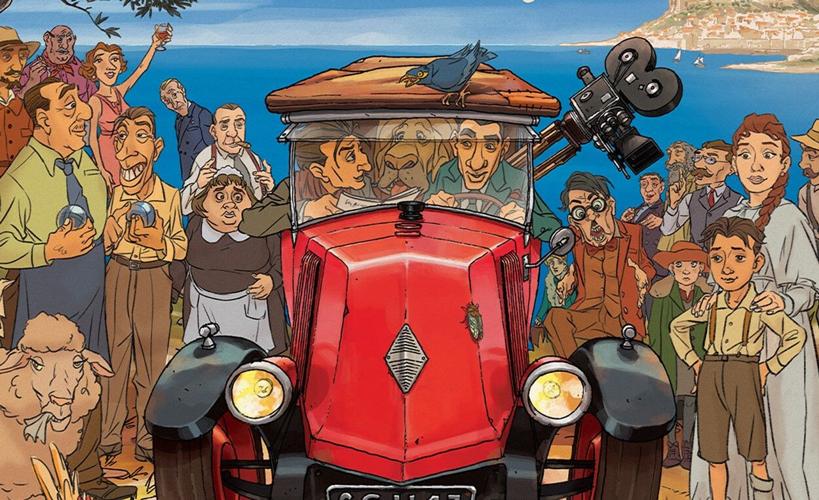
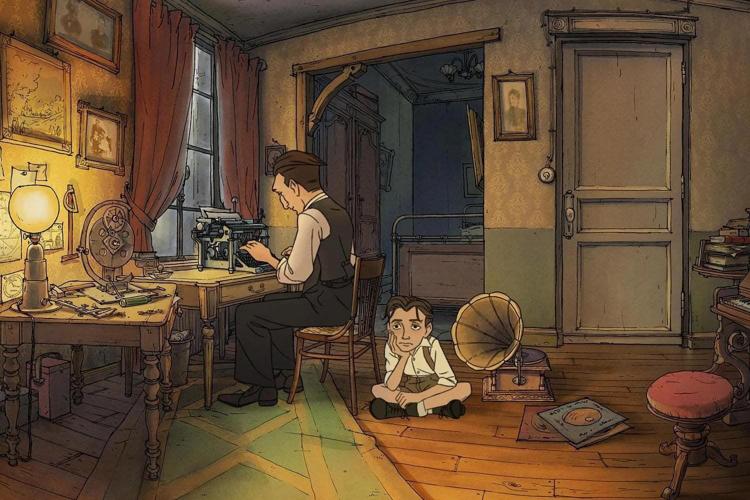
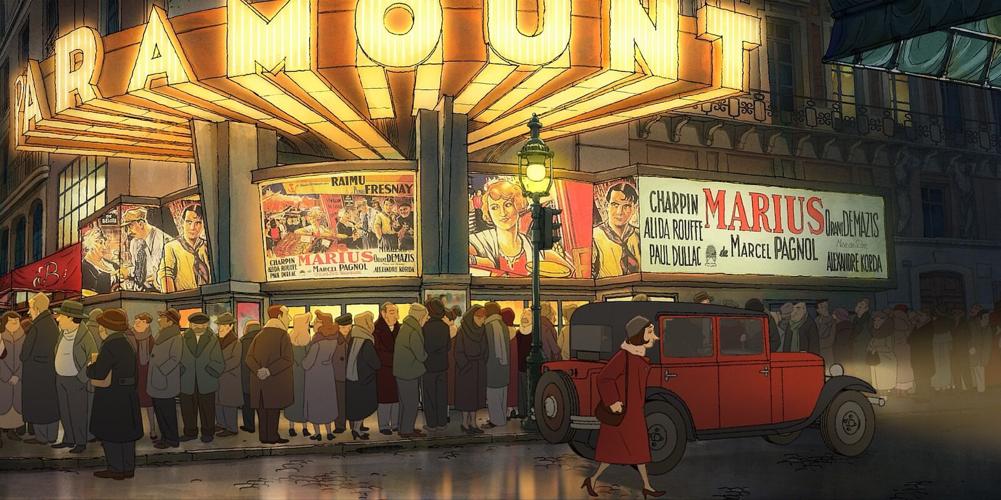


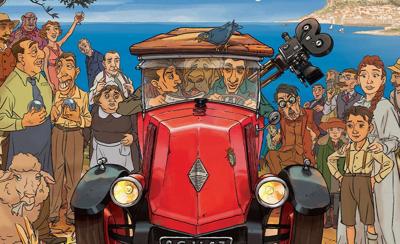
Sylvain Chomet is a French animator whose debut feature The Triplets of Belleville (2003) got two nominations at the 76th Academy Awards, including Best Animated Feature and Best Original Song. His second feature was The Illusionist (2010) and it got a nomination at the 83rd Academy Awards for Best Animated Feature. This film is his third feature and one would assume that it could have been an nominee at the 98th Academy Awards. It wasn't. The Illusionist was loosely about Jacques Tati, a French filmmaker who was perhaps more known in the United States, as a pioneer and successful one in French cinema history. This film is also about a French filmmaker, that of Marcel Pagnol who is also considered a pioneer in French cinema history, but the way this film's story is told isn't similar to how Tati's story in The Illusionist is told. Pagnol's story is a kind of cradle-to-grave telling, which is giving a highlight reel of his life that doesn't really present much depth or grand insight.
Chomet's The Triplets of Belleville and The Illusionist are more focused stories. They do give more depth and insight into their characters and situations. Those stories are stronger as a result. It's not that there isn't anything good about what's being shown about Pagnol's life, but the story is a more vague and amorphous thing. First off, The Triplets of Belleville and The Illusionist were films that were made with little to no dialogue. Those films were built more on action than dialogue, which forces them to be stronger, especially on a visual level. This film really doesn't have much action, as such it's more stagnant in terms of its progression. There is way more dialogue here than Chomet's films have ever had, which can and does liven it up to some degree, but the frames are still more stagnant with not a lot of movement as something like The Triplets of Belleville.

Vagueness could be a critique here. Yet, there is a theme that emerges while watching this film. Pagnol is from the south of France and grew up in Marseille, a city along the southern coast, along the Mediterranean Sea. As a child, he enjoyed writing poetry for his mother. When he grows up, he becomes a Latin teacher and tries to make a career for himself in Paris, which is in northern France, or eight hours away by train. Once he gets started doing theater and eventually directing films, his main thrust is all about authenticity, especially because a lot of his work is about people and places in Marseille. He wants accuracy. For example, if an actor is hired, he wants that actor either to be from Marseille or study the people and places in Marseille. When the Germans and specifically the Nazis try to interfere during World War II, Pagnol fights back.
When Pagnol engages with Hollywood studios through the course of his film-making, there is also American influence that Pagnol resists. Pagnol seems to want purity in French cinema and to maintain French culture in the art that he's putting out into the world. There are some interesting swipes at Hollywood that were amusing, but Chomet skirts over a lot of Pagnol's work. As such, getting any kind of true impact of each work is highly unlikely. This is perhaps a good introduction to Marcel Pagnol, but not as good as an honor or tribute as one might hope.

Marcel et Monsieur Pagnol
Rated PG-13 for language, smoking and brief violent content.
Running Time: 1 hr. and 30 mins.
In theaters.