
Recently, in Ocean City, Maryland, there was a 16 mm screening of George A. Romero's Night of the Living Dead (1968). Retrospective screenings of the 1968 flick have occurred all over the country, including in Pittsburgh where the film was originally produced and premiered. It's one of the most profitable films of all time. It garnered a cult following. It spawned a very successful franchise. It's considered one of the greatest and most influential films, particularly in the horror genre. It also popularized the idea of the "zombie" as what we know it today. Other successful properties in film, television, comic books, and even video games, with such things like The Walking Dead or The Last of Us, would not be what they are today without the power of Romero's so-called classic. Romero, his co-writer, John Russo, and his makeup artist, Tom Savini, didn't wholly invent the concept of a zombie, but they did help to mold how most people around the world think about them now.
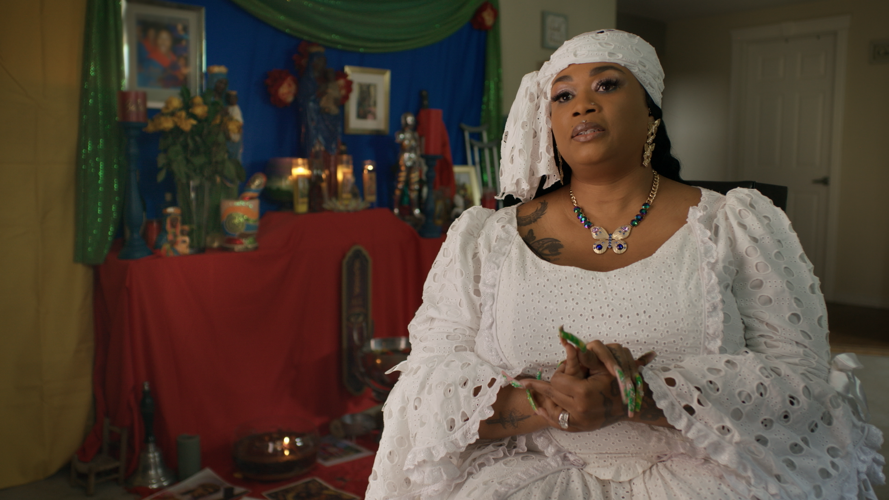
This documentary, directed by Maya Annik Bedward, in her feature debut, tracks the origins of the zombie as a concept, explaining where it came from, what it used to signify, and how Romero's film, along with Hollywood in general, has perverted the meaning and quite frankly corrupted the original intention. Bedward's film also demonstrates how Romero and Hollywood have helped to create what is a racist trope and stereotype that has denigrated and created fear and prejudice toward a certain group of Black people, if not Black people in general. The certain group of Black people are those from Haiti. If you've been paying attention to the news, you know that Haiti has been experiencing a lot of strife, especially in the wake of the earthquake that devastated the island nation in 2010, putting it in the top five of deadliest natural disasters in the world. Since 2018, Haiti has been in a political and economic crisis that has resulted in protests, a presidential assassination, and gang violence that has been tantamount to a civil war.

Also, in the news, this summer, the U.S. Supreme Court in Mullin v. Doe (2026) ruled in favor of the Trump administration and its Department of Homeland Security (DHS) to end what's called Temporary Protected Status, or TPS, for about 350,000 Haitian immigrants in the United States. This means that Haitian immigrants who are contributing workers could be targeted and have been put in line for deportation. This comes in the wake of President Trump back in his first term making derogatory remarks about Haiti and even during his second presidential campaign in 2024 making false claims about Haitian immigrants in Springfield, Ohio. Trump's comments have only been emblematic of the bigotry and discrimination that Haitian immigrants and Haitians in general have experienced, going back to even before the time of Romero.
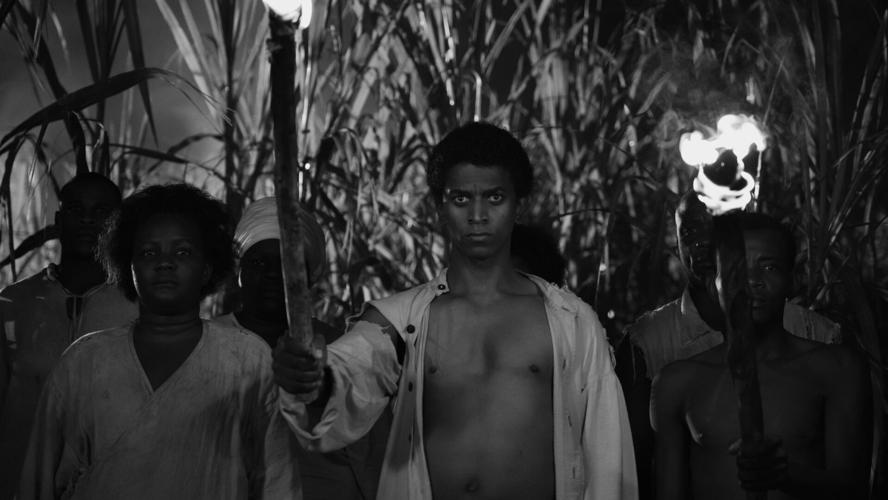
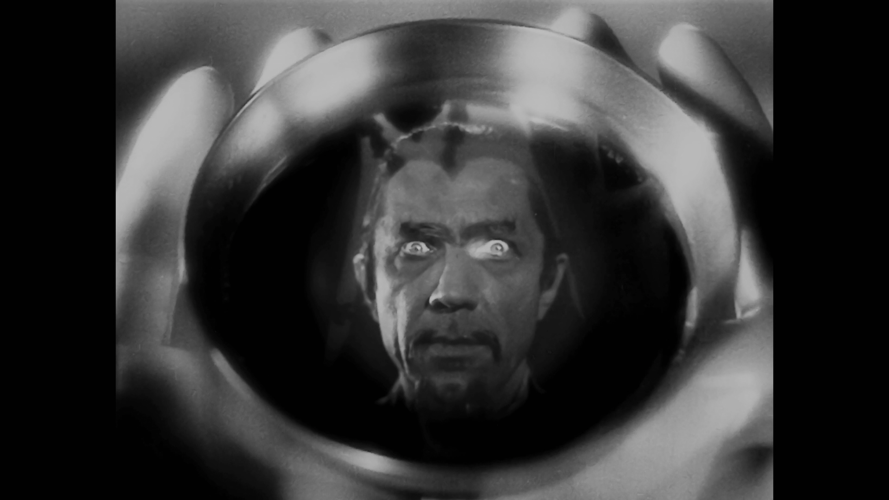
The first, feature-length film to use the word "zombie" and thus introducing it to Americans was White Zombie (1932). It was based on the book The Magic Island (1929) by author William B. Seabrook who was the first, American author to use the word "zombie." Seabrook's book was about his travels to Haiti in order to understand that country's religion, known as Vodou. He was also specifically interested in an idea that was present in Haitian culture about a person coming back from the dead or somehow being revived even after passing away. However, the custom is not really magical or supernatural, as it is spiritual. The concept of zombie is also more metaphorical, as it comes from the brutality and harshness of slavery. Haiti was a French colony that held about a half-million slaves before the 1791 Haitian Revolution. Haitian slaves were used to harvest sugar cane and the images of slaves who were malnourished and looking very gaunt were the inspirations for the initial depictions of zombies.

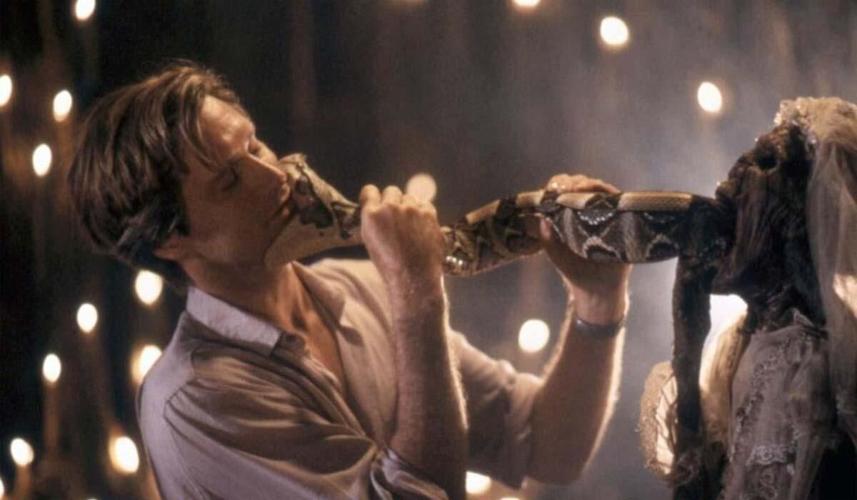
However, what people like Seabrook and later Romero failed to understand is that zombies weren't evil or the perpetrators of violence. Zombies were the victims of violence, specifically the victims of slavery and bondage. What became racist is that these White men who were the authors or the filmmakers that came in the 1930's and then again in the 1960's turned these Black victims into monsters that the mass culture at large should be terrified or scared of. Yet, the Hollywood denigration didn't just stop with this "zombie" misappropriation. The Vodou religion overall has been demonized over and over again. There are numerous examples, but one that Bedward cites is The Serpent and the Rainbow (1988) by Wes Craven. It depicts the Vodou religion as this deadly and torturous thing that only exists to inflict harm, particularly against white people.
It's not to say that any creative person can't be allowed to depict or critique whatever they want. Religions in general are rife for critique. In fact, this film arguably has some critiques of the Catholics who imposed their faith on the non-Catholics that lived in Haiti. However, when it comes to mass media and the product put out by Hollywood, one can find positive depictions of Catholicism or the Catholic faith all over. William Friedkin's The Exorcist (1973) is one such example where a Catholic person is seen as a hero and Catholicism is seen as a force for good. One might be hard pressed to find anything in the mid-20th century that depicts Vodou or Haitian people and culture as a force for good. Vodou or "Voodoo" has been nothing but demonized over and over in Hollywood media, and interviews from people who live in Montreal, Canada, down to New Orleans, Louisiana, testify to the stigma and discrimination that it's caused.

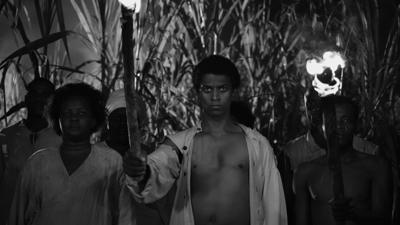
What's interesting is that Bedward's film seeks to critique all that demonization from Hollywood. Yet, she doesn't let herself off the hook either. Her film includes depictions of Vodou and historical scenes of slaves in sugar canes, photographed in glorious black-and-white. She includes commentary from a Black female filmmaker who is aware and conscious of how horror involving Black people should be depicted in terms of not demonizing or exploiting the culture being represented. However, Bedward acknowledges and allows for the critique of her own work within this work itself. She walks a line that not many who have depicted horror connected to Haitian roots have done.
Not Rated but for mature audiences or 16 and up.
Running Time: 1 hr. and 32 mins.
Available on VOD.