
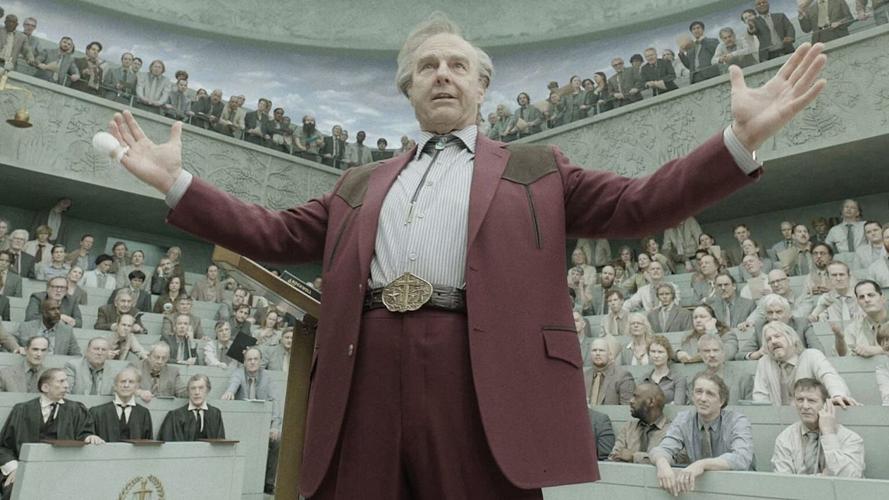








Tom Cruise (Top Gun: Maverick and Jerry Maguire) stars as Digger Rockwell, the owner and CEO of an oil or petroleum company that is currently drilling for fossil fuels in Greenland. He's obviously a wealthy and very insulated billionaire, living in a mansion, somewhere in the Washington, DC area. He doesn't seem to be married or have children, at least not any that are depicted. He does have an elderly mother, as well as a sister and nephew. His only companion, other than his servants like the maid and various employees, is his very sick cat, one that is apparently dying of cancer. Things get kicked off when Digger is informed that his Greenland oil rig has exploded, causing a huge crack in the nearby glacier that breaks off. The glacier chunk is reportedly larger than the DC area, and that chunk is on a collision course with Norway, which would result in catastrophic destruction throughout all of northern Europe. The rest of the film follows what Digger does to rectify or address the situation.
Many people have already pointed out that Oscar-winning director Alejandro González Iñárritu has taken his main inspiration for this film from Stanley Kubrick's Dr. Strangelove (1964). It's political satire that's meant to be exaggerated, heightened, and over-the-top. It's silly and it's goofy. It's meant to be ridiculous in order to spoof all the people involved. It's not that far removed from a Saturday Night Live sketch, except it has some additional meta-narrative aspects to it that pushes it into another realm. That realm is perhaps not as interesting or as engaging, as the subject at hand. What's ironic is that the same week that this film premiered, Comedy Central's South Park (1997) aired an episode titled "Billionaire Weenietown," which was also a satire on wealthy people exploiting lower class people and disrupting, if not destroying the environment around them. That episode worked incredibly well because the creators of South Park came up with a clear metaphor that riffed on a joke that had already been established in previous episodes. The metaphor was bizarre and loony, but it was a take that proved how brilliant satire can be. Here, I'm not sure there was a clear metaphor or take.

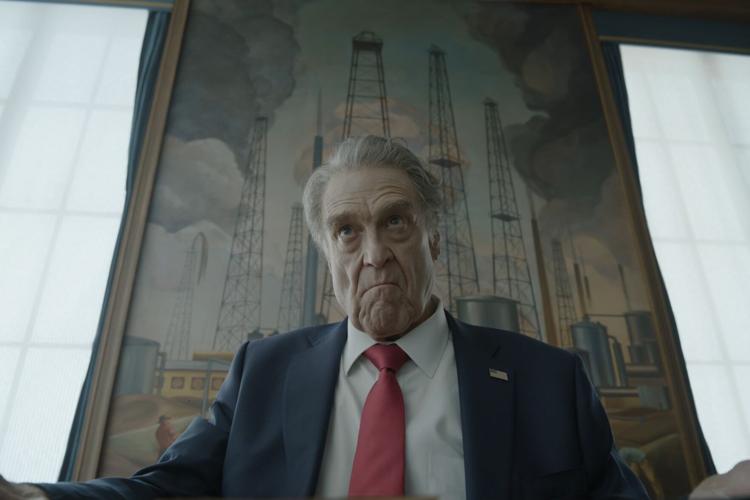
John Goodman (The Righteous Gemstones and The Conners) co-stars as President Compson, an elderly politician who works with Digger to figure out this Greenland problem and solve it. It's not clear if there's a specific, real-life President that is the target of this spoof. In that South Park episode, President Donald Trump is the obvious and direct target of the satire. Here, Iñárritu might be spoofing Trump, but, going back to President George W. Bush, the Republican presidents have been all about their support of oil companies and fossil fuel companies, as well as their opposition to efforts to curb or end climate change. Some can and have made the argument that Democratic presidents have also been in league with oil and fossil fuel companies, but those Democratic presidents have rhetorically been more about curbing climate change. Yet, it doesn't seem as if Iñárritu is targeting any one president in particular. It feels very generic, which isn't that bad of a criticism. Maybe it helps not to alienate certain audiences who might lean Republican personally, but it's obvious that this film's theme is all about how climate change is a problem, exacerbated by oil companies, so those right-wing audiences aren't being coddled that much here.
Yet, there is a point that is made that could be seen as coddling them. In one scene, Digger gives a speech where he throws the criticism of the oil and fossil fuel companies back onto the population at large. Digger says the reason these fossil fuel companies are able to do what they do is because of the high demand for their product. The demand comes in the form of people's high use of gas-powered vehicles or high use of electricity through the constant use of digital devices that need to be charged, such as phones or other handheld machines that require Internet access. South Park made the point that data centers, which also power Internet-based companies and the artificial intelligence integrated into them, require a lot of electricity as well, which contributes way more to the problem than the average American could individually. However, Digger's speech is meant to be an ironic and satirical statement. Some might take that statement though as seriously as Jack Nicholson's infamous speech at the end of A Few Good Men (1992). Cruise even delivers that speech in a way that invokes Nicholson at moments with a kind of righteous indignation where he sees himself as giving the people what they want, even when he is the heroin dealer scolding the heroin addict.
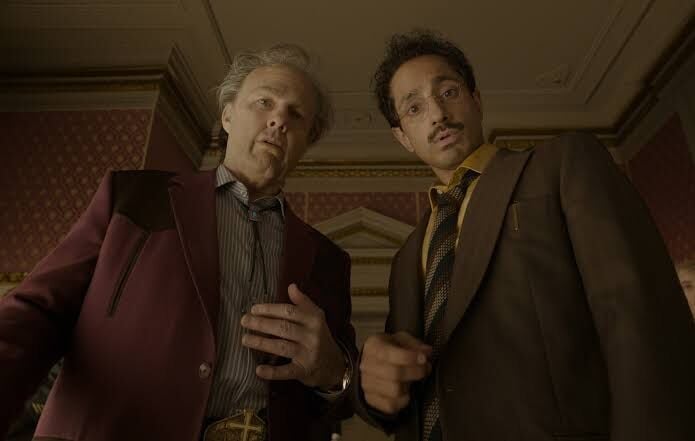
Riz Ahmed (Bait and The Night Of) also co-stars as Ganesh, a scientist who works for Digger as the head of the environment and safety department. Ganesh is the nervous wreck who has to inform Digger about the climate change catastrophe. He comically reveals that he sent emails as warnings of this pending disaster. He's not skewered by his lack of giving a stronger or more strenuous warning ahead of time. He's not skewered for not going to the public sooner. He's on Digger's payroll, so there might be a contractual constraint that prevented him from going to the public, but, in one scene, he's asked to speak to the public on Digger's behalf. At that point though, the catastrophe is already in progress and not much can be done to stop it, so there's no purpose, except assigning blame to Digger or whoever.
It was at Ganesh's speech though that it becomes apparent that this film is beyond assigning blame. Cynically, it's about how humanity handles the aftermath of such a global catastrophe. Cynically, it's about not fighting back and not trying to stop the catastrophe. Cynically, it's about accepting defeat. A film like Roland Emmerich's The Day After Tomorrow (2004) depicts a climate change disaster, but there is still an air of hope to it, a sense of fighting back. There is no sense of that here. The sense here is humanity has been defeated and all we can do is accept and try to cope. Without spoiling things, it seems the way to cope is through art and entertainment, particularly stage theater.

I'm not well versed in Broadway productions. I'm not familiar with the high level of stagecraft that's possible these days. That being said, I question the production design on display here being able to exist in a New York theater. The production design is possible seemingly only on a film sound stage and not a Broadway one, not without a lot of money. There's a proscenium aspect to the scenes and sets of which Iñárritu makes great use. Probably, the production designs utilized here couldn't be replicated on a Broadway stage or any kind of working theater. A warehouse or sound stage would have to be the venue, and even then I would still be skeptical. Yet, the stagecraft that is shown, especially at the end, is pretty incredible. The power of art and the power of theater are great things, but rendered here, it's a self-congratulatory trope that feels unearned.
Spoiler alert! Spoiler alert! Spoiler alert!

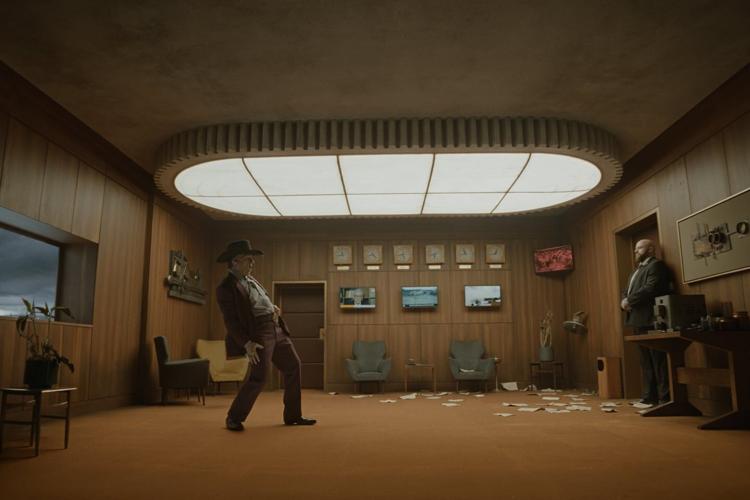
About 30 minutes into the film or thereabouts, the twist of the film is revealed. If you don't want to be spoiled, stop reading. However, it's revealed that Tom Cruise isn't playing Digger Rockwell. He's playing a man named Curtis Markson, an actor who is working on a very expensive stage play in which his role is that of Digger Rockwell. Apparently, Digger Rockwell was a real person in the world of this narrative and Digger was responsible for an oil rig explosion that broke off a glacier chunk that slammed into Europe and caused a lot of destruction. We see scenes that are supposed to be Curtis and the cast performing scenes from the play, but it's presented as if it's really happening. There are moments when they break the fourth wall and we see behind-the-scenes interactions between Curtis and the cast, as well as the play's director, Hannah, played by Sophie Wilde (Babygirl and Talk to Me).
Unfortunately, those interactions aren't satisfying because they don't provide that much insight on any of the people involved in the making of this play. Curtis Markson is an actor who doesn't seem to grasp why this play is a comedy. He also has awkward interactions with the producer of the play, that of Kenny, played by Jesse Plemons (Bugonia and The Power of the Dog), but those interactions don't amount to anything all that compelling or satisfying. Iñárritu might be trying to comment on the way theater is produced, much like he did in Birdman (2014), but the commentary in Birdman was way more pronounced and clear, whereas the commentary here feels muddled and more obscure.

Rated R for pervasive language.
Running Time: 2 hrs. and 9 mins.
In theaters.