







One could be cynical and say that Steven Spielberg is doing a remake of Close Encounters of the Third Kind (1977), his Oscar-winning film about people discovering the existence of extraterrestrial, sentient beings. It was a huge success. He was encouraged to do a sequel back then, but instead he made E. T. the Extra-Terrestrial (1982), which was about children befriending an alien from outer space. Both those films are in the top five of highest-grossing titles, directed by Spielberg, adjusted for inflation. Spielberg led War of the Worlds (2005) and Indiana Jones and the Kingdom of the Crystal Skull (2008), which both involved aliens from outer space. It's clear that he has an interest in the topic and the concept, which a lot of people share. Yet, it could also be that this film isn't just a remake, but a spiritual sequel. In the 1977 film, we see a select group of people discovering extraterrestrials. This film is about the whole world discovering it. War of the Worlds was about the same thing, but the aliens in that film were aggressive, very hostile, and highly destructive. This film is about taking away that threat and wrestling over extraterrestrials who are peaceful.
If one is a fan of the TV series The X-Files (1993), one knows that it was about a government conspiracy to keep the truth about aliens a secret from the majority of the population. It focused on one man and one woman connected to high-profile figures. As a result, that man and woman wanted to expose the government secret and let the world know the truth. The show was meant to run for years and it did, which meant the characters never succeeded in exposing the truth, but it was well-plotted, well-acted, and well-shot, as one of the best science-fiction thrillers ever made. The show dealt with issues of religion as the female character of the series was Catholic.

It wasn't until Robert Zemeckis' Contact (1997), starring Jodie Foster, did the idea of religious people reacting to knowledge of extraterrestrial, sentient beings, entered my brain. This film dives into that theological question of how religious people might be affected if such knowledge of aliens were exposed as truth. The film dabbles in the debate that if aliens exist, does it invalidate Christianity and some Christian tenets, as laid out in the Bible?
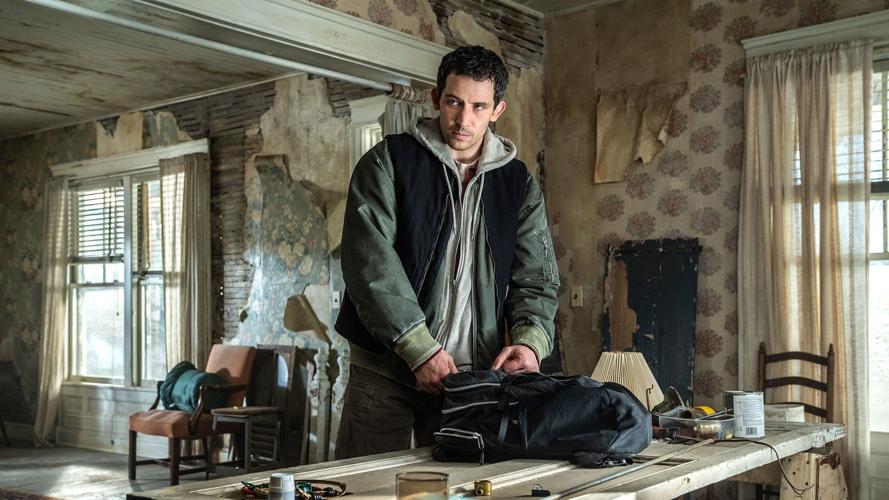
Josh O'Connor (Wake Up Dead Man and Challengers) stars as Daniel Kellner, a cybersecurity expert who works for a company called Wardex, a government contractor, connected to the Department of Defense. Wardex has been helping with the cover-up of extraterrestrial beings since the 1940's. Once Daniel realizes what they've been doing, he decides to steal physical proof, along with video evidence, which he plans to release to the public.

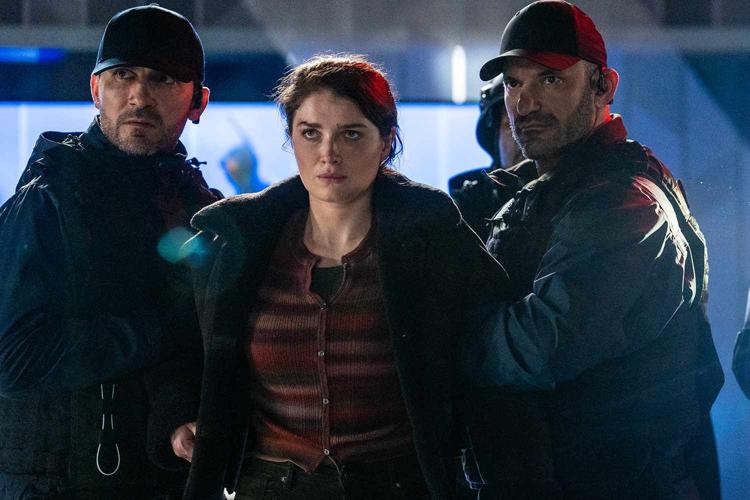
Eve Hewson (The Perfect Couple and Bridge of Spies) plays Jane Blankenship, the girlfriend of Daniel. She gets pulled into Daniel's whistleblower mission. She reveals that she was a novitiate, a person who is entering work in a monastery. In other words, she was going to be a nun. She didn't become one because she fell in love with Daniel and broke a nun's vow of chastity. Yet, she's still very much a person of faith. She's the one who voices her opposition to releasing the evidence of aliens to the public because she believes that it might invalidate Christian ideology, or it will cause people not to believe in God any longer. The film never identifies if it causes her not to believe or if it truly tests her faith. Yet, this question needs to be separated. One part is questioning the belief in God and the other part is questioning the validity of Christianity and Bible verses.
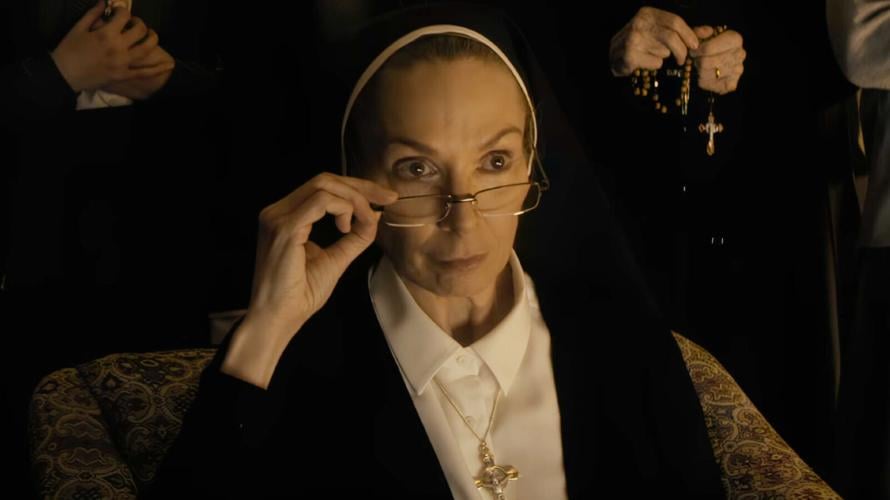
While I appreciate Spielberg's film introducing this debate, it's not really a debate. It's a concern that Jane has, and she does have a conversation with an actual nun, played by Elizabeth Marvel (Homeland and House of Cards). But, the conversation comes down to the semantics of one Bible verse. I understand that this film has a good chunk of plot and characterization to run, so there's not enough time to have a full-on dissection of why religious fundamentalists or people who interpret the Bible in a strict or literal manner might not be satisfied with this film's conversation. What was brilliant about The X-Files is that it gave equal weight to believers and skeptics. It even explored other religions and not just the Abrahamic ones. This film doesn't really give that weight.

The film is really about affirming the Christian faith and quite frankly coddling it, rather than challenging it. The X-Files wasn't offensive in its critiques or conversations. It was respectful to its character's faith, but it was also smarter in delving into these topics. At the same time, The X-Files was also sharp in its critiques of its own science-fiction premise, even suggesting that the existence of aliens was itself a hoax or not real. That changed as the series progressed, but its initial seasons were great at balancing the conversation. Spielberg's film portrays the aliens as undeniably real, which is fine, but it also depicts all of them as wearing halos. One could argue that the aliens kidnapped or abducted two children and experimented on them, which if a human did that would be considered a crime. Yet, this film depicts child abduction and experimentation as a benevolent thing.
I get that this film isn't about the aliens, who they are or what they are. It's about how the humans react to knowledge of their existence. Yet, who or what they are would inform the humans' reactions greatly. The ending we get simply doesn't address the central question at hand. The title of this film is the conclusion when it should have been the jumping off point, or at least the half-way point. Given the level of distrust of the media, the misinformation out there, the partisanship and A.I., the aftermath of revealing the existence of extraterrestrials is more intriguing than just the revelation. Denis Villeneuve's Arrival (2016) perhaps is a better example of that aftermath, although Villeneuve's film provides more insight and interaction with the aliens. Spielberg's film makes the aliens more of a concept than characters.

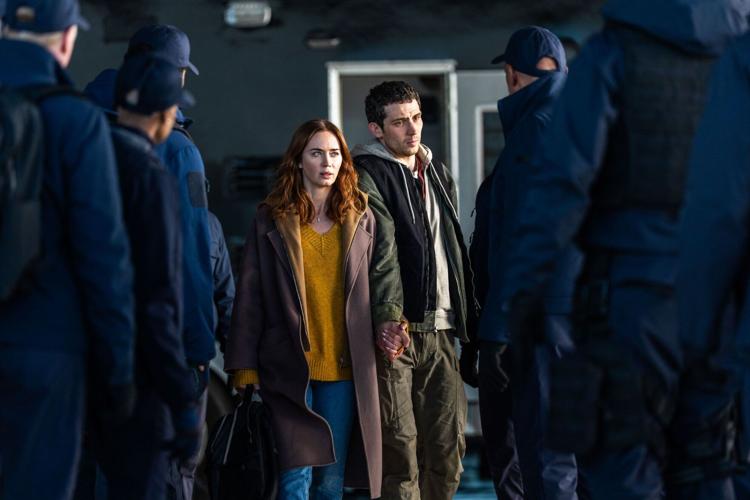
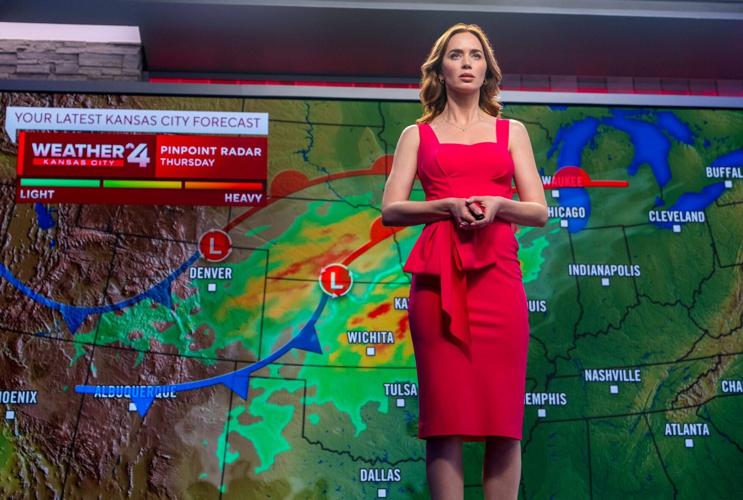
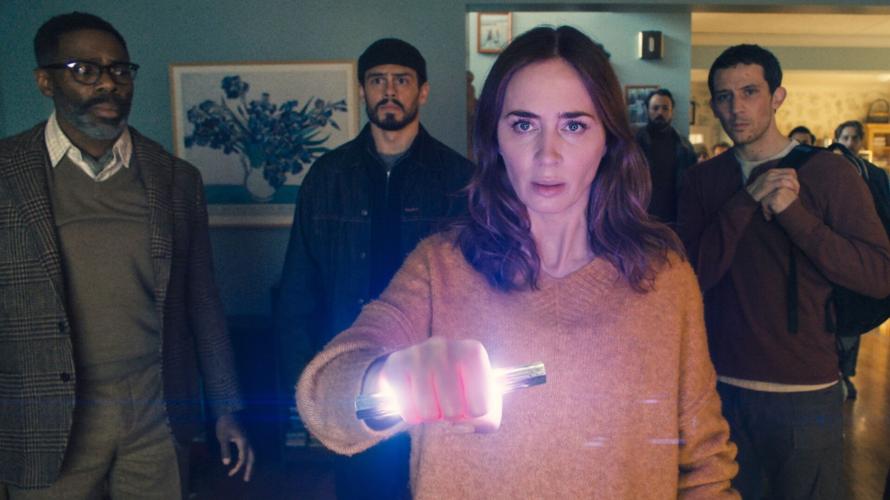
There's an overwhelming theme of fighting xenophobia. As such, having them be just concepts is fine because it's all about having them be metaphors for the bigotry and the discrimination between other humans. It all leads to a message of empathy and understanding that humans need to foster amongst themselves. Emily Blunt (Oppenheimer and The Devil Wears Prada) co-stars as Margaret Fairchild, a meteorologist at a TV station in Kansas City, Missouri. Strange things start to happen to her and it becomes clear eventually that she will be the vessel or the conduit for the empathy and understanding that this film is trying to engender. The path that's taken to engender that empathy and understanding is pretty easy. She simply teams up with Daniel to go on the journey of discovery.
That journey is exciting and Spielberg is a master craftsman when it comes to staging and framing scenes. The images he puts on screen are incredible or stunning. There is a shot of Colin Firth who plays the villain here that is truly haunting. The way Spielberg plays with light and shadow, particularly with the help of his cinematographer, is brilliant. The pacing and editing work well too. He makes getting to his ending energetic enough.

Rated PG-13 for action, violence, some bloody images, and strong language.
Running Time: 2 hrs. and 25 mins.
In theaters.