



At first, the film feels like it's about westward expansion and manifest destiny, but, because it's only the first episode in a planned four-part series, it's not clear if director, co-writer and star, Kevin Costner, is being critical of those concepts and historical actions, or if he's celebrating those things. The premise involves a group of American settlers heading west to a place called "Horizon," which is a town that has a lot of land for settlers to take. However, that land might be protected by indigenous people. The opening scene shows how deadly that protection can be. It's not clear yet if Costner is saying that the protection is justified or if he's simply underlining the hardship that's going to be overcome gloriously.
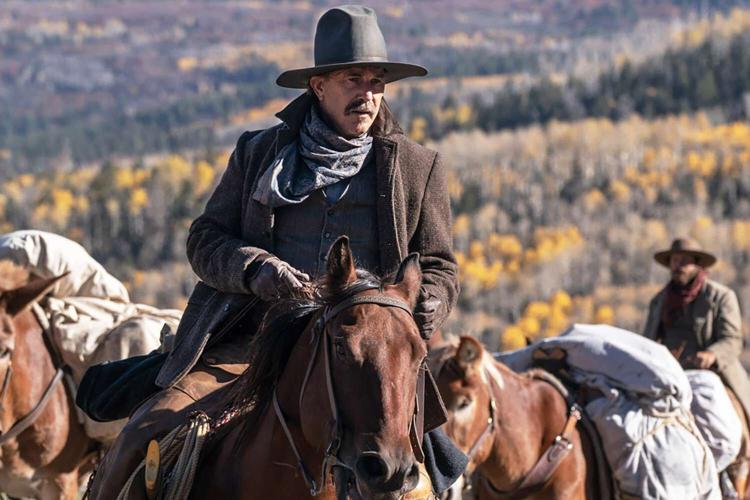
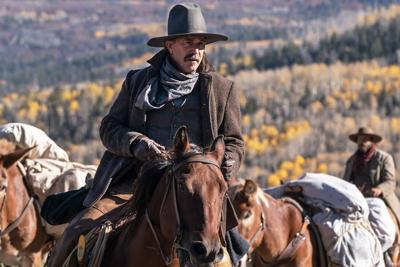
If one is hoping to see a lot of Costner, you won't. Costner does play a man named Hayes Ellison, a gunslinger in 1859 or sometime before the American Civil War who seems to live in what will become Montana. He claims to be employed as a trader, but he gets pulled into a revenge plot in which a family of outlaws named the Sykes brothers are trying to find a young woman and child. Hayes becomes tasked with keeping the young woman and child safe. This could've been a compelling plot in and of itself, not unlike Tom Hanks in News of the World (2020), but Costner gives himself so little screen time that Hayes' story feels almost inconsequential, particularly inconsequential to the whole "Horizon" plot.

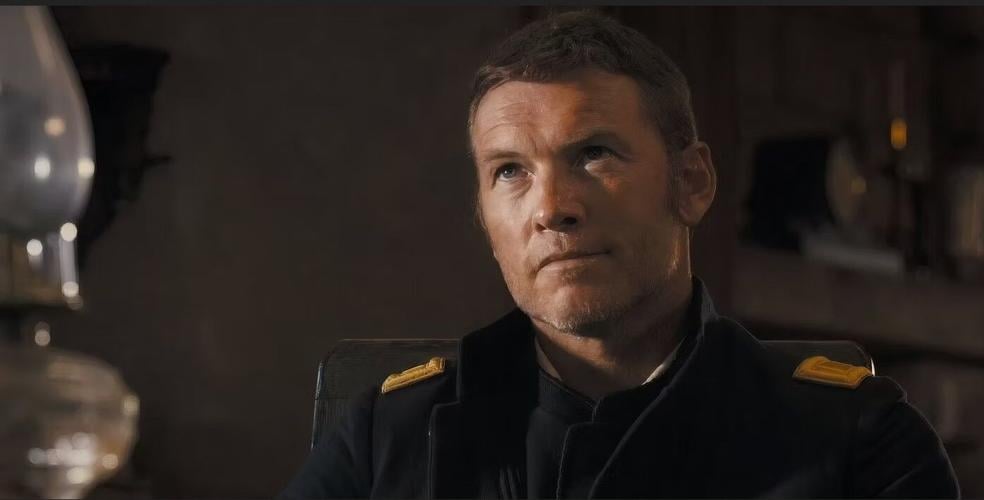
Sam Worthington (Avatar and Clash of the Titans) co-stars as Trent Gephardt, a lieutenant in the U.S. Army. He arrives to rescue the survivors of an Apache attack in the San Pedro Valley. His character is the only one to push back against the idea of westward expansion or colonization, but it's not clear if he's really pushing back or if his comments are strictly from a military logistical standpoint. It's not clear if his stance is to argue that colonizing is wrong or if colonizing in this one specific place is wrong.
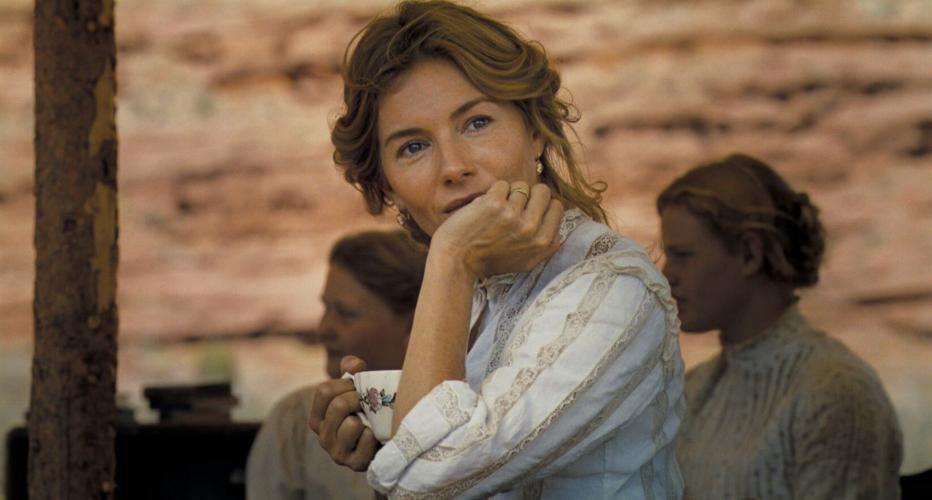
Sienna Miller (American Sniper and G.I. Joe: Rise of Cobra) also co-stars as Frances Kittredge, one of the settlers rescued in the Apache attack. She becomes romantically involved with Trent. The passage of time isn't sure, but Frances starts out married to another man. Her moving into a romance with Trent feels perhaps rushed. Instead of a romance, if Frances and Trent would've had conversations about the westward expansion and colonization issue, that would've gone a long way to flesh out the theme and give more of a sense of the direction of this film and the chapters overall.

Like with a lot of westerns, the themes of lawlessness and revenge, solving issues with a gun or showing one's dominance with gun violence are present here. There are also scenes and story lines about the difficulty of settlers or travelers on things like the Oregon Trail or the Santa Fe Trail, the difficulty amongst each other in particular. There is a sequence where we see the difficulty a woman might face that involved class and pride, as well as possible sexual harassment that I thought was interesting. The film briefly touches upon the presence of Chinese laborers, especially during the California Gold Rush and railroad construction, but those Chinese characters are only given short shrift.
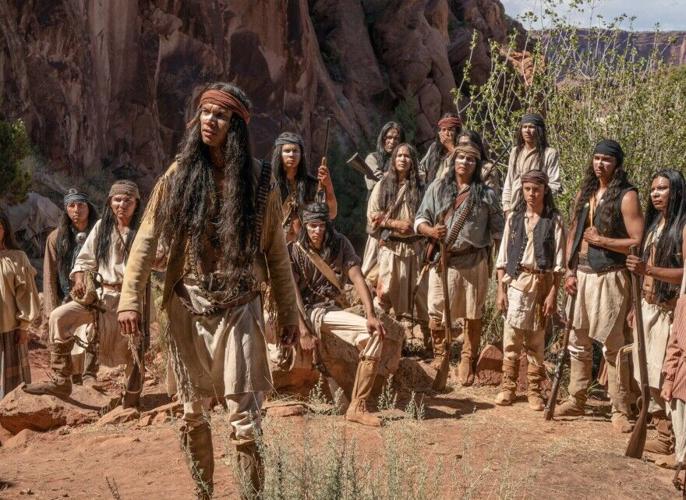
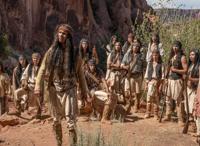
Obviously, like most westerns, the looming threat of Native Americans remains a constant thing here. Costner directed the Oscar-winning Dances With Wolves (1990), a film that isn't perfect in its depiction of the Lakota and is considered a "white savior" film, but that feature was sympathetic and compassionate toward the Native Americans. One would have a hard time arguing that Costner isn't sympathetic or compassionate toward the indigenous people here. Yet, they are portrayed mostly as a looming threat, but the film does give some space for the Apaches, such as Pionsenay, played by Owen Crow Shoe (The Revenant) and Taklishim, played by Tatanka Means (Killers of the Flower Moon).

The criticism is that the film didn't give Pionsenay and Taklishim more space. They're probably on balance with some of the other supporting characters in this sprawling ensemble. Hopefully, future chapters will give Pionsenay and Taklishim more of the floor to learn more about them and their culture beyond their opposition to the American or white settlers encroaching upon their lands. I'd love for Costner to delve further into their lives and loves, in order to flesh them out.
Rated R for violence, some nudity and sexuality.
Running Time: 3 hrs. and 1 min.
In theaters.