





This is the official submission from Spain to the 99th Academy Awards for Best International Feature. It premiered at the 79th Cannes Film Festival where it competed for the Palme d'Or. It won the People's Choice Award at the 51st Toronto International Film Festival (TIFF). As a result, many are saying that it's going to be nominated for several trophies at this upcoming Oscars, including Best Picture. TIFF winners usually do. It's a very well produced period piece that bounces back and forth between a storyline in the early 20th century, the 1920's and 30's, as well as a storyline in the 21st century. The production design, the cinematography, and the editing are all superb. The technical aspects are all quality, but I wasn't as compelled by the storyline in the 21st century, as I was the storyline in the early 20th. There were things about the modern-day stuff that were interesting, but it ultimately felt tacked on. The stuff set 100 years in the past is where I wish the film remained exclusively, yet ultimately not much happens there either.
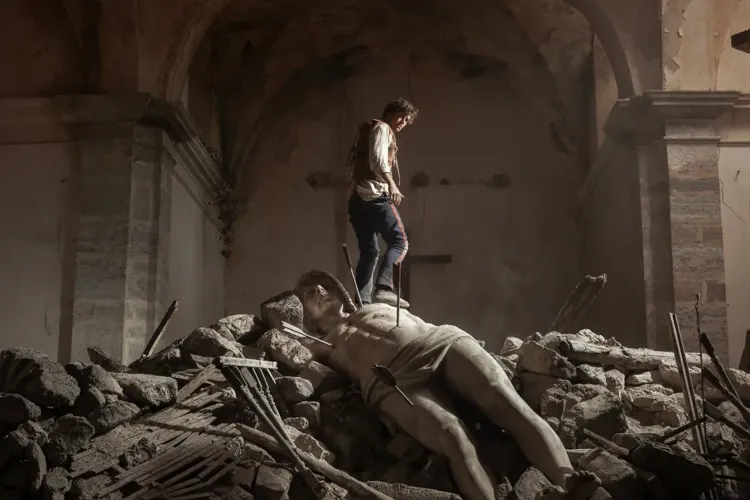
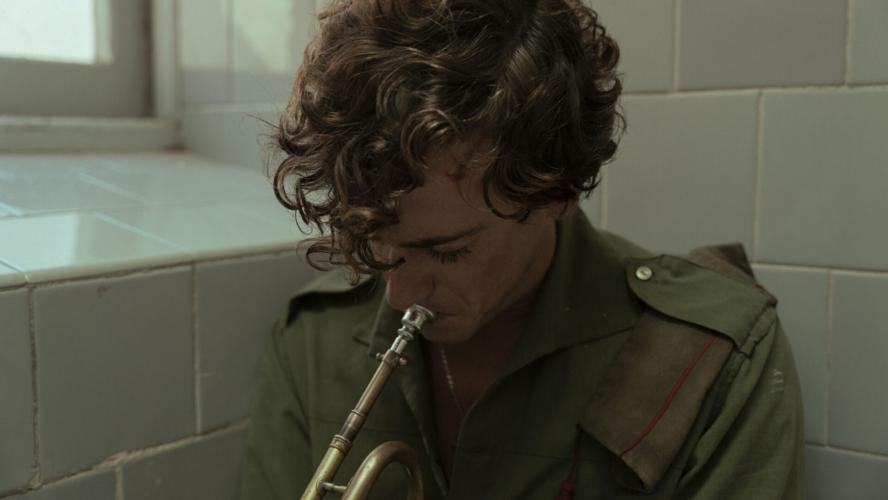
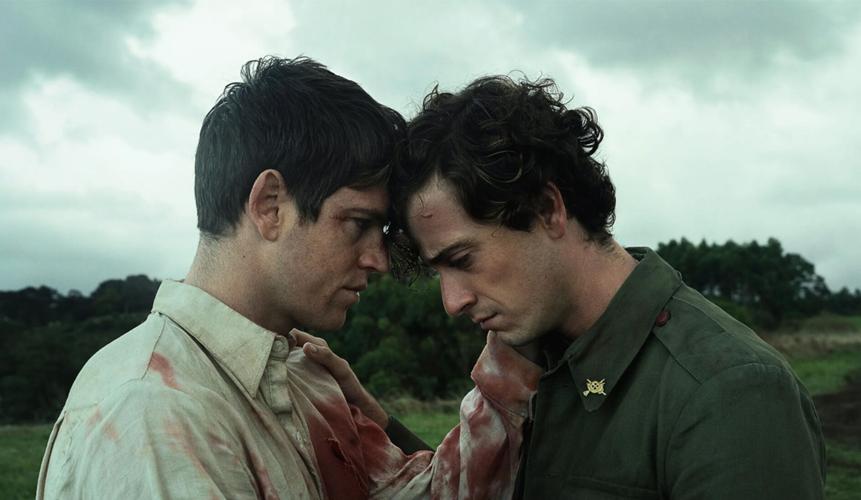
Guitarricadelafuente is a Spanish pop star who makes his acting debut in this feature. He stars as Sebastián, a trumpet player whose village is destroyed by Italian aircraft in 1937. His mother is killed and he's subsequently recruited to be a part of the Spanish Civil War, a conflict between the Republicans and the Nationalist rebels. Sebastián is specifically recruited on the side of the Nationalist rebels. There is a makeshift hospital where prisoners of war who are injured are brought to get medical care. Sebastián and other rebel soldiers are there to guard those prisoners. When a very handsome, Republican prisoner arrives at the hospital, it unlocks feelings inside Sebastián.

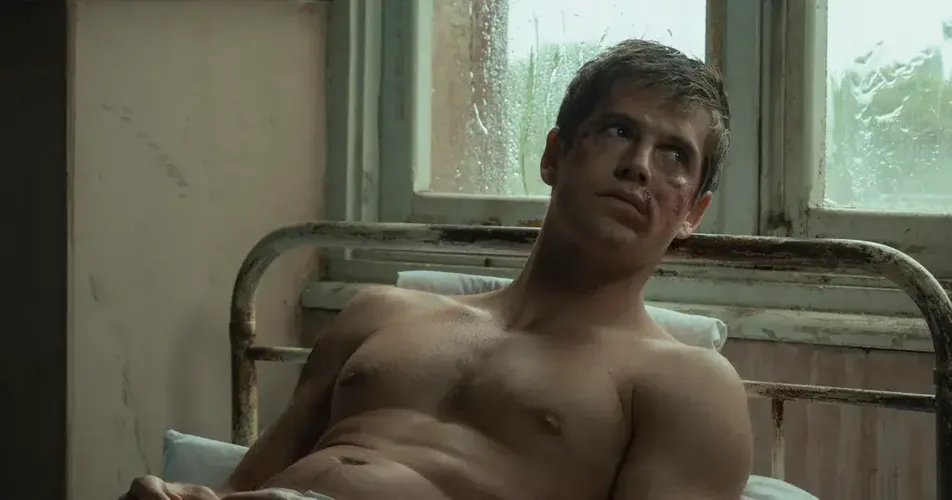
Miguel Bernardeau (Elite) co-stars as Rafael Rodríguez Rapún, the aforementioned, very handsome, Republican prisoner of war. He was badly injured and is recovering at the hospital. Sebastián is ordered to guard him. Rafael is based on a real person. He was a former athlete who joined the military for various reasons. However, he harbors secrets, which get revealed over the course of the film. The first of which is that he's gay. That fact isn't necessarily a secret, but the 1930's has right-wing fascism all around him, so Rafael can't exactly be that open about his sexuality. He's incredibly attractive. Sebastián is clearly guided by his lust and he's not that subtle about his feelings. Sebastián is revealed to be gay too, and he lucks out that Rafael is homosexual, but there's no way he could've known, so Sebastián is almost ridiculously bold when he starts making moves on Rafael.
The film isn't lacking in its homoeroticism. Rafael practically spends his entire hospital stay shirtless or nearly naked. He goes fully nude when, due to his injuries, Sebastián has to bathe him. Strangely, the other rebel soldiers spend their down-time frolicking fully nude on a nearby beach or riverbank. Sebastián is a witness to all of this. It's a wonder as to why his same-sex attractions weren't activated toward one of those rebels. It's not clear why his lust or love is singularly focused at Rafael. However, their romance is intriguing and the most compelling thing here.

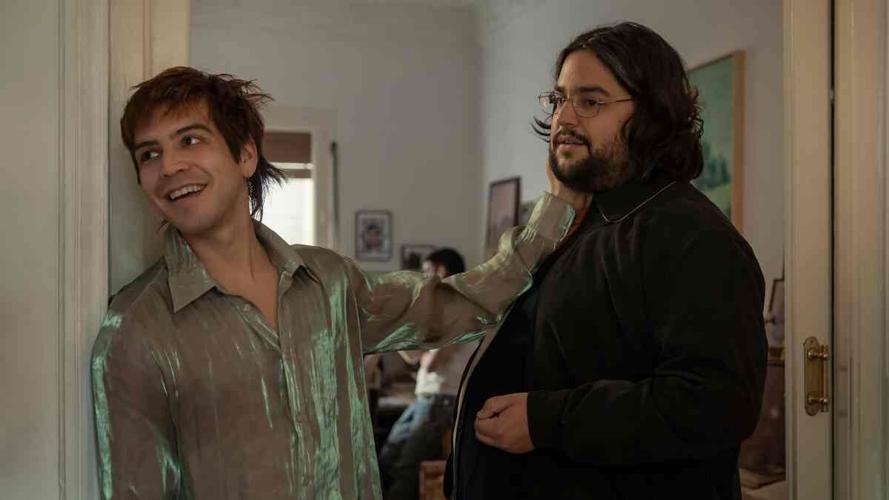
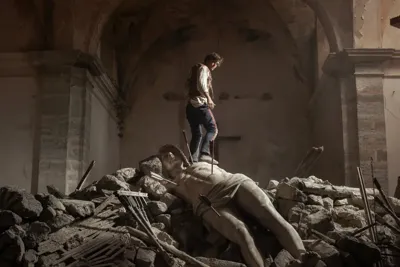
Carlos González also co-stars as Alberto Azcuna, a gay man living in Madrid, 2017. He's a playwright, although he hasn't seemingly done any theater work lately. He currently is having issues with his mother. A lot of those issues stem from the breakup of her parents and her father seemingly abandoning her. Alberto thought his material grandfather had long since died, but it's revealed that his grandfather was alive but Alberto didn't know. The only reason he finds out is because his grandfather has now just passed and Alberto is getting an inheritance.
The film interrupts the storyline of Sebastián and Rafael's romance with Alberto's storyline of him discovering who his grandfather was and what the inheritance is. Once those answers are discovered, I wasn't that impressed or compelled. One of those discoveries was easily guessable. The other didn't blow me away, as much as I hoped, given the amount of time the film dedicates to it.
Spoiler alert! Spoiler alert! Spoiler alert!

It's revealed that Sebastián is the grandfather to Alberto. The inheritance turns out to be pages to a play, written by Rafael's dead, former lover, Federico García Lorca, a real-life poet and playwright who was assassinated by the Nationalists during the beginning of the Spanish Civil War. Lorca's death is what prompted Rafael to join the Republicans and fight the Nationalists. Lorca wrote a play entitled "La bola negra," which is about a closeted gay man who tries to get a membership in a club that turns out to be homophobic. So, the play really doesn't have anything to do with the Spanish Civil War or Lorca's romance with Rapún.
Directors and co-writers, Javier Calvo and Javier Ambrossi, aka "los Javis," made this film with playwright Alberto Conejero who wrote a piece about the romance between Lorca and Rapún. Conejero's work is probably the reason Sebastián's grandson is named Alberto. However, it's odd that los Javis didn't make this film more about that specific romance. Instead, the romance is centered on this fictional character named Sebastián. It builds to an incredible moment where Sebastián has to be the one to kill Rafael, given that they're on opposite sides of the Spanish Civil War. He has to murder the man he loves. Unfortunately, that moment doesn't have the impact that los Javis probably wanted it to have.

Because of the nature of Sebastián and Rafael's relationship, they couldn't have sex. They couldn't even kiss. There can be love and even passion between two people without it getting physical. Yet, given their situation, they can't even talk too much openly, so the whole thing becomes a lot of unfulfilled longing. Then, Rafael is dead. In the scenes with Alberto, his grandfather Sebastián is already dead, so we don't get much reflection of his experience as a gay man in that period or what Lorca's play meant or represented. It becomes not much more than a MacGuffin. Otherwise, I walked away from this film feeling like I learned little to nothing about the characters therein.
Rated R for violence, bloody images, graphic nudity, sexual content, and language.
Running Time: 2 hrs. and 40 mins.
In select theaters, including the Cinema Art Theater in Lewes, DE on Nov. 13.
Available on Netflix on December 2.