

William Greaves was a Black filmmaker from New York City, born in 1926. He joined the Actors Studio in 1948 alongside Marlon Brando and Shelley Winters. He worked as an actor till the late 50's. When the Civil Rights Movement started reaching its heights in that time period, Greaves transitioned into becoming a documentarian. His work was mainly for television, for what would eventually become PBS. As a result, he got four Emmy nominations. His first came in 1969. His nonfiction work was exemplified with documenting African American people, life, culture, and history.
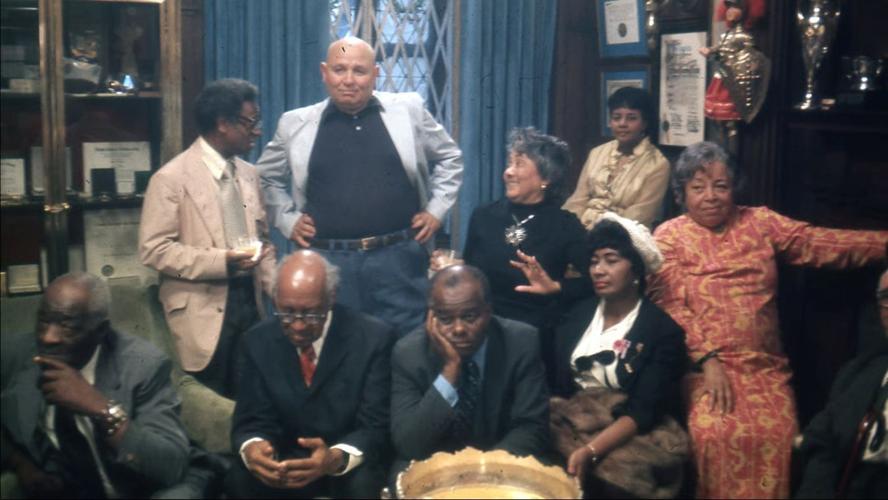
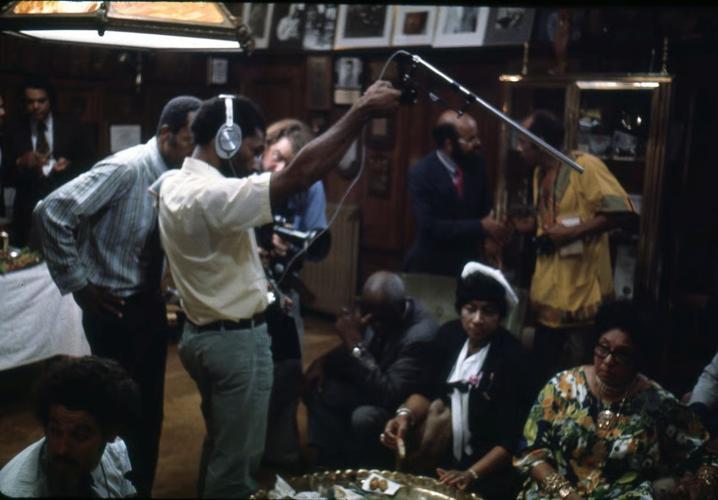
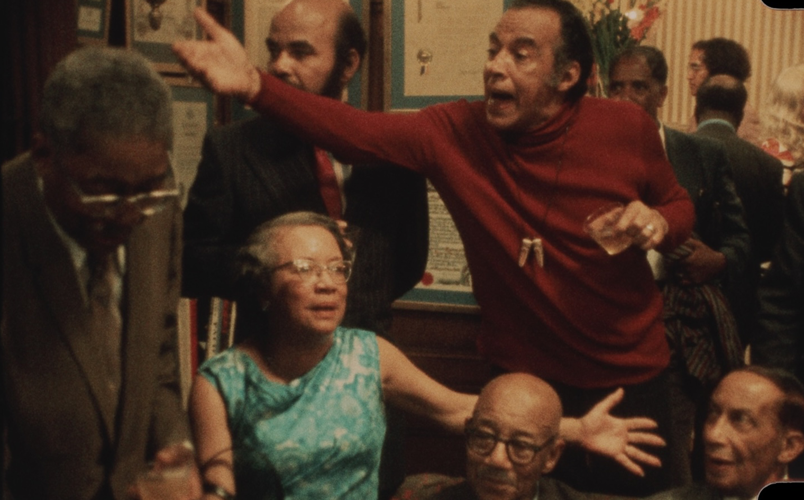
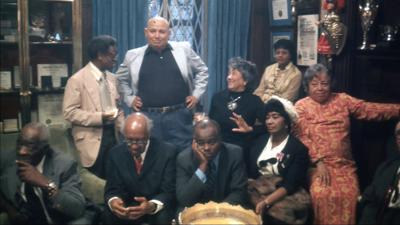
In 1972, Greaves had an idea. He decided to invite some luminaries from the so-called Harlem Renaissance to a party at Duke Ellington's house. He would bring a film crew and capture their conversations about what the Harlem Renaissance was, what it meant and who was involved. He would also conduct one-on-one interviews and try to wrap his arms around that particular era. Unfortunately, he never did wrap his arms around it. The film and the footage were never released publicly. It set on the shelf for 50 years. Greaves died in 2014. His son, David, picked up the mantle and is the one shepherding this film to the big screen.

David Greaves may have done some press about it, but I'm not sure why this footage would stay unreleased for 50 years. His father was a very busy man. Greaves did put out several films in 1972, and various projects around that time. Arguably, this film isn't dealing with anything urgent or pressing in that year, unlike his other works in that time period. If anything, it's essentially a time capsule, even by the admission of the attendees as a look back at a bygone era, and a way for the older Black folks to educate the younger ones.
Notably, having an event that captures an African American experience and then having that footage shelved for a long time aren't new. Amazing Grace (2019) was a documentary about Aretha Franklin, originally shot in 1972 by Sydney Pollack, which sat unreleased for 40 years. The reason was due to sound sync issues, which we see Greaves doing on camera in this film. Summer of Soul (2021), which won the Oscar for Best Documentary Feature, focused on the 1969 Harlem Cultural Festival. The footage of that festival were held on tapes in the original producer's basement for 50 years. It's definitely starting to feel like a pattern of untold Black stories that sit on shelves for decades. For Amazing Grace and Summer of Soul, those films were documenting stories or artists in their heyday. This film is documenting artists past their prime, talking about their heyday that was decades ago. The luminaries of the Harlem Renaissance didn't have their heyday in a time of video cameras, so this film is even doubly important.

There are dozens of luminaries at this party. Greaves is able to introduce us to a good number of them. We get a good taste of who they are and what they do. Through their conversations, we also get a good sense of their personalities. Most of them have very strong and quite loud personalities. The ones who are the most outspoken certainly make impressions. Those impressions are memorable and compelling, but, ultimately, it's all superficial. There isn't much depth that gets mined. One such example is Richard Bruce Nugent. There was a film called Brother to Brother (2004) that's a deeper examination of Nugent's life as a gay man, a fact not mentioned here. Several of the interviews talk about their works, their art. At several points, poets or musicians recite or sing their works. Yet, Nugent doesn't, as it would reveal his homosexuality. Nugent is a strong personality, so it's unfortunate that part of him is kept closeted.
Rated PG-13 for some disturbing images, language, smoking, and brief partial nudity.
Running Time: 1 hr. and 40 mins.
In select theaters, including New York and Washington, DC.