
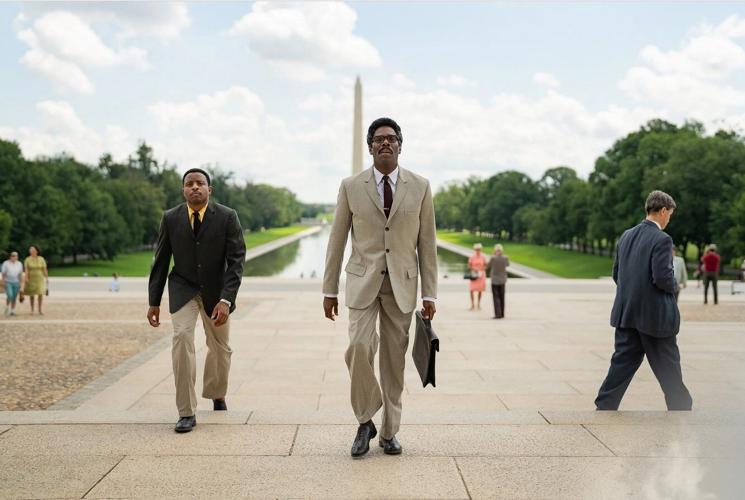

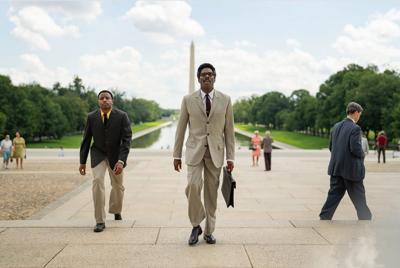
On August 28, 1963, the March on Washington for Jobs and Freedom was held in Washington, DC. It stands as the largest political rally in the history of the United States. It's where Reverend Dr. Martin Luther King, Jr. delivered his iconic "I Have a Dream" speech in front of the Lincoln Memorial. The march was instrumental in the passing of the Civil Rights Act of 1964. A lot of people only recall King's speech and attribute the march to Dr. King. However, King was not the organizer. He wasn't the one who put that march together. He was involved, but the actual work to organize was handled by A. Philip Randolph, a labor union and civil rights activist, and Bayard Rustin, a fellow activist from the Philadelphia area. In the wake of the 50-year anniversary of the march, President Barack Obama posthumously gave Rustin the Presidential Medal of Freedom, the highest civilian award from the U.S. Despite Rustin's work, not many people know about him. Again, the 1963 march is attributed more to King than anyone else. When President Obama left office, it's no wonder that his and Michelle Obama's production company, Higher Ground, would create this feature about him. Higher Ground mainly does documentaries but there already was a PBS film called Brother Outsider: The Life of Bayard Rustin (2003) that filled that void.
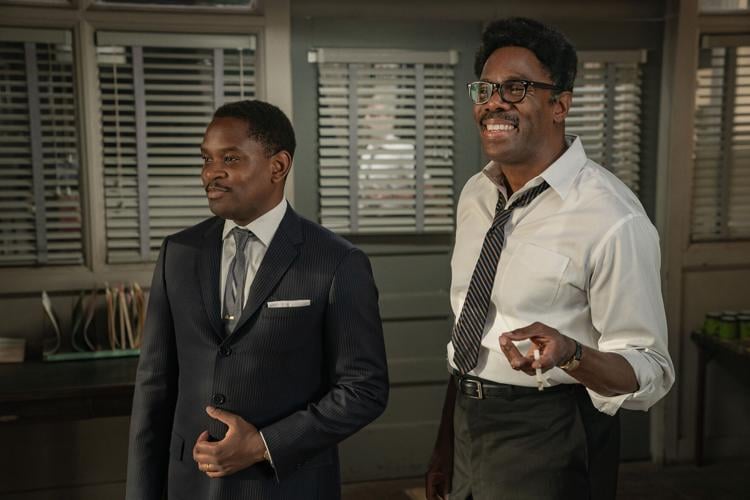
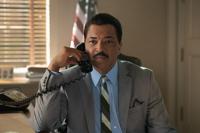
Colman Domingo stars as Bayard Rustin, a 51-year-old, African American activist. Domingo is similar to Rustin in that both are Black, gay men from the Philadelphia area. Domingo has been acting for over 20 years. He's a Tony Award nominee for The Scottsboro Boys (2010). He's a SAG Award nominee for Ma Rainey's Black Bottom (2020). He's also an Emmy Award winner for his role in HBO's Euphoria (2019). This isn't Domingo's first feature that involved Rustin. He was part of the cast of the Oscar-winning Selma (2014), which was about the march from Selma to Montgomery in 1965. If anything, this film could be considered a prequel to Ava DuVernay's 2014 docudrama.

Domingo played a different person. He played Ralph Abernathy, a Baptist minister from Alabama. However, the character of Abernathy in that 2014 film is akin to Bayard Rustin here in that both men were close friends to Martin Luther King, Jr or MLK and both men were crucial or highly present to each of those specific marches. In the 2014 film, Domingo played a sidekick to MLK. Here, MLK is more the sidekick, which changes the dynamic somewhat. However, both films grapple with similar themes and issues. The obvious one is racism and the struggle of African Americans to fight for equal rights and non-bigotry.
Yet, there's another element here that sets this film apart. That element is homophobia. Rustin comes up with the idea for the 1963 march. The film mainly follows Rustin's efforts to get the logistics and infrastructure in place for the march on Washington. As a community organizer prior to elected office, it's clear why President Obama would gravitate toward this story because it's all about the community organizing that was necessary to execute the march as an actual operation and event. It's almost an education about how these kinds of events don't just magically happen. They require organizing and this film delves into that work, depicting the obstacles that would come. One of which is that of publicity or public relations.

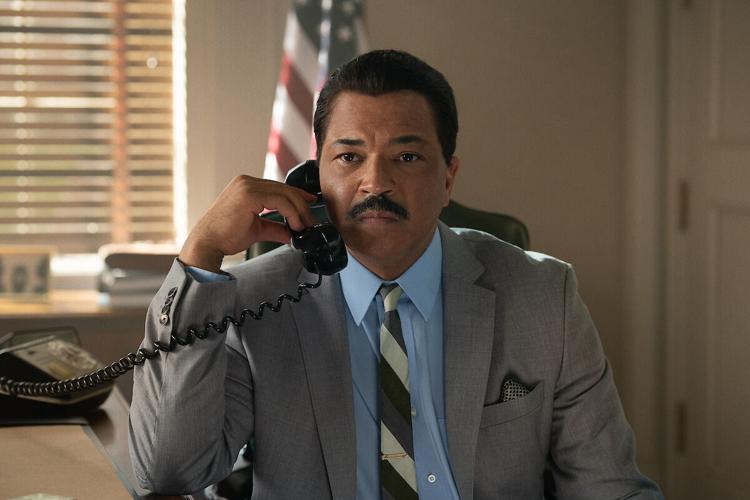
By 1963, the fact that Rustin was a gay man had become an open secret. People within the Civil Rights social circle were aware of his homosexuality, but it wasn't known in the public and when it is reported in the news, the media spins his private life as that of deviancy or perversion. It's highly homophobic, but the issue is that the media push isn't coming from White people or those that oppose the Civil Rights Movement. The media push is coming from fellow Black people. It's implied that U.S. Congressman from New York, Adam Clayton Powell, played by Jeffrey Wright (The Hunger Games: Catching Fire and Casino Royale), is the one leading that homophobic push, which only shows the division that Black people had about homosexuality.
Julian Breece (When They See Us) who is also Black and gay is the co-writer here with Dustin Lance Black (Milk) and their screenplay make the homophobia depicted be more about the publicity or public relations of it all. Rustin's goal is to have 100,000 people attend the march. In terms of public relations, there is this argument that this number won't show up, if it gets out that a gay man is behind it. This is punctuated with a scene early in the film, involving Rustin losing a job with the NAACP because a rumor gets out that he and MLK, played here by Aml Ameen (The Maze Runner and Sense8), were secretly gay lovers.

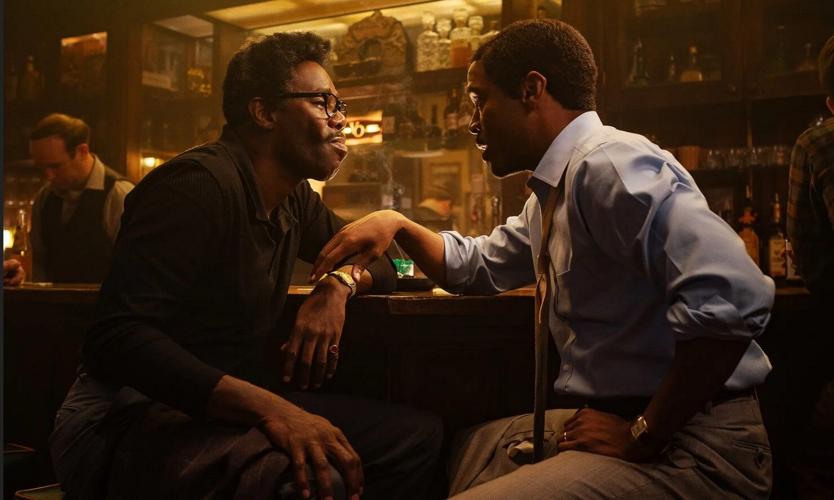
Another homophobic undercurrent involves a young, aspiring preacher named Elias Taylor, played by Johnny Ramey. Elias might be a fictional character, exclusively written for this film, but Rustin's relationship with Elias shows the danger that gay men experienced and the fear that their personal and professional lives could be lost if their desires or who they choose to love were exposed. It's great to see Domingo, an actual gay man, portray that desire and love on screen. He's a bright and ebullient presence in this narrative. There is evidence that Rustin is haunted and in fact might be motivated by a traumatic incident from his past, which was a homophobic attack that mirrors the racial attacks against Black people throughout the 50's and 60's. Seeing Rustin stand up to it or push through it, by way of Domingo's performance, is the true power here.
Rated PG-13 for some violence, sexual material, language, brief drug use and smoking.
Running Time: 1 hr. and 48 mins.
Available on Netflix.