



A photographer documented with pictures and audiotapes a specific motorcycle club in the Midwest from 1965 to 1973. He turned it into a book that writer-director Jeff Nichols has adapted. I haven't read the book, but, given that it was made by a photographer, it's likely that the book is photograph heavy. That photographer did conduct interviews on audiotapes, which likely provided insight into the people of this motorcycle club. Unfortunately, this film doesn't convey that insight in any substantial way. Instead, it's all superficial. The portraits here are surface level. There's no depth to much of them, which is fine, if all one cares about is the atmosphere or vibes of this film.
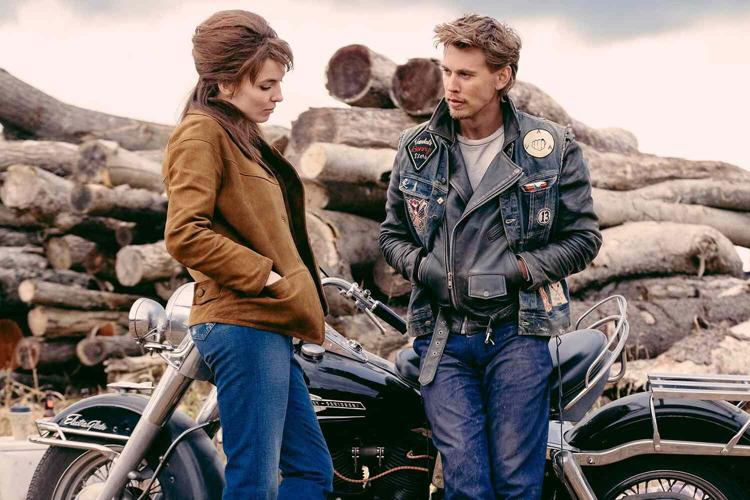
Jodie Comer (Killing Eve and The Last Duel) stars as Kathy, a woman living in the suburbs of Chicago. We don't really learn too much about her. One night, she meets a friend at a biker bar. She's clearly out of place, but she meets and is attracted to one of the guys inside. It's clearly a case of opposites attract because she's a bit of a chatterbox, while he's mostly stoic and silent. At first, she's not impressed, but eventually she goes on a motorcycle ride with him. After he loiters outside her house, despite her having a boyfriend, she ends up getting involved and marrying him. She narrates this film, vis-à-vis her being interviewed for the aforementioned book.

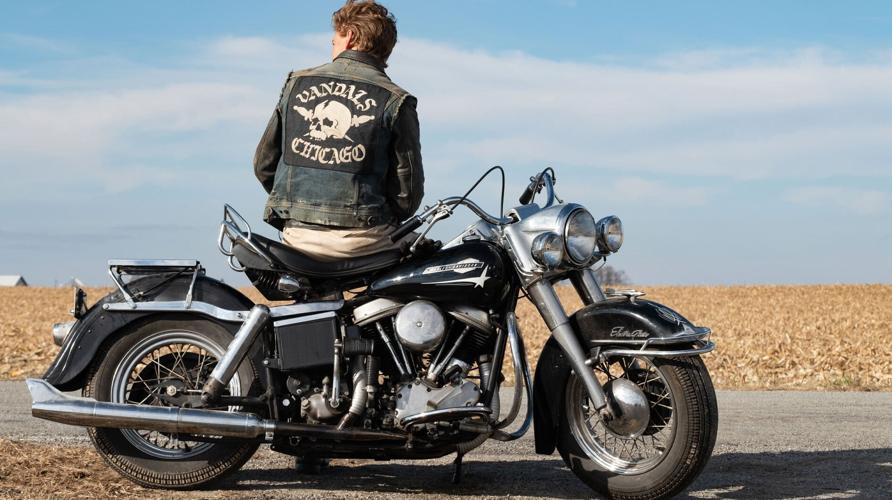
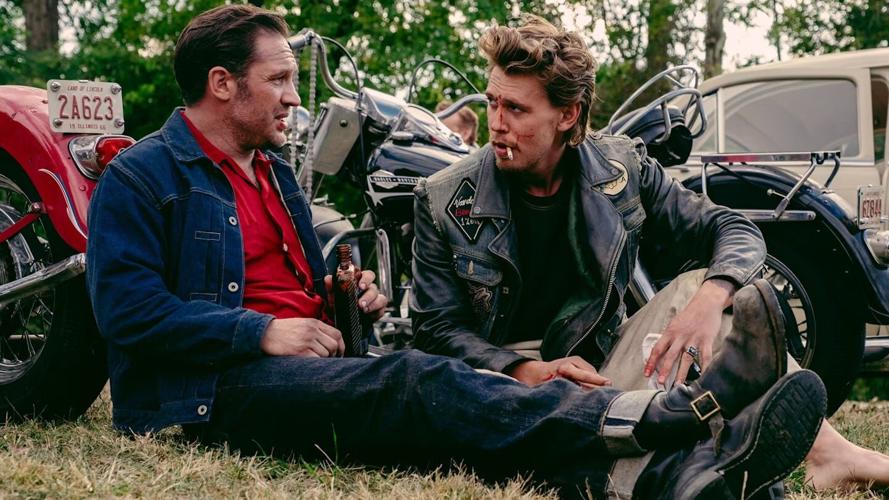
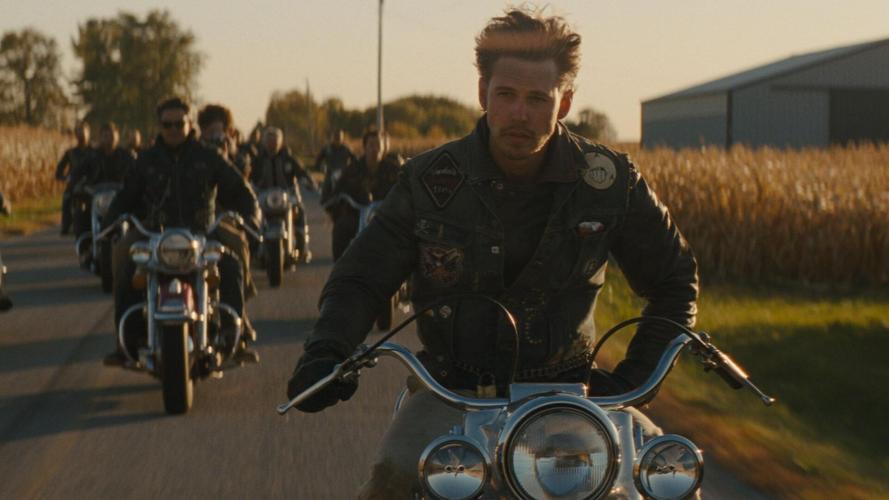
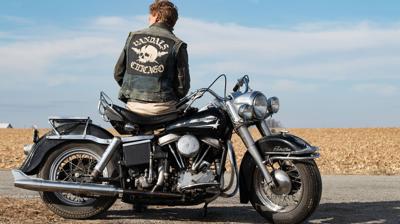
Austin Butler (Dune: Part Two and Elvis) co-stars as Benjamin Cross, aka "Benny." He's the aforementioned, strong, silent type. He's a member of a motorcycle gang known as the Vandals. Each member has a jacket with specific colors on it. They all hang out at this one biker bar just outside Chicago and they all ride together. Benny is meant to be the love interest for Kathy. Her experiences with the Vandals come through him almost exclusively, yet we really don't learn anything more beyond Benny's dad being dead and Kathy never seeing him cry or get emotional. Benny is basically a blank. He's loyal to the Vandals, willing to fight and possibly even die for them. Yet, it's never articulated why and any possible insight into him doesn't seem to be of any interest to Nichols.
Tom Hardy (Venom and The Revenant) also co-stars as Johnny, the founder of the Vandals. He was inspired when he was watching on television the film The Wild One (1953), starring Marlon Brando. Brando's character in that film was also named Johnny and was the leader of a motorcycle gang. Johnny basically wanted to emulate Brando's character. Except, Johnny has a wife and kids. Brando's character did not. Yet, that never really becomes a point of contention in this narrative.

Nichols' film never spends any substantial amount of time with Johnny's wife or his kids, as to give us any idea of what kind of husband or father he is. It's assumed that he values the Vandals more than his own family, which is contradictory given that he treats the Vandals as if it were a kind of family. This contradiction is never really examined. We never see him ever have a real conversation with his wife or kids. We get no insight into that aspect of his life at all.
Mike Faist (Challengers and West Side Story) plays Danny Lyon, the aforementioned photographer who is documenting this motorcycle club with pictures and audiotapes. He follows the club around and snaps photos and will occasionally interview some of them. It's odd because we don't really see him interviewing Johnny or Benny. This is odd because again Johnny is the founder and Benny is basically his right-hand. If you're trying to document a club, it's odd not to interview the two main people of that club, which Johnny and Benny basically are. Danny mainly interviews Kathy who is Benny's wife, but she doesn't provide any more insight into her husband that would inform us of what Benny thinks or feels about the motorcycle club or why he's even a part of it.

Later in the film, Johnny asks Benny to take over as leader of the Vandals. Johnny doesn't take him up on that offer. Johnny never explains why he doesn't. It's basically never brought up again. Later, the Vandals start accepting new and younger members who start changing things to some degree, although that might be arguable. Johnny does something to try to protect another of the Vandals. Benny doesn't like it and it makes him want to leave the Vandals. This isn't ever examined either. I'm never sure what Benny finds objectionable, such that he would leave. He also leaves his wife, which makes me not understand why he was even married to her, if he can leave without even saying goodbye.
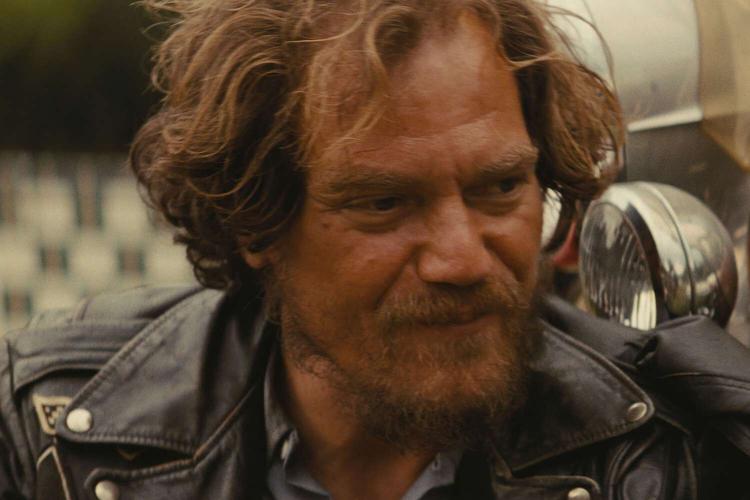
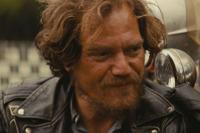
These characters are simply surface-level or else they're archetypes. At one point, a character named Zipco, played by Michael Shannon (Man of Steel and Take Shelter), talks about people whom he calls "pinko," which are anyone not like them or anyone who is more educated, academic, not as unkempt, more refined in dress or culture. He also talks about being "undesirable." There is something to the idea of people feeling rejected or not like they fit into mainstream culture whatever it might be. When it specifically involves Benny or Johnny, it's not clear where their rejection originates. Benny seems like a handsome, very capable person. How does he feel rejection or who rejected him? Or where does his rejection stem?

The same could be said of Johnny. Where does his rejection stem? For him, it could be something different. As said, he was inspired to start the Vandals from watching a Marlon Brando film. Maybe this doesn't stem from rejection, as it's simply emulation because he thinks doing so gives him power or status that he craves. This is all guesswork because the film definitely doesn't delve into his psyche or point-of-view with any kind of depth. As such, when he meets his ultimate fate at the end, it came with a shrug and not any kind of emotional impact.
Rated R for language, violence, some drug use and brief sexuality.
Running Time: 1 hr. and 56 mins.
In theaters.