




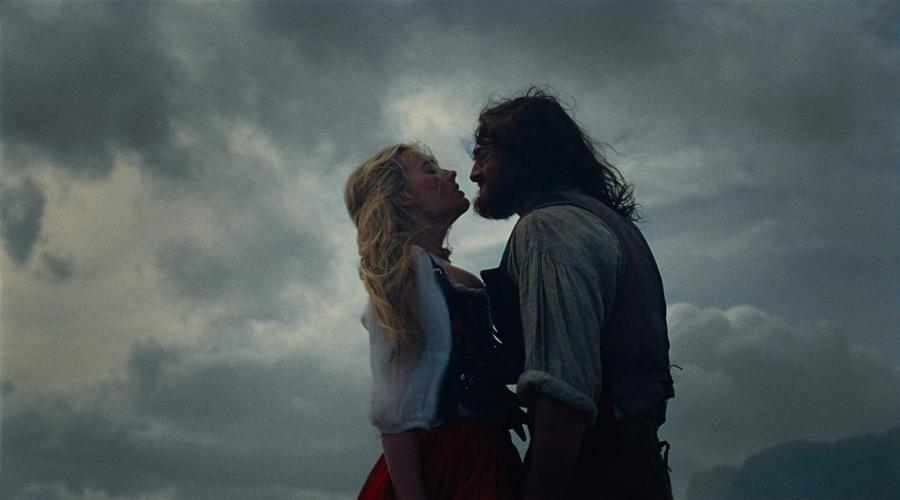


The 1847 novel by Emily Brontë is considered one of the greatest pieces of English literature. It's regarded as a classic in writing. It's been adapted into film and television, and other media, dozens and dozens of times. One of the earliest versions was William Wyler's adaptation in 1939, which was nominated for eight Academy Awards, including Best Actor for Laurence Olivier and Best Picture. Aside from some Bollywood adaptations, the male protagonist, known as Heathcliff, has been portrayed by White men. There's some indication in the novel that Heathcliff might have been dark-skinned. Some have interpreted that as him being dirty because he's a street urchin initially. Andrea Arnold's 2011 version cast a multiracial man or person of color in that role, that of Solomon Glave and James Howson. The character of Heathcliff is meant to be an antihero, one who is an object of romanticism in the first half of the book but later becomes an agent of revenge in the second half. His romantic interests are mainly directed at Catherine Earnshaw. His revenge though is mainly directed at those connected to Catherine but never Catherine herself, not really.
In the novel, the first half of the book is about Heathcliff and Catherine's star-crossed romance. The second half is about their respective children and the subsequent struggles over possession of the titular property. Most adaptations don't bother with that second half. Wyler's adaptation doesn't bother with that second half. It's not as if we don't get a bit of Heathcliff's revenge in the various adaptations. This version, written and directed by Emerald Fennell (Saltburn and Promising Young Woman), only focuses on adapting the first half of Brontë's book. Yet, we still get a bit of Heathcliff's revenge. There is an emphasis here on it that goes beyond what was in Wyler's version. On that scale, what Fennell does didn't personally work for me. Selling a romance between Heathcliff and Catherine didn't work for me when Heathcliff's revenge is dialed up, dialed up to the point that Fennell almost makes him a cartoon-like villain that I didn't even recognize as human.

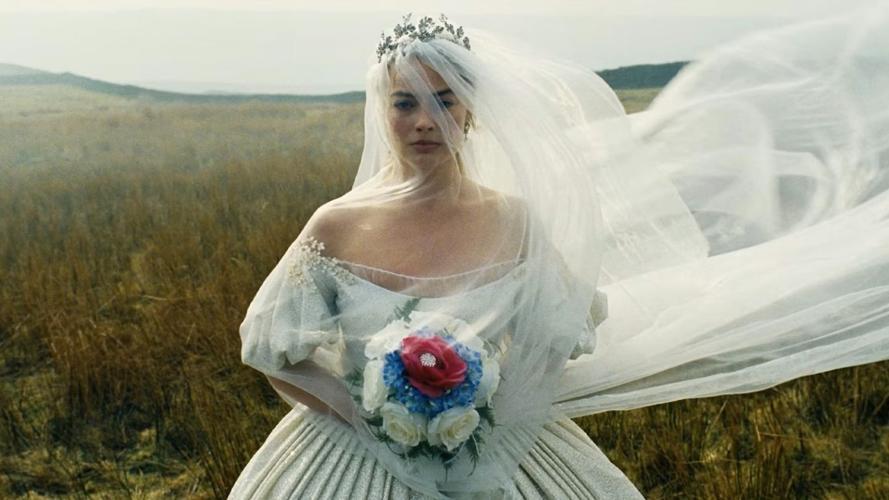
Margot Robbie (Barbie and Suicide Squad) stars as Catherine Earnshaw aka "Cathy," a young woman living in northern England, in an area known as Yorkshire. The area is moorland with fields of high-grass, various hills and even rocky cliffs. In the book, Cathy has an older brother, but in this version her brother is dead, so she simply lives on a farming estate with her widower father and a couple of his servants. Her father goes on a trip to Liverpool where he finds and brings back an orphaned boy who he basically adopts to live with him and his daughter. In the book, she takes a liking to the orphaned boy because of his wildness, which she also has. Cathy also seems reluctant to fit into polite society or the ways of the wealthy class. Yet, this film never really sold that aspect. To be fair, Arnold's version is probably my favorite version and that 2011 film didn't sell that aspect either. Yet, arguably, Cathy wasn't the main character or the perspective that Arnold's film took. It took the perspective of the orphaned boy instead.
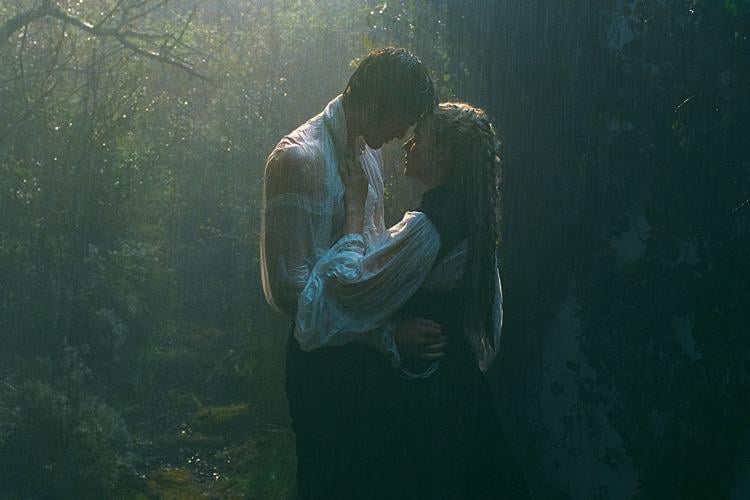
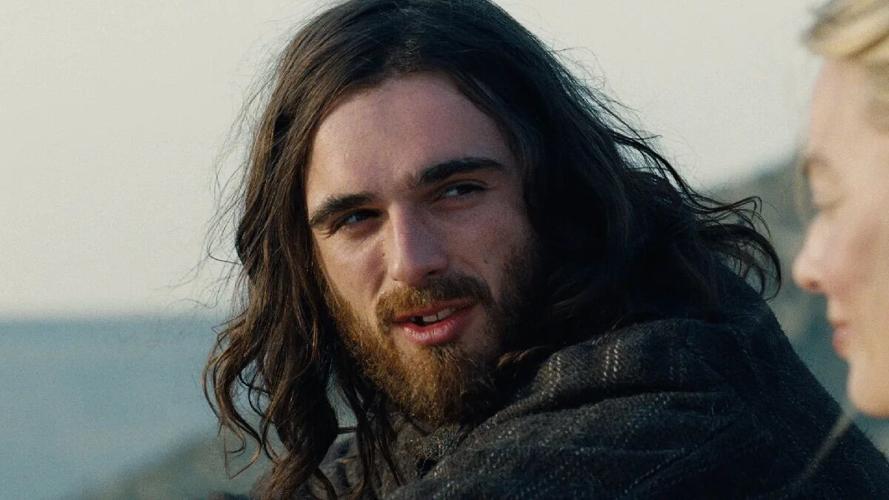
Jacob Elordi (Frankenstein and Saltburn) co-stars as Heathcliff, the aforementioned, orphan boy. He was living on the streets of Liverpool, doing who knows what, but Cathy's father picked him up and brought him back to Yorkshire and his farm. He was illiterate and a shy boy who often retreated during tense times. As he grew up, he takes a liking to Cathy and even suffers abuse at the hands of her father, just to protect and be near her. He basically becomes a farmhand and servant, working for Cathy's father. He feeds the horses and slaughters the pigs, as well as other farming duties. When a wealthy neighbor takes over the land next to the Earnshaw farm, Heathcliff becomes annoyed at Cathy's fascination with that wealthy neighbor. He's not good with words at first, but it becomes clear, even to Cathy, that Heathcliff has feelings for her. There are two, different, sexual moments between the two that makes his feelings quite clear.

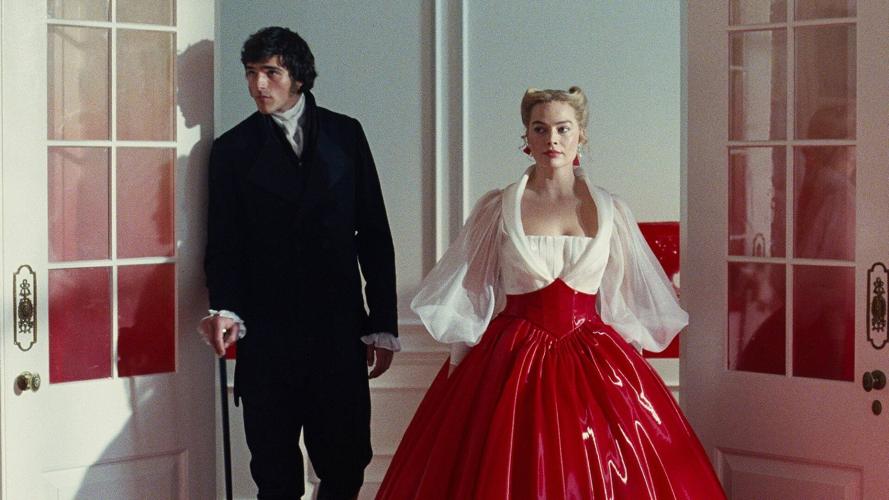
Yet, Cathy is the one who retreats in those moments. When she's finally ready to tell him how she feels, it's too late because he misconstrues a conversation that he overhears and runs off for five years with no word of where he's going. As a result, Cathy decides to marry the wealthy neighbor. With some slight deviations, all of this is not too far flung from the novel. As the novel does, Heathcliff does return a changed man. Instead of a poor servant and farmhand, he's come into some wealth and education. He could be Mr. Darcy from Jane Austen's Pride and Prejudice (1813). There's no explanation as to how he got this makeover and wealth or even any significance as to why it would matter or not. Heathcliff coming back as wealthy doesn't really make that bit of difference in Fennell's narrative, but it probably should.
It likely only matters in that it serves in the dialing up of Heathcliff's revenge kick. Him being wealthy now appears to be something only to be flaunted in Cathy's face. He still seems attracted to her, but there's a side to him that wants her to suffer or pay for what he claims as her breaking his heart. His revenge though builds to what becomes a toxic, BDSM relationship with Cathy's sister-in-law, which would have been fine, if that was something already in his nature, but it comes out of nowhere and he's actively abusing this woman and defiling her. Arguably, he gets the sister-in-law's consent, but it's so twisted a turn that it turned me off to his character. It makes him seem more monstrous than Elordi's character in Frankenstein (2025).

Fennell's monstrosity in Heathcliff undercut the epic romance that we're meant to buy. Yes, men in love can do things that are monstrous to those they claim to love, or even toxic things, as is the case here. Yet, in one moment when Heathcliff's monstrosity is put on display, specifically when he claims willing to kill someone, literally murder a man, Cathy herself retreats from him. His monstrosity only is exacerbated from there. As he got more monstrous, whatever romantic appeal in his and Cathy's story dwindled. He literally treats a woman like a dog and yet we're supposed to believe in his love for women. It's why I prefer Arnold's 2011 version. Arnold made Heathcliff's struggle less about revenge and more about racial animus that Heathcliff faced since he was a child. A letter writing campaign from him felt off as well because if he wanted to communicate with Cathy, writing letters felt pointless, given his illiteracy and given that he's not above just breaking into Cathy's house, which we see him do several times, except at the end when it's supposed to matter the most.
Arnold's film also didn't have all the melodramatic machinations that Fennell's film has. I do enjoy soap opera, and the comedic, satirical and even over-the-top things here make it a more entertaining ride than Arnold's film or even Wyler's. The sensuality that is marked with Fennell's sound design, even from the very first frame, is very evocative and at times palpable, along with the production design and cinematography in certain scenes. Yet, the sexuality isn't as explicit, as some of the suggestions might lead you to believe. They are strong sexual suggestions for sure and some depiction of it, but it's nowhere near the level of eroticism that cinema had in the 90's for example with films like Basic Instinct (1992) and Jason's Lyric (1994). Aside from Elordi being shirtless for a brief moment, there really isn't any nudity here. It's not as intense as it could have been or should have been, given Fennell's teasing.

Rated R for sexual content, some violent content and language.
Running Time: 2 hrs. and 16 mins.
In theaters.