








Elizabeth Holmes is a businesswoman who founded Theranos, a health technology company she founded in 2003. Theranos allegedly invented a blood testing device that could perform fast and accurate tests with small amounts of blood. It was a revolutionary idea and its valuations made Holmes the youngest and wealthiest, self-made, female billionaire in U.S. history. However, in 2018, the U.S. Securities and Exchange Commission (SEC) charged Theranos, and thus Holmes, with fraud. In 2022, she was convicted of defrauding investors, and was sentenced to 11 years at a federal prison in Bryan, Texas, which is in the central part of that state. In those four years, she garnered a lot of media attention. It culminated in a Hulu series called The Dropout (2022), starring Amanda Seyfried who won an Emmy Award for her performance.
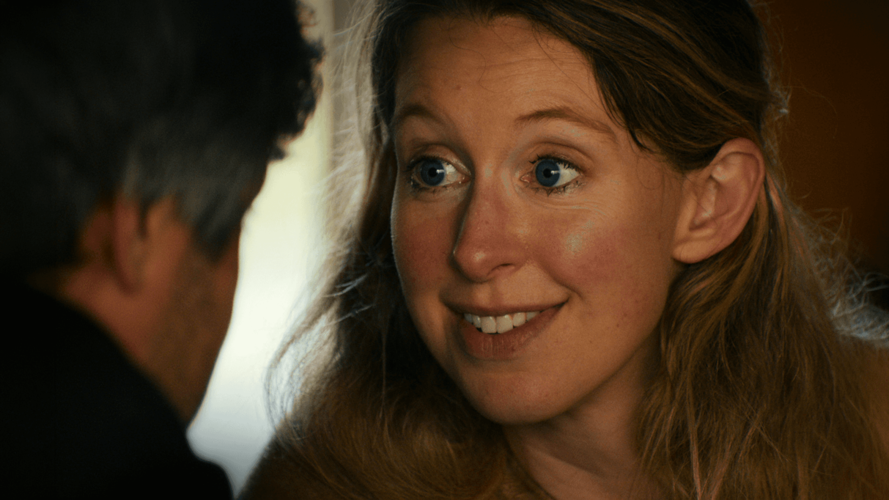
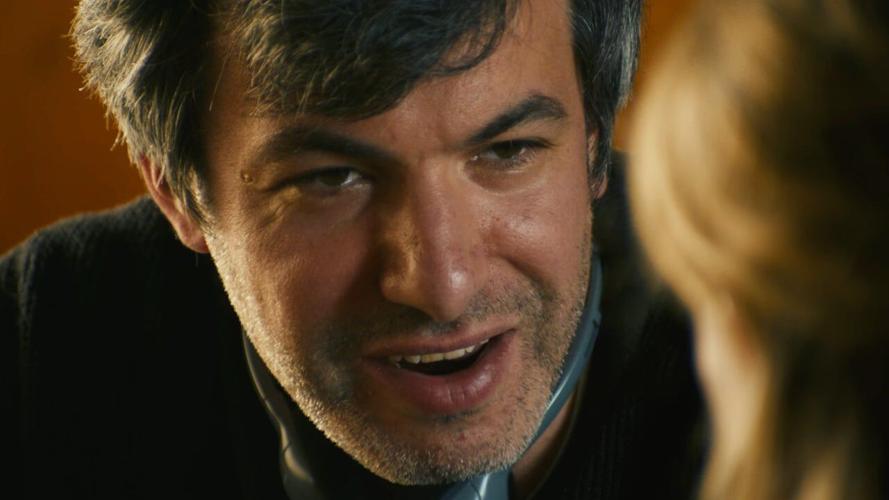
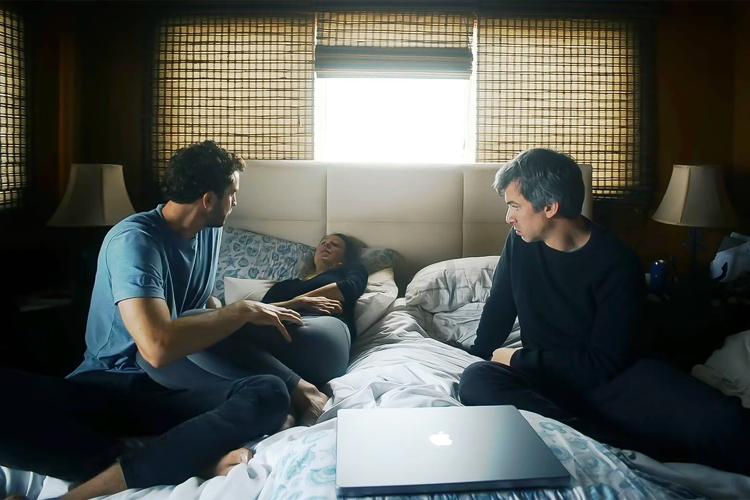
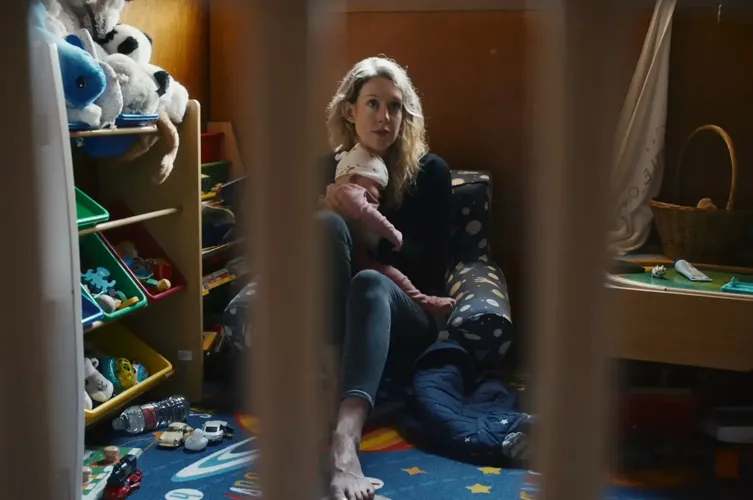
Oscar-nominated filmmaker, Alex Gibney did a HBO documentary about Holmes in 2019. That film ended with Holmes being indicted. However, this film, directed by Nathan Fielder and Lance Oppenheim, picks up after Holmes' conviction. Specifically, it starts a little over a month before Holmes has to report to prison in May, 2023. Fielder is even invited to stay with Holmes, her current romantic partner, Billy Evans, as well as their newborn child in their home in southern California, just north of San Diego where Evans grew up.

Fielder was like an embedded journalist, documenting but also questioning Holmes and Evans about what led to their situation, as well as what their future plans were. Yet, Fielder isn't a journalist. One could argue that neither is Gibney, but Gibney leans more toward traditional journalism, certainly more so than Fielder does or has ever done. Fielder grew up doing improv comedy. At the 77th Primetime Emmy Awards, Fielder was nominated for Outstanding Writing for a Comedy Series and Outstanding Directing for a Comedy Series. Emphasis is on "Comedy Series." Those nominations were for his HBO program The Rehearsal (2022). That show incorporated real-life people or subjects in what were elaborate comedy bits. There's nothing inherently wrong with this, but it's also nothing new. From Candid Camera (1953), to Da Ali G Show (2000), to the recent Jury Duty (2023), using real-life subjects in order to engage in comedy bits or pranks has always been a thing in media. However, on the surface, Fielder isn't really presenting this as a comedy but as some kind of journalistic exposé. It's similar to the vibe of The Rehearsal. The vibe of Fielder's Comedy Central series Nathan for You (2013) was an obvious comedy and well placed on the cable channel where it aired. You couldn't really confuse it for anything else really, but for this film, its designation or label seems to be a bit blurred.
All of this isn't to impugn Lance Oppenheim who makes great documentaries and has done work for The New York Times, but Nathan Fielder is in every scene of this film, often appearing on camera and is a guiding force here, and it's clear that he isn't a journalist. For example, there are a myriad of things that Fielder could have asked Holmes or Evans. Yet, the question he seems to ask over and over is a variation of whether Holmes is telling the truth or lying. It makes the first half of this film feel rather repetitive. Holmes insists she's not lying, and so does her partner. Yet, Fielder keeps asking in one way or another if she's lying or being manipulative, and if so, does she realize she's doing so? The reasons this feels repetitive is because the question is moot or rather pointless because it's already been answered definitively. Whether she admits it or not, it's immaterial because Holmes was convicted of fraud, which is basically lying. She was convicted of lying. It was essentially proven in court, so unless Fielder's goal is to vindicate her, then I don't see the point of his line of questioning.

If the goal is to attempt to understand Holmes in a more psychological way, there's one scene that seemingly pierces into her psychology. It's a scene involving Abbott and Costello that suggests that despite being very intelligent, Holmes might have some kind of comprehension or communication problem. Fielder scratches the surface here, but he doesn't develop or investigate it further. There's even an incredible moment where Holmes' father reveals that Holmes was sexually assaulted, or raped. It's a shocking moment, which seems to take Fielder by surprise. Unfortunately, Fielder lets that factoid sail by. He doesn't interrogate or examine it further. It perhaps might have been inappropriate or uncomfortable for him to do so, but Fielder is living with Holmes and her family. He's shooting interviews that seemingly have them nose-to-nose, almost intimately so. He even captures Evans in the shower in a full-frontal nudity moment, so inappropriate and uncomfortable almost feel like the point here. Even if broaching the topic of rape with Holmes herself wasn't likely, Fielder could've further interrogated her father who was the one who revealed the rape in the first place.
Again, it makes me feel as though what we're witnessing isn't journalism. It's Fielder trying to set up comedic bits. Interrogating a rape charge isn't exactly a good foundation for humor. Having him be shocked by the revelation and showing his facial reaction when it happens is humorous enough, but he doesn't seem interested in going further than that.
Spoiler alert! Spoiler alert! Spoiler alert!

It's not much of a spoiler, but Amanda Seyfried appears in the second half of this film. Given that Fielder references The Dropout a million times in that first half, it would've been more shocking if Seyfried didn't show up in person. There's an interaction that Fielder orchestrates with Seyfried and Evans that's more insightful than any interaction that Fielder has with Evans. Seyfried also makes an insightful comment about Fielder that shows his bias more so in a way that Fielder himself doesn't recognize. He demonizes Evans but acts almost protectively of Holmes, and there's no interrogation as to why. Would he be so protective if she weren't a beautiful woman? That's a question for the audience that Fielder should have asked himself in the film.
Otherwise, I'm not sure why I should care about any of this. When it comes to Holmes, nothing new or interesting is learned about her. Therefore, I'm not sure why anyone would be compelled by watching her. The true revelation is her partner, Billy Evans. Yet, what's learned about Evans doesn't make him all that worthy of seeing everything about him either.
Rated R for language and some graphic nudity.
Running Time: 2 hrs. and 54 mins.
In theaters.