


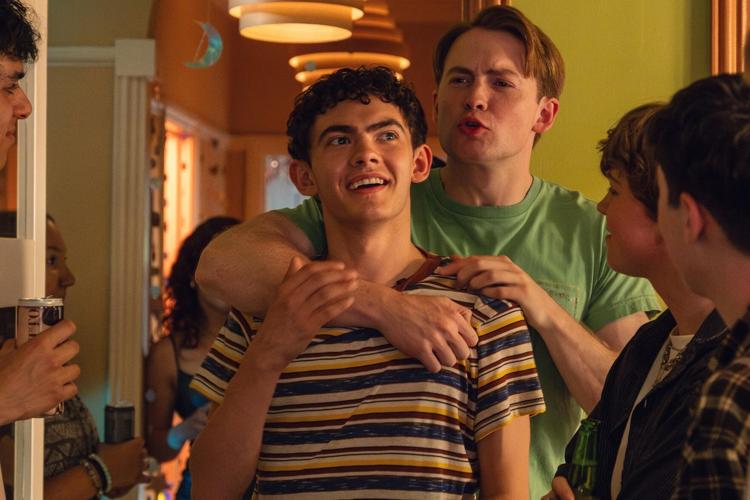

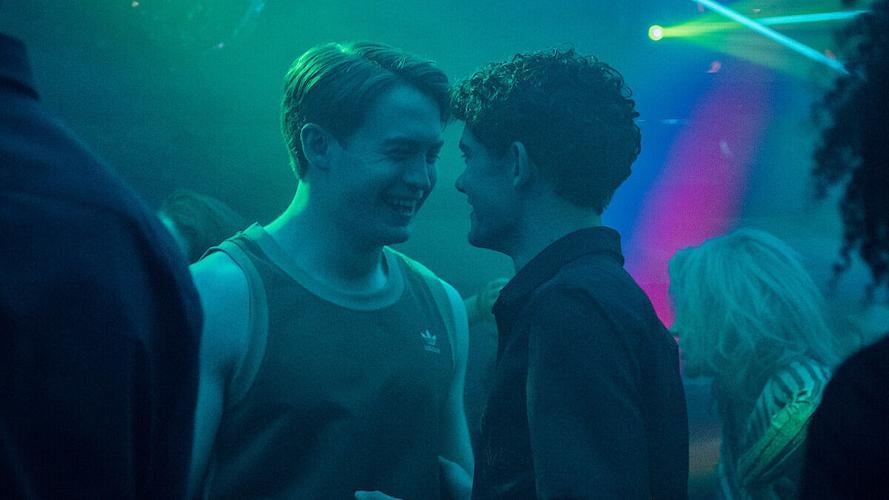

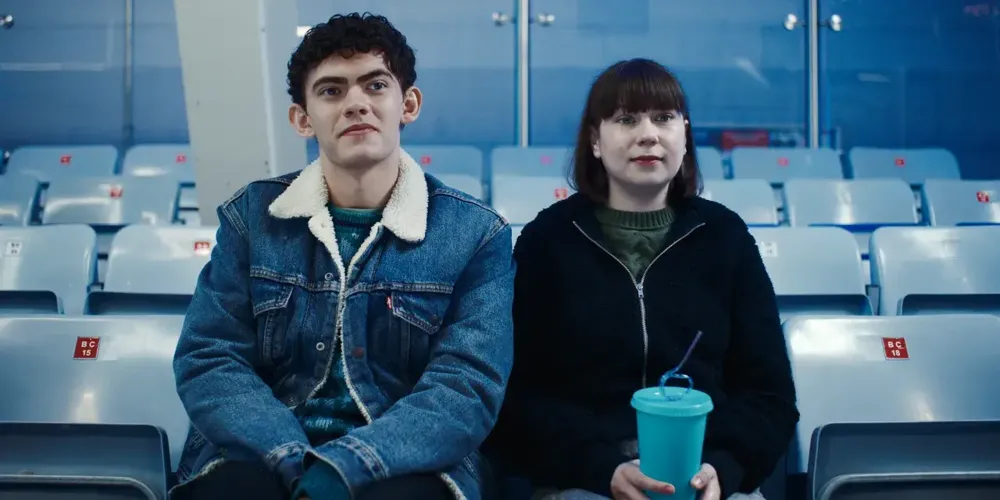



The series, adapted from Alice Oseman's graphic novel, was a hit on Netflix, which ran for three seasons. It was critically acclaimed. It was nominated for 17 Emmy Awards. It won 7, including Outstanding Young Teen Series and Outstanding Lead Performance in a Preschool, Children's or Young Teen Program for Kit Connor (Warfare and The Wild Robot). The show also won three GLAAD Media Awards for Outstanding Kids & Family Programming or Film - Live Action. It won that award for each of its seasons. The show was seen as queer representation that was joyful and affirmative for LGBTQ+ youth. Connor's character was spotlighted as one that was specifically affirmative for bisexual youngsters. This feature basically wraps up the story line, which started with these teenagers preparing to go to university and thus figuring out the path for their adult lives.
The show focused mainly on the sexual and gender identities of its cast of characters. This feature arguably focuses on their identities otherwise. Yet, even that is arguable. Connor co-stars as Nick Nelson, a British, rugby player who is applying to go to university in Leeds. In the beginning, he was to write a statement in his university application. Unfortunately, he doesn't know what to write because the only thing that he has, other than being bisexual and having a boyfriend, is his rugby playing. There's literally nothing else about him. This feature in many ways is about Nick discovering who he is beyond rugby and bisexuality. Unfortunately, I'm not sure this feature arrives at any kind of answer. One scene at the end has the graduates saying what they want to do in the future. One teen wants to be a lawyer. Another wants to be an artist. Nick is asked but he doesn't answer. It's not to say a teenager has to have his life completely figured out or know what he wants to be at age 18. Yet, this feature doesn't give him much of any direction. We see him working at an animal shelter, but that doesn't seem like that's his ultimate passion. He does get into university, but we have no clue what he'll even study.

Joe Locke (Agatha All Along and Heartstopper) stars as Charlie Spring, a fellow classmate. Unlike Nick, this character has more of an established identity. Charlie starts out in this feature campaigning for a school election. He's running to become "head boy" of his school. I'm not too familiar with how British schools operate. The term "head boy" appears in the Harry Potter franchise, but I'm not familiar with what it truly means and this feature doesn't do much to clarify what a head boy actually does or what it necessarily means for Charlie in terms of his responsibilities. In fact, this feature drops the head boy aspect pretty much after the opening scene and it becomes meaningless. Yet, it does indicate how Charlie seems to lean more toward politics or activism, as his career or vocation beyond school graduation.
In my review of the first season back in 2022, I compared it to Geography Club (2013). This feature further solidifies that comparison with a scene ripped from that 2013 film. Charlie puts together a group at school or he uses a classroom as a place where LGBTQ+ youth can meet and get support from him and others. He does so with the goal of combating bullying and providing a safe space for all of them. It also demonstrates his community organizing skills, which further indicate his potential move into politics or activism. He also has an eye on mental health and therapy. But, all of this gives Charlie more depth or insight into him as a character that we don't get with Nick.

However, this is likely the point of this feature. The point is to depict the disparity between Nick and Charlie. Charlie has his issues, but Charlie's identity is more fleshed out and he's perhaps more sure of himself, whereas Nick's identity isn't fleshed out, mainly due to him having taken longer to come out as bisexual and thus start being his true self. Thanks to issues with his father, Nick has been more repressed emotionally and incapable of expressing himself. Since coming out, he's latched onto Charlie and has become so wrapped up in Charlie's well being that he's rather co-dependent. This feature seems to be about Nick coming to this realization and addressing it, but it doesn't really do so in a totally satisfying way. Yes, Nick is co-dependent and he becomes unnerved at the prospect of him and Charlie splitting up because they'll be attending different universities. One would think the film would end with him finding his independence somehow by perhaps discovering something new about himself, possibly at his university, but that doesn't really happen.
Last year, Netflix also dropped the series Forever (2025) by Mara Brock Akil, which is a Judy Blume adaptation. It's also about a teen romance that hits a lot of the same themes, including one of the teens realizing a co-dependence. That series was extremely well done and eclipses what was done here. There's a recurring idea of teenage romances not lasting. Akil's series does a better job of reckoning with that idea in a realistic way than this one. This feature is more dramatic, but its energy leans more toward romantic comedy but with not that many jokes. Finally, this feature introduces an asexual relationship that I wish it took more time to explore because that relationship seemed more intriguing than its wrap-up of the Nick and Charlie story line.

Rated TV-MA.
Running Time: 1 hr. and 54 mins.
Available on Netflix.