
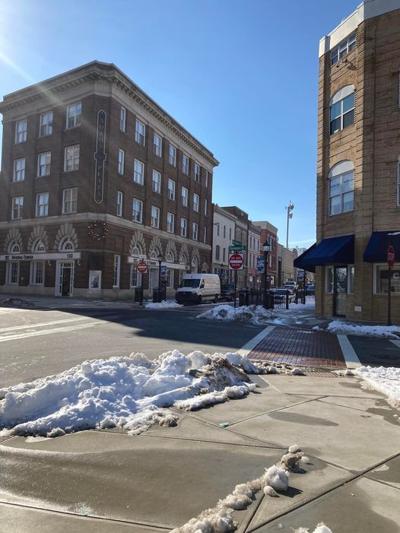
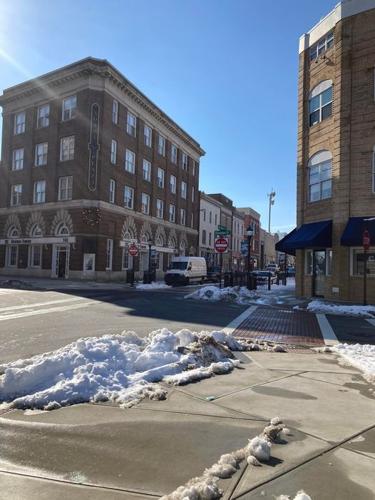
SALISBURY, Md.- A new Black History walking tour has arrived in Salisbury. Created by a Salisbury University student at the Nabb Research Center, the self-guided walking tour takes participants to seven locations in Salisbury. In order, the stops are the Georgetown Residential Area, the John Wesley Methodist Episcopal Church, the Church Street Mural, the Houston Cemetery, Downtown Salisbury, the Wicomico County Courthouse and the Entertainment District. WBOC met with Shanie Shields, President of the Chipman Foundation in Salisbury.
"This building, the downstairs part of it was built in 1837, so it had a historical significance it was positive it was a school, a meeting place, a church," said Shields.
The next stop is Church Street Mural, which represents hope for future generations, according to the Nabb Research Center. Next is the Houston Cemetery, founded by the Houston family, who rose to prominence in the Black community during the late 1800's and early 1900's. Next, WBOC met with Monica Brooks from the Wicomico NAACP in downtown Salisbury. Brooks says it's important to have conversations about race, even if they are uncomfortable.
"Black people have been uncomfortable all of the time. We have to consider our environments everywhere we go. We have to teach these things to our children from a very young age," said Brooks.
Next on the tour is the Wicomico County Courthouse, the site of two lynching's. The tour ends on Lake Street, to feature what was known as the 'Entertainment District'. Salisbury Councilwoman April Jackson says it was once a booming cornerstone to the city.
"Lake street used to be entrepreneurship of all African Americans, it was a thriving community," said Jackson.
Brooks says tours like these are an important opportunity for Salisbury to understand and know it's past.
"If we're ever gonna get to a real inclusive society, we have to acknowledge the contributions of everybody who have helped to build our foundation of our local communities as well as our nation," said Brooks. "Everyone should be equally remembered, and all of history should be inclusive and truthfully acknowledge the past."
To learn more about the tour, each location, and the app for the tour, click here.