

STOCKTON, Md. -- Anxiety is building on Maryland’s Eastern Shore as the state moves closer to finalizing major budget cuts that could affect vulnerable residents. Maryland lawmakers are considering a $126 million reduction to the Developmental Disabilities Administration.
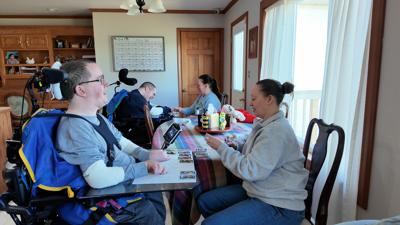
Andrew and Nathan Holland, brothers who live in Worcester County, were both born with leukodystrophy, a brain disorder that has left them wheelchair-bound and dependent on around-the-clock care from in-home nurses.
Their sister, Shana Farlow, said DDA funding helps pay for that care, allowing her brothers to remain in their home, surrounded by family and familiar comforts.
"Families like mine have worked so hard to find great staff and to have great people work with my brothers, and all of this is in jeopardy," Farlow said.
Farlow said the proposed cuts would reduce hourly wages for nurses by about $10, which she fears could drive caregivers to seek other employment. Replacing them, she said, would be difficult.
"What's the end goal here? Do they want us to put them in to what's called traditional facilities, group homes? Why? Why do they want us to do that?" said Farlow.
Officials in Gov. Wes Moore’s administration tell WBOC the proposed cuts are part of a broader effort to control rising costs. Over the past five years, DDA enrollment has increased by 11%, while spending has surged by 144%.
The governor’s office warns that without changes, the program could face long-term sustainability issues. According to the governor's office, if cost containment measures aren't implemented, the entire DDA program could lose its compliance with the federal CMS waiver program.
Over the last five years, the DDA's budget has been one of Maryland's fastest-growing budget items, with spending exceeding $920 million during Gov. Moore's administration.
According to the governor's office, for DDA to continue operating under the CMS waiver, home and community-based services cannot exceed what Medicaid would pay for care at intermediate care facilities.
Farlow, however, said the cuts could have devastating consequences for families like hers.
"I would like to ask Governor Moore, like, isn't his slogan ‘Leave no one behind?’ And he's really leaving the disabled community behind," she said.
The proposed budget now heads to the Maryland House of Delegates, where lawmakers will consider possible amendments. Farlow said she hopes legislators will restore at least some of the funding and preserve the care her brothers rely on.