
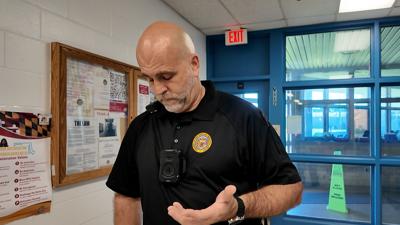


WESTOVER, Md. — Correctional officers at Maryland state prisons are now equipped with body-worn cameras as the state works to improve safety and accountability inside its facilities.
According to the Maryland Department of Public Safety and Correctional Services, officers at every Maryland state prison had been provided with body-worn cameras as of July.
At the Eastern Correctional Institution in Somerset County, officers demonstrated Tuesday how the cameras are activated, used during interactions and docked to store footage.
According to DPSCS, the cameras are designed to record interactions between officers and incarcerated individuals, document incidents and provide video evidence during investigations.
David Greene, deputy secretary of operations for DPSCS, said the department partnered with Axon to implement the body-worn camera system.
Greene said the system includes a performance and audit tool that allows DPSCS to track camera usage and gives supervisors and administrators the ability to review footage.
Robert Williams, a correctional officer at ECI, said he has noticed a change in behavior when incarcerated individuals know an officer is wearing a camera.
"In my experience, that tends to calm them down a little bit when they know that I have a camera," Williams said. "If I respond to an incident or something like that, it shows a different viewpoint."
According to DPSCS, ECI recorded half as many physical assaults in August 2026 compared with August 2025.
The department said that was the facility's lowest level of assaults since 2023.
According to DPSCS, correctional agencies in other states have also reported reductions in assaults, uses of force and complaints after implementing body-worn cameras and related safety technology.
In Virginia, a body-worn camera study found a 59% reduction in injuries to incarcerated individuals and a 45% reduction in reportable uses of force, according to DPSCS.
According to DPSCS, a Florida pilot program reported a 70% reduction in excessive-force complaints, a 51% reduction in uses of force in general-population settings and a 42% reduction in staff assaults.
In Ohio, agencies reported a 50% reduction in complaints from incarcerated individuals, a 50% reduction in time spent on investigations, and a 24% agency-wide reduction in uses of force, according to DPSCS.
DPSCS said the goal of Maryland's body-worn camera program is to make correctional officers and incarcerated individuals safer while improving accountability.
Authorized personnel can retrieve camera footage for investigations and supervisory reviews. The department said the recordings are managed through storage and security controls.