
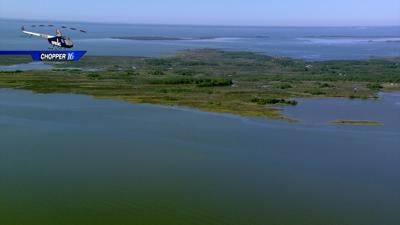

Annapolis, Md. – The Chesapeake Bay’s “dead zone” is expected to be relatively mild this summer, according to a forecast published this week by various Maryland and Virginia institutions.
The Below-average nutrient runoff is expected to mean better conditions for Bay marine life.
Scientists at William & Mary’s Batten School & VIMS, FlowWest and the University of Maryland Center for Environmental Science shared their findings this week.
What do the results of this study mean?
Dead zones are areas with little to no oxygen in the water. According to NOAA, these zones occur naturally, but scientists are “...concerned about the areas created or enhanced by human activity.”
Nutrient pollution drives the formation of dead zones. When excess nutrients from runoff or wastewater reach rivers and coasts, they fuel algae overgrowth. That algae eventually sinks and decomposes, a process that strips oxygen from the water and suffocates marine life.
The forecasted dead zone is expected to be one of the smallest on record — ranking in the bottom 10% since monitoring began in 1985 and roughly a third smaller than average.
“This year’s forecast suggests that the Chesapeake Bay may experience one of its milder dead zones in recent decades,” said Aaron Bever, senior managing scientist with FlowWest. “Lower nitrogen loads entering the Bay this spring are expected to translate into better oxygen conditions for fish, crabs, oysters and other Bay life this summer.”
What explains this year’s mild outlook?
According to this forecast, this year’s mild outlook is largely due to low river flows and reduced nitrogen pollution entering the Bay from earlier in the year. According to the Chesapeake Bay Program, when heavy rainfall does occur, rainwater travels to rivers and streams and picks up nutrients, which can fuel algal blooms.
How will the summer season impact dead zones?
Summer weather could still affect the dead zone's size and duration. Scientists note that heavy rain, heat waves or prolonged calm periods are hard to predict and could shift the size and duration of the dead zone.
The Chesapeake Bay program says, “Researchers will conduct a full assessment of the dead zone’s extent and duration in fall 2026. Throughout the summer, conditions can be tracked through the Chesapeake Bay Environmental Forecast System and Maryland Department of Natural Resources Hypoxia Reports.”