
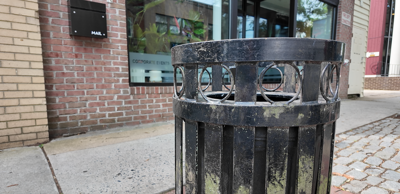

DOVER, Del. – Concerns over trash and sanitation in downtown Dover are sparking conversations among residents, business owners and city leaders about how to keep the state's capital clean.
Some community members say litter, illegal dumping and human waste in certain areas of the city have become ongoing issues that need more attention.
For Dover community activist Chelle Paul, the concerns are personal.
Paul says she and volunteers from her church spend time each week cleaning up trash in downtown neighborhoods because the problem persists.
"We know that it's such a problem. We actually pick up the garbage behind people and it's a weekly thing. It continues to come," Paul said.
While she believes the city has a role to play, Paul says the community also has a responsibility to help.
"You can continue to complain, but at some point, community has to get involved," she said. "So as a community, we decided to put forth the effort to just start keeping our own streets clean."
Paul also believes additional public restrooms or portable toilets could help address sanitation concerns, particularly for people experiencing homelessness.
"We know it's there. So do something to cure the problem, set up the porta potty so that these individuals have somewhere to use the bathroom because you know that they're living on the street," she said.
Dover City Councilman Brian Lewis says he's heard similar concerns from residents and believes more resources may be needed to address the issue.
"I've gotten reports that homeless people defecating on people's private property, on sidewalks," Lewis said. "Maybe we need to look into putting Porta Johns around to maybe address that issue. Get nonprofits to help us."
Lewis added that addressing homelessness and its related challenges requires more than just city resources.
"I've said in the past that we need the state to help us out. The city alone cannot do this," he said.
Lewis also says illegal dumping and trash are legitimate concerns because they can create health and safety hazards.
"People are out there dumping trash in our neighborhoods. And it's, again, a major health and safety issue," Lewis said. "If it's not addressed, somebody's going to get hurt. I think the city does the best they could as far as sanitation."
However, not everyone agrees the problem is as widespread as some have suggested.
Downtown business owner Donnell Fears, who has operated a business downtown for seven years, says the area's reputation does not always reflect reality.
"The stereotype and stigma is a big problem for those who don't know or who's not down here every day," Fears said. "Some of the concerns that I hear about or some of the complaints that I hear about doesn't happen during a typical workday."
Fears says business owners often work together to address issues when they arise and believes many sanitation concerns are resolved quickly.
Another longtime downtown business owner, Gary Knox, says Dover compares favorably to other cities.
"It might be a few pieces of trash every once in a while," Knox said. "I've been to other cities. Philadelphia, for example. It's much worse. It's not bad at all. I think the city does a pretty good job, actually."
Despite differing opinions on the severity of the issue, many people agree on one thing: keeping downtown Dover clean will require continued cooperation between city leaders, businesses, nonprofits and the community.
As discussions continue, residents on all sides say they want the same outcome — a cleaner, safer and more welcoming downtown.