

DOVER, Del. — Delaware hospitals are adopting a new statewide approach to treating opioid use disorder in emergency departments, with health leaders hoping to turn more overdose visits into opportunities for recovery.
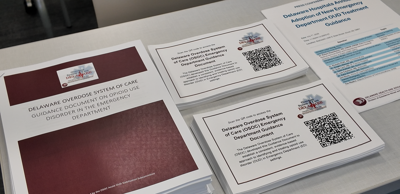
The new Emergency Department Opioid Use Disorder Treatment Guidance was unveiled Tuesday at Bayhealth Hospital's Kent Campus by the Delaware Department of Health and Social Services, the Division of Public Health, the Division of Substance Abuse and Mental Health, the Delaware Healthcare Association and hospital leaders from across the state.
Officials say the guidance creates a consistent standard of care at every Delaware hospital, ensuring patients experiencing an opioid overdose or withdrawal receive timely treatment, compassionate care and stronger connections to long-term recovery services.
"This is an opportunity to address a real public health crisis," said Dr. Robert Rosenbaum, state EMS and Preparedness Section medical director. "This is not a moral failing. This is a medical problem. This is something that can be treated with medication."
The guidance encourages emergency departments to begin medication for opioid use disorder earlier, connect patients with peer recovery specialists and coordinate follow-up care before they're discharged.
Health leaders said the goal is to make sure patients receive the same level of care no matter which emergency department they visit.
"We wanted patients, if they went to any hospital in the state, any time of day, any day of the week, to receive consistent treatment," Rosenbaum said. "The more patients we connect with, the earlier we connect with them, the more opportunities we give them to enter into treatment."
A critical opportunity for recovery
Joanna Champney, director of Delaware's Division of Substance Abuse and Mental Health, said the hours after a non-fatal overdose can be one of the best chances to help someone begin recovery.
"If a person seems ready, we want to make sure that we have everything lined up for them," Champney said. "That can include peer support, strong referral options and making sure transportation and insurance are not barriers."
She said the state has also worked to remove barriers by educating hospital staff about available treatment programs and ensuring uninsured or underinsured patients can still access substance use treatment through state-funded providers.
State seeing signs of progress
Officials said Delaware is already seeing improvements in connecting patients with medication for opioid use disorder after an emergency department visit.
According to the state, about 8% of Medicaid patients now begin medication within 48 hours of leaving the emergency department — the highest rate recorded since the state began tracking the data. About 15% begin treatment within the first week, while more than one in four eligible patients start medication within 30 days.
Still, officials said there is more work to do.
Nearly three out of four eligible Medicaid patients are still not connected to medication treatment within a month of leaving the hospital, and opioid-related emergency department visits have remained above expected levels statewide over the past five quarters.
"We know we still have quite a long way to go," Champney said. "Bringing hospitals together like we did today and really launching consensus that we're all on the same page... will really help us to escalate the progress toward the goal that we have, which is to make sure as many patients as possible who are eligible are getting access to that medication."
'We just need somebody to believe in us'
Among those speaking Tuesday was Jeni Dixon, who shared her own recovery journey and credited compassionate care with helping her overcome addiction.
"We just need somebody to believe in us," Dixon said. "Just like you would the other patient next door. That's what I'm hoping this does."
Health leaders say changing how patients are treated — both medically and emotionally — is key to reducing stigma and increasing the likelihood they'll continue treatment after leaving the hospital.
Officials also encouraged Delawareans to learn the signs of opioid use disorder and overdose, carry naloxone, commonly known as Narcan, and become familiar with treatment resources available throughout the state.
The state plans to continue monitoring how many patients begin medication for opioid use disorder within 48 hours, one week and 30 days after an emergency department visit to measure the impact of the new guidance.
Where to get help
Delaware officials encourage anyone struggling with opioid use disorder or other substance use or mental health challenges to seek help as early as possible.
The Delaware Department of Health and Social Services has additional information about the state's new Emergency Department Opioid Use Disorder Guidance, treatment resources and recovery services available online.
More information is available here: Delaware Overdose System of Care Guidance Document and Resources
Additional information about substance use disorder treatment, mental health services and recovery resources is also available through HelpIsHereDE.com.