
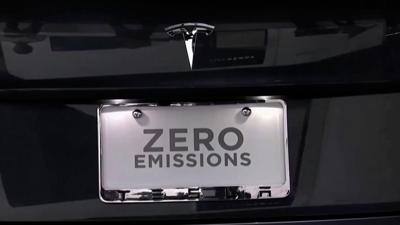

Delaware's Department of Natural Resources and Environmental Control (DNREC) has clarified their electric vehicle policies, but the final draft of regulations continues to provoke controversy.
Earlier this year, DNREC announced plans to adopt California's Advanced Clean Car II (ACC II) program, encountering opposition from Republican lawmakers and community members.
This week, DNREC finalized the regulations, capping the required percentage of clean cars from an initial 100% by 2035, to 82% by 2032.
Dustyn Thompson, Chapter Director for the Sierra Club Delaware Chapter, said these adjustments make it harder to argue against the initiative. He stated, "You can no longer stand and say that this is a ban. There is no threat with the way that Governor Carney has moved forward with this process. All of those talking points are gone."
State Rep. Rich Collins (R-Millsboro), however, remains unconvinced and advocates for increased public comment opportunities due to DNREC's modifications to the initial plan.
Collins expressed his concerns, stating, "DNREC is ignoring the citizens of Delaware. I think they are ignoring science; I think they are ignoring absolute practicality. I think it is going to create tremendous economic hardship for the people of Delaware because the electric cars are not only more expensive but people don't want them."
Thompson highlighted that the global shift toward electric vehicles is inevitable, noting, "This is a worldwide change, not limited to the United States. Other nations are significantly ahead compared to the U.S." He emphasized that without the regulations, money would flow out of the state due to limited options for clean transportation.
Rep. Collins maintains his stance that the regulations are not aligned with the desires of Delawareans and could potentially inflict financial harm on dealerships within the state.
"The administration and the Department of Natural Resources have their political agenda and they are going to push it through no matter what unless somebody takes them to court and wins on that level," he said. "Which I absolutely think is a possibility."
The department plans to publish the regulations and any received public comments on Dec. 1.
During the last legislative session, two bills introduced by Republican lawmakers sought to limit DNREC's authority but didn't garner enough votes to pass in both chambers. There's no word on any plans to reintroduce them.
The growing impact of electric vehicle regulations has also drawn national attention. Nearly four thousand car dealerships across the United States penned a letter to President Biden, expressing financial concerns regarding the impact of EV regulations, which have emerged in multiple states.
The letter outlined the predicament faced by dealerships, being obliged to offer electric vehicles for sale despite minimal consumer demand. Four dealerships in Delaware signed the letter, along with 98 in Maryland and 92 in Virginia.
This development marks a significant step in Delaware's approach to cleaner transportation, prompting discussions and concerns among stakeholders about its impact on the state's automotive industry.