
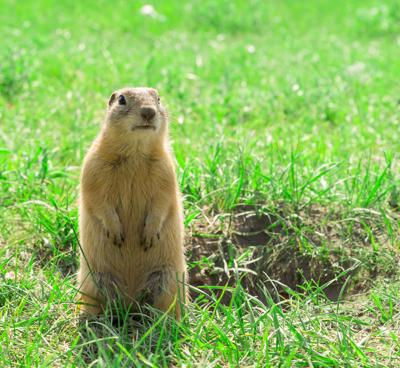

DOVER, Del. – The Delaware Division of Public Health (DPH) is announcing its first reported rabies case of 2023. DPH received a report last week of a human and their pet dog who had been exposed to a potentially rabid groundhog in a residential neighborhood located near Bringhurst Woods Park on Washington St., in Wilmington. The groundhog was tested for rabies and the results came back positive on Friday, June 16. Both the individual and their pet dog have been advised to receive prophylaxis for rabies following the exposure.
Since Jan. 1, 2023, DPH says it has performed rabies tests on 75 animals. In 2022, it says it performed rabies tests on 198 animals, 11 of which were confirmed to be rabid, including two raccoons, three foxes, four cats, one bat and one skunk. That number represents only a fraction of rabies in Delaware because in most cases, DPH only tests animals that have potentially exposed humans to rabies.
Anyone who thinks they might have been bitten, scratched by, or encountered a groundhog or feral cat in this area should immediately contact their health care provider or call the DPH Rabies Program at 302-744-4995. Anyone in the area who thinks a groundhog may have bitten their pet should call their private veterinarian to have their pet examined and treated, and the exposure reported to the Delaware Department of Agriculture.
Rabies is a preventable disease. DPH recommends that individuals take the following steps to prevent rabies exposure:
Because animals can carry rabies without appearing sick, it is important to watch and enjoy wild and unknown animals from a distance.
Wear thick gloves if you are handling a community cat whose vaccination history is unknown.
Avoid hand-feeding wildlife.
Teach children not to touch any unfamiliar animal and seek adult assistance immediately if a child is bitten or scratched by any animal.
If a wild animal is on your property, keep your distance and let it wander away. Bring children and pets indoors and alert neighbors who might be outside. You may contact a nuisance wildlife control expert who will remove the animal for a fee. These professionals can be reached at wildlifehelp.org.
Feed pets indoors.
Tightly cap or put away garbage cans where animals cannot gain access to them.
Leave orphaned animals alone. Often, the parents are close by and will return for their young.
Because pets can get rabies from wildlife and could then spread it to humans, preventing rabies in pets is also an important step in protecting yourself and others.
For more information on the DPH rabies program, visit www.dhss.delaware.gov/dhss/dph/dpc/rabies.html or call 1-888-285-5156 (24/7) or 302-744-4995 (business hours).
For more information on rabies, visit the Centers for Disease Control and Prevention (CDC) at www.cdc.gov/rabies/.