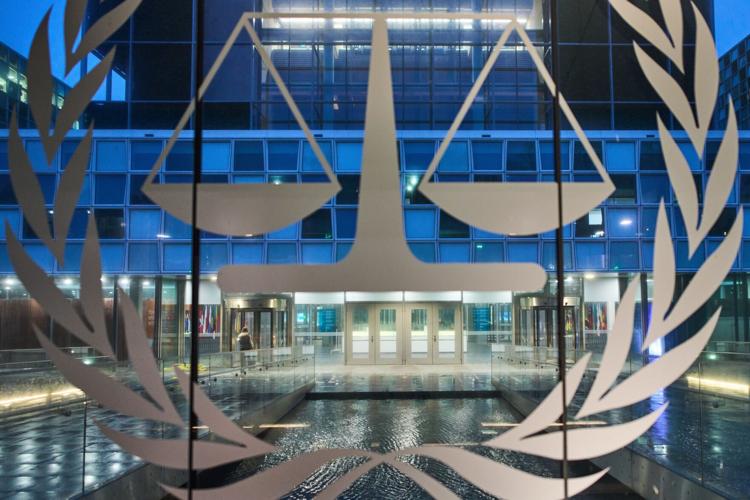

THE HAGUE, Netherlands (AP) — German Foreign Minister Johann Wadephul visited the International Criminal Court on Monday in a high-profile show of support for the embattled global tribunal that U.S. President Donald Trump calls a “rogue institution.”
The Trump administration already has slapped sanctions on 13 of the court’s staff members, among them key prosecutors and nine judges including the court’s Japanese President Tomoko Akane. U.S. Secretary of State Marco Rubio has launched what he called a “sweeping campaign to dismantle the threat posed by the International Criminal Court.”
“The German government completely supports the court,” Wadephul said in The Hague shortly before his visit, adding that Berlin is seeking to “enable the court to be workable.”
Officials in the court’s host country, the Netherlands, have been warned that sanctions on the entire court are imminent and are looking at ways to help the tribunal keep operating, including paying staff, protecting witnesses and maintaining the detention facility, diplomatic and government officials with knowledge of the briefings told The Associated Press last week. They spoke on condition of anonymity because they were not authorized to speak publicly.
Sanctions could prevent the court from accessing financial and IT services, and even paying its U.S. employees. When the court’s former chief prosecutor was sanctioned in 2025, he lost access to his Microsoft email, his bank accounts were frozen and he was barred from entering the United States.
Earlier on Monday, Wadephul said Berlin is “working together with other states on preserving its ability to function.” The court currently has 125 member states.
One possible measure to mitigate sanctions is the EU “blocking statute,” which could be used to protect European court staff by preventing European companies from complying with the U.S. measures.
It's unclear, however, whether the statute would shield the ICC itself, because it’s an international body, not a European one. EU citizens are entitled to a basic bank account, but that doesn’t provide access to credit cards or U.S. payment facilities.
Dutch Foreign Minister Tom Berendsen called the blocking statute the “nuclear option” in countering possible sanctions, but said the Netherlands has been in talks with the European Commission to ensure that if it is necessary it can be quickly enacted.
“We are ready for that, the commission is ready for that,” he told reporters at a news conference with Wadephul. Berendsen said he also is in talks with the United States in an attempt to head off possible further sanctions.
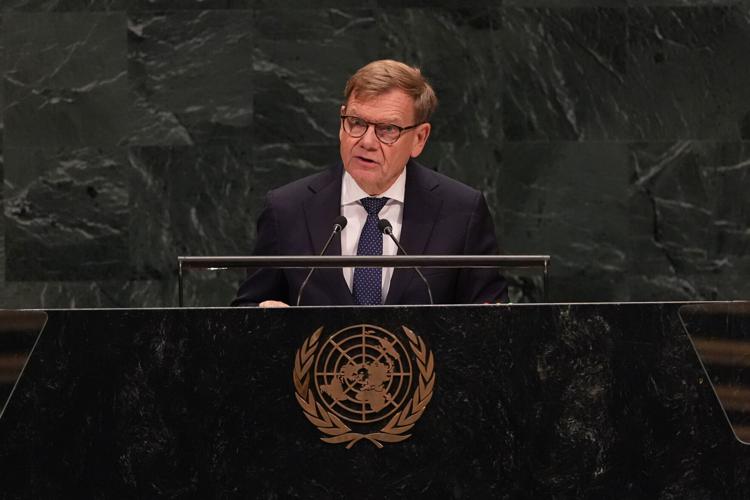
In a speech to the United Nations General Assembly last week, Trump called on ICC member states to quit the court. Days later, Dutch Prime Minister Rob Jetten used the same podium to forcefully defend the court, telling the General Assembly: “I believe there can be only one response. To say: hands off the ICC, and all those other institutions that protect the international legal order.”
The ICC was established in The Hague in 2002 as a court of last resort to prosecute individuals responsible for the world’s most heinous atrocities: war crimes, crimes against humanity, genocide and the crime of aggression. It takes on cases when nations are unable or unwilling to prosecute crimes on their territory.
The U.S. and Israel strongly object to the court’s arrest warrants for top Israeli officials, including Prime Minister Benjamin Netanyahu, over the war in Gaza. The U.S. also has opposed investigations into its military actions in Afghanistan.
Like Russia, China, India and Israel, the United States is among countries that have never joined the panel, with Washington citing fears of politically motivated prosecutions of its military.
Wadephul said Germany was a principled supporter of the ICC.
“Germany knows from its own history where it leads when state power flouts the law and humanity. So supporting the ICC is not a purely foreign policy question for Germany. It is also part of our historic responsibility,” he said Monday as he set off for The Hague.