
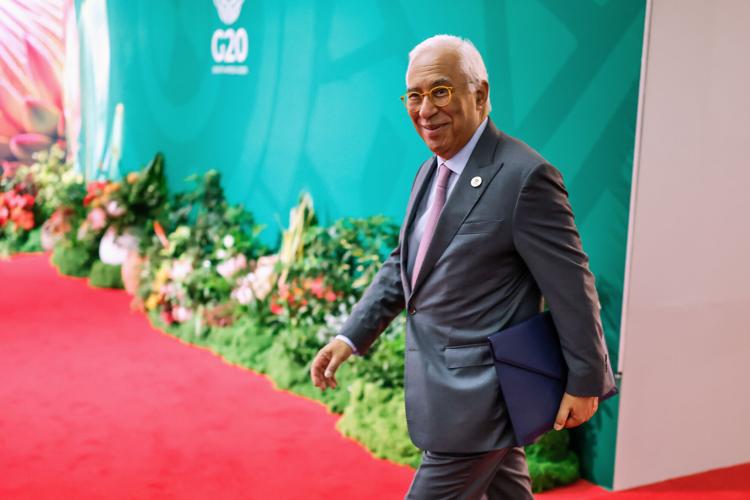

BRUSSELS (AP) — A top European Union official on Monday warned the United States against interfering in Europe’s affairs and said only European citizens can decide which parties should govern them.
European Council President Antonio Costa’s remarks came in reaction to the Trump administration’s new national security strategy, which was published on Friday and paints European allies as weak while offering tacit support to far-right political parties.
It’s “good” that the strategy depicts European countries as an ally, but “allies don’t threaten to interfere in the domestic political choices of their allies," Costa said.
“What we can’t accept is the threat of interference in European political life. The United States cannot replace European citizens in choosing what the good or the bad parties are,” he said in Paris at the Jacques Delors Institute, a think tank.
The strategy was critical of European free speech and migration policy. U.S. allies in Europe face the “prospect of civilizational erasure," the document said, raising doubts about their long-term reliability as American partners.
But Costa, who chairs summits of the 27 national EU leaders, said Europe’s “history has taught us that you can’t have freedom of speech without freedom of information.”
The former Portuguese prime minister also warned “there will never be free speech if the freedom of information of citizens is sacrificed for the aims of the tech oligarchs in the United States.”
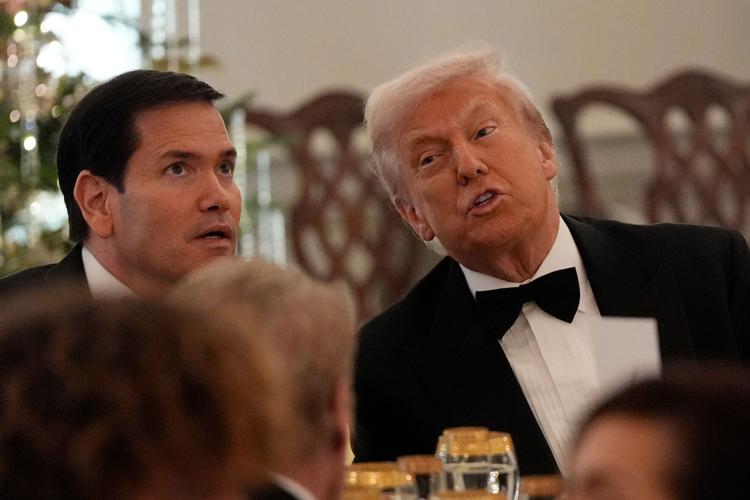
The security strategy is the administration's first since President Donald Trump returned to office in January. It breaks starkly from the course set by President Joe Biden’s Democratic administration, which sought to reinvigorate U.S. alliances.
It comes as the U.S. seeks an end to Russia’s nearly 4-year-old war in Ukraine, a goal that the national security strategy says is in America’s vital interests.
But the text makes clear that the U.S. wants to improve its relationship with Russia after years of Moscow being treated as a global pariah and ending the war is a core U.S. interest to “reestablish strategic stability with Russia.”
Kremlin spokesman Dmitry Peskov has said the document “absolutely corresponds to our vision.” Over the course of the war, Russia has worked to drive a wedge between NATO allies, particularly between the U.S. and Ukraine's main backers in Europe.
“If we read closely the part about Ukraine, we can understand why Moscow shares this vision,” Costa said. “The objective in this strategy is not a fair and durable peace. It’s only (about) the end of hostilities, and the stability of relations with Russia.”
“Everyone wants stable relations with Russia,” he added, but “we can’t have stable relations with Russia when Russia remains a threat to our security.”
Top EU officials and intelligence officers have warned Russia could be in a position to launch an attack elsewhere in Europe in three to five years should it defeat Ukraine.
