
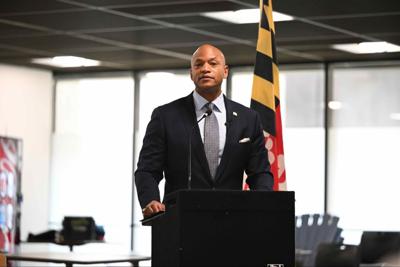


ANNAPOLIS, Md. - Maryland’s top Democratic leaders are rolling out a massive legislative package they say will help bring down energy costs for residents, while Republicans argue the proposal does not go far enough to address long-term affordability and energy supply concerns.
Gov. Wes Moore, Senate President Bill Ferguson, and House Speaker Joseline Peña-Melnyk announced the Utility RELIEF Act on Friday, March 13. The sweeping energy package is aimed at reducing utility bills, increasing in-state power generation, and adding new oversight for utility companies, according to Democratic lawmakers. State leaders say the proposal would save Maryland families about $150 a year on energy bills while investing more than $200 million in energy programs and infrastructure improvements.
Gov. Moore’s office says the legislation would direct $100 million toward refunds for Maryland ratepayers to help offset utility fees and lower monthly bills. Another $100 million would support local clean energy generation through a new bidding process for renewable energy projects. The package also calls for grid modernization in the hopes of improving the capacity and efficiency of existing power lines.
The legislation would place new guardrails on data centers, requiring them to pay for their own energy infrastructure upgrades rather than passing those costs on to residents, according to Moore. Democratic leaders say the package would also streamline energy assistance programs for working families and help fund the Public Service Commission’s Limited Income Discounted Rate program, which lawmakers say could save eligible customers up to $1,400 per year.
The proposal also includes tougher oversight of utilities, including greater scrutiny of $3.5 billion in actual and projected spending on federally approved projects. It would cap what utilities can recover for supervisor pay, eliminate the current 0.5% Regional Transmission Organization participation incentive, and require utility companies to join PJM Interconnection. State leaders say those changes would save Maryland families an estimated $20 million annually.
“Marylanders deserve energy bills they can afford,” Moore said on Friday. “But because of the Trump-Vance administration’s actions and failures by regional operators like PJM, too many families are seeing skyrocketing utility costs—and that is unacceptable. That is why we are taking action where we can: holding utility companies accountable, moving faster to build new energy generation, and delivering $100 million to lower energy bills for Maryland families. While Washington keeps making life harder for working people, we are staying focused on the issues that matter—lowering costs, making Maryland more affordable, and protecting Maryland families.”
House Republicans, however, said the proposal falls short.
House Minority Leader Jason Buckel and House Minority Whip Jesse Pippy said skyrocketing energy costs are hurting nearly every Maryland family and making it harder for businesses to compete in their response to Moore’s announcement on Friday. They blamed what they called Maryland Democrats’ “extreme and unrealistic ‘green energy’ policies” for making the state less affordable while doing little to address “asserted” global climate concerns.
Still, Republicans acknowledged that parts of the bill reflect concerns their caucus has raised for years about surcharges, artificial taxes, and added costs on monthly energy bills. Even so, Buckel and Pippy said the package does not go far enough to deal with short-term affordability issues or the long-term supply and demand pressures they say threaten Maryland’s grid reliability, energy costs, and ability to grow its technology sector.
“Fundamentally, this bill is too little, but hopefully it is not too late,” Buckel and Pippy said. “We can, and must, do better for our citizens.”
The Utility RELIEF Act now heads to the Maryland General Assembly, where lawmakers are expected to continue debating how best to address rising energy costs and the state’s future power needs.