
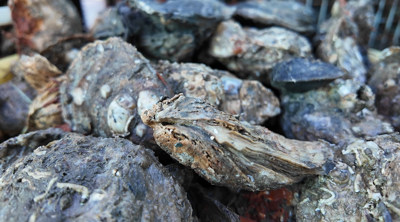

CHESAPEAKE BAY, Md. — Oyster numbers in the Chesapeake Bay are climbing as the season gets underway, according to a recent report from Maryland’s Department of Natural Resources.
The report found that oyster populations have grown over the past five years in both the state’s sanctuaries and its public harvest areas.
DNR staff said the increase in the state’s sanctuaries stems from a mix of favorable environmental conditions and restoration work, including planting baby oysters on oyster shells.
Sanctuaries are closed to harvest, but Kate Charbonneau, DNR’s assistant secretary for aquatic resources, said the oysters growing in them benefit the wider bay.
“Given the success that we’ve had, I think we demonstrated that doing large scale restoration is worthwhile,” Charbonneau said. “It’s a good investment, and it sustains not just our sanctuaries, but it can sustain all of the areas that we want to have oysters in, so [they’re] available for the public fishery as well…And also we want to, you know, make sure that we have oysters available for if we do have disease come into the bay.”
For this report, DNR measured each sanctuary by the number of adult oysters, including small and market-sized ones, the amount of spat, or juvenile oysters, the available habitat and the observed level of mortality. A majority of sanctuaries are trending upward or have been restored or targeted for restoration.
The gains were not limited to sanctuaries. Over the five years assessed, a majority of non-sanctuary areas saw significant increases in total oyster density, market-sized oysters and biomass compared to earlier five-year periods.
Watermen say they have noticed the change over the last five years when they’ve been out on the water. Danny Bozman, who brought in his bushel limit in Crisfield on Thursday, said he has done so consistently over the past few years.
“It's been really good the last four years, five years....Probably 4 or 5 years ago. Started seeing a lot of small oysters and stuff, and then they were living very good,” Bozman said.
DNR said the growth in public harvest areas is good news for watermen. Charbonneau said the results show the state can keep oysters available while managing the fishery responsibly.
“It definitely shows that we have oysters available for them to harvest and we can harvest sustainably,” Charbonneau said. “We work in cooperation with our watermen community to set bushel limits and ensure that, you know, the pressure that we’re putting on the fishery is not too much.”
In addition to bushel limits, DNR credits the growth in oysters in public harvest areas to watermen investing in their own replenishment efforts.
According to Charbonneau, disease hit the bay’s oyster population hard in the early 2000s. Since 2010, when DNR set out to restore oysters throughout the bay, abundance has tripled.