
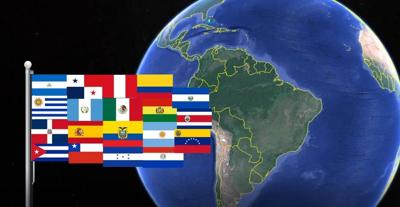
Hispanic Heritage Month is a time of celebration to truly honor the diverse cultures and traditions that each individual country holds and cherishes. It's a time for people with other nationalities in the U.S. to also recognize their fellow Hispanic colleagues, peers, neighbors, friends, and to understand how important it is for Hispanics to celebrate their culture with pride representing where their families are from.
The month, which is from Sept. 15 to Oct. 15, gives Hispanics a chance to remind themselves and their community that that identity is not forgotten simply because they no longer live in that country of origin. It's a reminder that what makes us different--our language, our slang, our accents, our wardrobe, our food, and our traditions--is something worth highlighting.
With Hispanic Heritage Month coming to an end, we looked at the distinct cultures that exist across Latin America, with an eye on the different Hispanic cultures seen on the Delmarva Peninsula.
Mexican culture is one of the most recognizable Latino cultures on Delmarva. From the tacos and tequila, to the fiestas (parties) and the folk clothing. But there are many other traditions than meets the eye.
"I take pride in being Mexican because we have such rich traditions," said Doña Marlene de la Cruz Garcia.
Garcia, a cancer survivor, recently celebrated her 52nd birthday with her loved ones, throwing a party with her favorite kind of music.
"It's a kind of (like) tropical music," she said. "We call it Cumbia."
While Cumbia comes in many different flavors across Latin America, the Mexican Cumbia that she loves from GrupoTerra Nova, is a bit different.
"Our style of cumbia is different," explained Freddy Sanchez, a musical group member. "We use a lot of synthesizers, in contrast to Cumbia from Colombia or other countries where they use trumpets. But we use a lot of keys."
Even though they play Cumbia with heavy Mexican roots, Ezequel Castillo, another band member, says that they also "have members that were born here, that have Guatemalan heritage. It's a mixture of cultures that we have blended together to create our blend of tropical Cumbia."
Mario Sanchez is half Guatemalan and half Mexican and he said that he has had family members from Guatemala be confused as Mexican.
"They get bothered and offended," Sanchez said.
While Sanchez admits it too bothers him, he said that it's beautiful seeing how their version of Cumbia has been able to inspire people of all heritages to dance.
"It's beautiful seeing families together enjoying themselves with our music," he said.
It’s safe to say family is a big part of all Hispanic cultures, and in Argentina nothing unites family like fútbol, Soccer.
“I don’t miss any of the matches when the World Cup is on," said Nelda Sturgeon. I love it.”
Watching soccer while drinking the traditional tea known as 'Mate' is the norm for Argentinean families.
Tango however, that’s a whole other ball game--especially because, even though it's historically-known to be popular and in the most touristic parts of the country you will see shows and amateurs on the street, very few take the time to learn the art.
“I love tango music, I learned to dance tango about 15 years ago and was passionate about it and performed in some showcases,” said Delaware state Sen. Laura Sturgeon of Argentinean descent. “It’s the music, it’s the food, it’s the asado, it’s the empanadas, it’s the Dulce de Leche, and the Alfajores and it’s this warm feeling that it gives me.”
Sturgeon was raised and born in the U.S. by Argentinean parents who, like many, come from a mixed European background. Sturgeon grew up with both American and Latin American cultures. She said at times, it was hard to maintain her Argentine pride when her Hispanic heritage is often put into question because of her European looks.
"I feel like sometimes when I claim my Latina heritage people kind of roll their eyes...I get it, I understand that I don't look the part, I understand that I probably haven't suffered from being, having been a Latino because I don't look the part but it hurts a little bit," she expressed.
At the same time, as the first Latina to serve in the Delaware General Assembly, Sturgeon said she feels incredibly proud to be able to represent her community and desires nothing more than to also have the community be just as proud of her.
From South America to la Republica Dominicana, also known as the Dominican Republic in English.
"Baseball in the Dominican Republic is more than just a sport," said Miguel de la Rosa, a former Texas Ranger baseball player.
“You often have to choose between school or baseball,” he said. "Many times you have to sacrifice education to pursue the dream of becoming a baseball player.”
Miguel de la Rosa said he was unable to make it to the Big Leagues because he had to deal with injuries but for many, its a symbol of hope and a better life.
The Wicomico Men's Softball League is their favorite passtime.
"That’s part of our culture," said Wicomico player Willy Vargas. "We’re playing baseball at a very young age, our parents keep us playing the game.”
Estarlyn Morales was also a former professional player who played for the Seattle Mariners.
Morales said he began playing the sport at just 4 years of age.
“After work we come out here to de-stress and be around our friends and just have fun because that’s what we love to do,” Morales said.
Even after their years in pro ball, their love for the sport never faded away.
“I’m old and I'm still here watching baseball we can’t get away from it," Morales continued to say.
Nevertheless, Dominicans are more than just baseball.
Food is a big component in their culture.
'Sancocho' for example, is a traditional soup made up of different meats combined with foods like plantain, potato, corn and more.
Over the years there’s been a growing number of Dominicans settling on Delmarva.
Judith Garcia is a Seaford, Del., resident who left the busy city life of New York, for a calmer, more peaceful life on the peninsula.
“I’ve been living here for six months” she said.
Many locals from the Dominican Republic say getting confused with other cultures is all too common.
“I’ve been called Puerto Rican or Mexican," said another resident living in Salisbury, Marlenny Castillo.
Different cultures with distinct customs, but the Latino pride is what unites us.
Though far away from the native lands, traditions are a friendly reminder of what home feels like.