
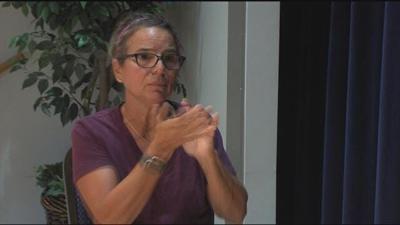

SALISBURY, Md.- We are living in times where our livelihoods and our health rely on information from public and health officials. But what if you couldn't hear that vital information?
That is everyday life for Rosemary Balzer.
Both of Balzer's parents were also deaf, so Balzer grew up communicating not through spoken word, but through American Sign Language (ASL).
"I have three sisters and one brother...they were all deaf. I was the last baby of the family. We grew up communicating perfectly," explained Balzer. When everyone is communicating using the same method, it's easy to get the message across.
But it wasn't so perfect outside of the home.
During the 60s and 70s, schooling was difficult for deaf children. Teachers tried to get their deaf students to communicate through spoken word, they were not allowed to sign, and they were forced to wear heavy headsets. Rosemary says it began to improve when deaf schools hired deaf teachers, or children of deaf parents, because they understood the method of communication.
Balzer says technology has helped to bridge the communication gap between those who can hear, and those who cannot.
"It's called an invisible disability. People can't really look at me and tell I'm disabled and I'm deaf, so back in the day I would just point at my ears I can't hear, I am deaf, and people would back up and say, 'Sorry I forgot.' Now adays people will actually try to finger spell, and try to apologize and try to look at their iPhone and type in their notes and communicate with me back and forth. And it's a bigger change of attitude than it was before," she said.
But Balzer says that society still has many hurdles to overcome, including during the pandemic.
"So in the White House, President Trump, when he gives his speeches, some people aren't able to read the captions, the elevated words are just too much...it's better visual language," Balzer explained.
The White House is being sued by the National Association of the Deaf for just that. The suit claims that refusal to have an interpreter is a violation of the first amendment.
Instead, Balzer relies on a site called the Daily Moth to get her national and local news. The blog site signs the news to the viewer instead of having them read captions.
But it's not just here that there is a disparity in the communication.
"I broke my hip not too long ago, I went to the hospital, I had to stay overnight for three days, no interpreter. The hospital has one contact person for an interpreter and they were out with another patient, they were unavailable," said Balzer. She said that when an interpreter did show up, it was hard for them to get caught up on all that had happened in the three days before their arrival.
The Americans with Disabilities Act requires local governments, businesses, and non-profits to have communication aides for anyone who is blind, deaf, or has communication disabilities. Balzer says the lack of such aides in both healthcare and law enforcement settings are grave concerns, especially with the recent police involved shootings in America.
"We need more law enforcement to be able to communicate with the deaf community, it's very important to us. I feel like they need to take training to be able to communicate with every individual. I saw a segment on the Daily Moth were a while ago some incident happened with a black man and he unfortunately was killed, and that's my biggest concern is that the communication with the deaf is not accessible when it comes to law enforcement," said Balzer.
While she may not be able to hear, Rosemary lives a full life: she bikes for fun and exercise, and she works part time at the Deaf and Independent Living Association in Salisbury. There, she works to help teach deaf residents how to pay bills, how to shop, and live independent lives like her own. She admits that she has overcome many challenges, but considers being deaf just another unique quality of who she is.
A special thanks to Jewel Stafford, who was the interpreter for our conversation with Rosemary.