
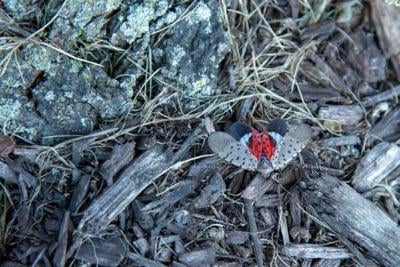
DOVER, Del.- Kent County will join the Delaware Department of Agriculture (DDA)'s current spotted lanternfly quarantine.
The move expands the quarantine outside of New Castle County. DDA says the expansion is due to spotted lanternfly populations found in Smyrna, Dover, and Harrington this past week.
DDA says the spotted lanternfly is a destructive invasive planthopper that attacks many hosts, including trees, shrubs, orchards, grapes, and hops. DDA says the lanternfly hurts Delaware's agricultural industry, forests, and neighborhoods. DDA says due to quarantines in other states, interstate commerce will be impacted if the pest is transported out of the First State.
So what is a lanternfly quarantine exactly? According to DDA, people, businesses, and towns are not allowed to move any material or object that could harbor the lanternfly without taking steps to prevent it. DDA says the bug can fly, hop, or drop onto a car, meaning it can be easily transported.
"There is extreme concern about the timing of the finds in Kent County," states a DDA release. "A female spotted lanternfly will lay upward of 200 eggs before she dies due to cold weather. These eggs will overwinter and hatch out in the spring, creating a larger established population in 2021."
"While we understand the frustration residents have with infestations, we must focus on containing the spread of spotted lanternfly to protect Delaware and regional agriculture. Our staff will accomplish this by focusing treatments on priority properties that are pathways for the movement of spotted lanternfly such as highways, railways, public transportation, and distribution centers," said DDA Plant Industries Administrator Jessica Inhof. "Residents can do their part by removing tree of heaven, treating for nymphs and adults from May to November, and scraping and destroying egg masses from December to May. We are asking every Delaware resident to take part in the effort to stop the spread."
DDA and USDA are surveying properties and treating those with the tree of heaven, though it's not clear if the funding will continue in the future. The tree of heaven is an important food source for the fly, so getting rid of it helps get rid of the bugs DDA says the tree of heaven is found in industrial parks, along highways and railways, and in unmanaged areas or vacant lots. Municipalities and businesses should prioritize destroying the female tree of heaven while leaving some male specimens as trap trees.
More information on the quarantine and what homeowners should do if they have the tree of heaven can be found online at https://de.gov/hitchhikerbug.