
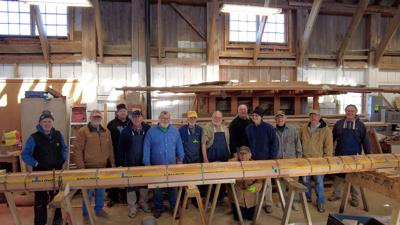


CAMBRIDGE, MD. - Significant progress has been made in the ongoing restoration efforts for the historic skipjack "Nathan of Dorchester," as the team at Richardson Maritime Museum diligently works on reviving the vessel. Thursday marked a crucial step as the boom, a vital component of the skipjack, was expertly crafted by gluing together 48-foot planks into an octagon shape.
The dedicated team from Richardson Maritime Museum, recognizing the need for a comprehensive overhaul after more than 30 years of service, opted for a departure from traditional repair methods. Instead of the conventional pine tree approach, they utilized a more durable and robust alternative. John Swain, a shipwright with the museum, emphasized the necessity of adapting to changing timber availability, stating, "Its more long lasting. [This new method] and its generally stronger. Using the old method was perfect I mean it worked for years and years but things have changed in terms of timber so we can't get that stuff anymore."
Following the meticulous assembly, the team is allowing the epoxy glue to cure over the weekend. The next phase of the restoration project, scheduled for the upcoming week, involves sanding down the glued planks to shape the boom into a rounded form. The museum anticipates that this modernized approach will enhance the longevity and strength of the skipjack's crucial equipment.
"We're aiming to have the 'Nathan of Dorchester' back in the water by mid-March," mentioned a spokesperson from Richardson Maritime Museum. This ambitious timeline reflects the team's commitment to preserving the skipjack's rich maritime heritage while incorporating contemporary techniques for a more resilient future.