
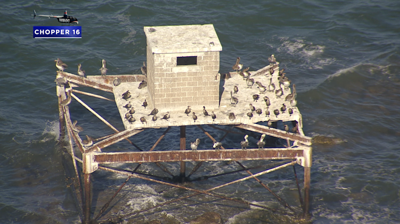

CHESAPEAKE BAY — The number of brown pelicans breeding in the Chesapeake Bay has declined, with Maryland researchers looking at food availability and other factors that could be contributing to the drop.
The Maryland Department of Natural Resources found about 575 breeding pairs in the state this summer, with most concentrated around Smith Island. Several sites that had been active breeding colonies in recent years were empty.
Dave Brinker, science program manager for the Maryland DNR Natural Heritage Program, says the availability of menhaden, an important food source for pelicans, is closely tied to their breeding population.
“Pelican breeding populations in the Chesapeake Bay are absolutely related to the density of menhaden in the bay,” Brinker told WBOC. “So if menhaden decline because of, you know, fishing practices, pelicans are going to decline.”
Menhaden are also an important food source for other fish and wildlife in the Bay. Brinker says a decline in their availability could affect multiple species.
“If you accept that there's a decline in menhaden in the Bay, to see the pelican population declining is not really a surprise,” Brinker said.
Brinker says he expects pelicans to remain in the Chesapeake Bay, but their numbers may not return to what they were a decade or more ago.
“We'll probably always have pelicans, but we just won't have as many as we used to have ten, 15 years ago,” Brinker said.
Jim Rapp, who leads bird tours through Delmarva with Delmarva Birding Weekends, says he has also noticed a sharp decline in pelicans over the past couple of years.
“It's been pretty drastic,” Rapp told WBOC. “It's been a really sharp decline the last couple of years.”
Rapp says food availability may not be the only factor affecting the birds. Erosion and storms can also threaten the islands where pelicans nest.
“I've been out there before, sadly, and seen in one month, you know, birds on the nest. A storm comes up and they're all gone. I mean, that happens when you nest that close to the…high tide line,” Rapp said.
Researchers are still working to understand what's driving the decline and what it could mean for the future of brown pelicans in the Chesapeake Bay.