
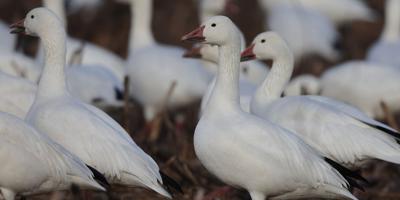

KENT COUNTY, Del. - The Delaware Department of Natural Resources and Environmental Control announced that laboratory testing on a sick snow goose returned presumptive positive findings of H5 avian influenza. DNREC says they collected the bird on December 8 in Kent County.
Avian influenza is a highly contagious airborne respiratory virus carried by wild birds that spreads quickly among their populations, DNREC says. The virus is spread through nasal and eye secretions as well as bird manure. People are advised not to touch injured, sick, or dead birds. Pets and children should be kept away from wild birds and bird droppings.
Since this initial presumptive positive case in Kent County, DNREC says they have received reports of snow geese with signs of illness along the Delaware Bay coast. However, a count of dead or sick birds cannot be given right now as sick birds often die where the public cannot see them. It is also important to note that snow geese in particular fly long distances and infected birds may die in other locations, transmitting the virus to other birds. Because snow geese migrate from the Arctic, it is unknown when or where the bird in this case may have acquired the virus.
The virus has infected a small number of people across the country, though testing of people in close contact with infected animals indicates a low risk to the general public's health. As a precaution, backyard flock owners are advised to keep birds in outdoor coops and not bring outdoor birds inside, according to DNREC.
If you see a sick or dead bird on public or private property, DNREC asks that you report it through the Division of Fish and Wildlife's sick and injured wildlife reporting form. If you find dead or sick wild birds on your farm, notify the Delaware Department of Agriculture at poultry.health@delaware.gov.
If you do find a dead bird on your property, DNREC advises that you wear proper personal protective equipment, including gloves, a mask, and safety glasses, to dispose of it. It is important that you double-bag each dead bird you find, zip-tie the bag, and put it in a designated trash bin for pickup along with your PPE after careful removal. Always thoroughly wash your hands.
Waterfowl hunting season reopens December 17 for ducks and December 20 for Canada geese, so DNREC is reminding hunters to be careful with their harvests of these birds. If you are hunting and come across a dead or sick bird, visit the U.S. Department of Agriculture's Animal and Plant Health Inspection Services webpage for additional information on the proper protocols.
DNREC gives the following advice to poultry and livestock farmers to help protect their animals from contracting the virus:
- Keep waste like dead animals and compost piles covered
- Remove standing water adjacent to coops and barns
- Keep waterfowl away from ponds and basins by removing plants from them and employing scare devices
- Secure farm buildings by repairing damaged screens on windows and holes in barn walls, and deter perching with things like bird spikes
- Reduce food sources to ensure you are not feeding wildlife
- Use decoys to scare wildlife away and move them often
For more information on avian influenza, visit de.gov/poultry.