
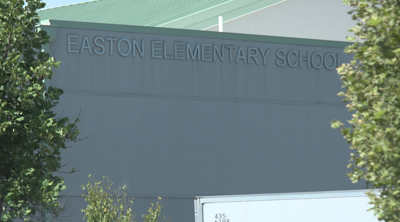

TALBOT COUNTY, Md. – Some Talbot County Public Schools students won't be bringing home the traditional letter grades this year.
The district is rolling out an updated grading policy for the 2026-2027 school year, expanding "standards based grading", more formally known as competency-based standards, to students in third through fifth grade. The model has already been in place for Pre-K through second grade.
Under the new system, students are scored on individual skills using a proficiency scale rather than a single letter grade. The new grading system is as follows:
Competency Standards Proficiency Scale (PreK-5)
SP — Surpassing Proficiency: skills and understanding exceed grade-level expectations in this area.
DP — Demonstrating Proficiency: skills and understanding meet grade-level expectations in this area.
AP — Approaching Proficiency: skills and understanding are approaching grade-level expectations.
EM — Emerging: skills and understanding are just beginning to develop in this area.
NM — Not Measured: this skill has not yet been taught or assessed in this marking period.
"Letter grades tend to be the landing point for students — ultimately, where they show their proficiency at the end of learning a skill or standard," said Robin Werner, director of teaching and learning for Talbot County Public Schools. "Although that's valuable information, ultimately, for our youngest learners, they learn at different rates. They sometimes need different support."
Werner says this change will allow students to take more ownership in their learning.
“They'll be able to understand specifically the skills when they look at their report cards as well as what they are working on,” Werner said. “And I think that it's also helpful for our youngest learners, to be working on the development of the skills over the course of the whole year and not focusing just on one letter grade, like really focusing on the skills and standards that they're trying to achieve and trying to master.”
Werner said the change is also about giving families more detailed and frequent information about how their children are progressing.
"Standards based grading is grading our students the same way — it's just communicating it in real time, so that our families have better information so that they can be more involved in the learning process," she said. "Instead of waiting until our report card to get one single grade, it's breaking down all of the standards that we were already assessing and teaching, but being more deliberate on what we're communicating."
Previously, some elementary students’ progress wasn't visible to parents in real time because of how grades were entered. Under the new model, teachers will log standards as they're taught throughout the marking period rather than waiting until report cards go out.
Devin Bernhard, a high school teacher, said she supports the shift, particularly at the elementary level.
"I think moving away from letter grades, especially in the younger grades — elementary — is a good idea," Bernhard said. "I think it places more focus on mastery of skills… I think that putting everything into one letter grade as a snapshot, can be really stressful for kids and families and it doesn't communicate as much as, say narrative assessment can, especially at the younger grades where, it's really more about building skills and about, putting letters on a transcript or competing, in some way.”
Not everyone in the community is on board with moving away from traditional letter grades.
Ann Cole Johnston, a former high school teacher and college professor said while students who need specific help should be given support, she is an old fashioned teacher when it comes to the grading system.
“I feel strongly that an A is an A is an A and superior excellence, outstanding work that would be deemed as such across the country in every community, every town, every city, every state,” Johnston said.
Werner said the district is preparing staff to answer parent questions at back-to-school events and has posted additional information on its website and social media pages.
Students in sixth through 12th grade will also see a change this year, moving to a new hybrid model of the classic letter grades.
More information on this change from Talbot County Public Schools can be found on the district’s social media page.