
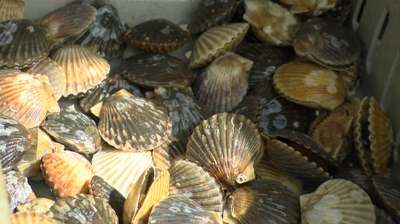

DELMARVA — The University of Maryland Eastern Shore has received a $200,000 grant to help expand bay scallop farming and give more growers the tools to enter the industry.
The three-year project, funded by the Northeast Regional Aquaculture Center, began in September 2026 and runs through July 2029. It will focus on training growers and hatchery workers, improving access to young scallops and finding better ways to transport them from hatcheries to farms.
Bay scallops are native to Maryland waters, but commercial-scale farming remains largely undeveloped in the United States.
Dr. Stephen Tomasetti, director of UMES’ Paul S. Sarbanes Coastal Ecology Center and the project’s principal investigator, says the goal is to help growers make scallop farming a profitable part of their businesses.
“If you're a grower, we want to give you all the tools that you would need to get this thing up and running and for it to be, you know, a profitable part of your business within, you know, within a few years,” Tomasetti told WBOC.
The project will include four training sessions over the next two years, including workshops focused on hatchery operations and growing scallops. Researchers will also study how to improve the availability and transportation of scallop seed, or baby scallops, which growers need to begin production.
Claire Rush Blades, a manager at Baywater Seafood in Snow Hill, says access to that seed is one of the biggest challenges for scallop farmers. She says the business, which she identified as Maryland’s only commercial bay scallop operation, plans to share its growing methods with researchers and potential growers.
“So if this can help new farmers or farmers who are already oyster growing transition over with a little bit more support and more help…it's only going to be better for for the seafood industry,” Blades said.
Baywater Seafood is expected to help demonstrate its growing methods and host training opportunities for people interested in the industry. The project also involves researchers from Rutgers University, who will help lead hatchery-focused training in New Jersey.
The Virginia Institute of Marine Science told WBOC, “We welcome investments building on this work, helping growers diversify their businesses and bring more local seafood to market.”
The effort aims to help more growers diversify their businesses and bring locally grown bay scallops to market.