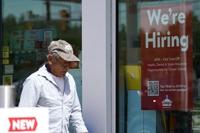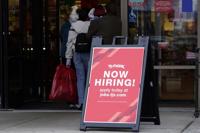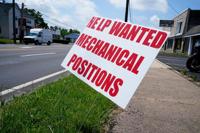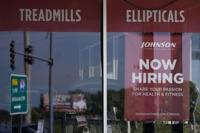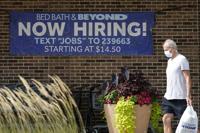

Slightly more Americans filed for jobless claims last week but the labor market remains one of strongest parts of the U.S. economy.
Slightly more Americans filed for jobless claims last week but the labor market remains one of strongest parts of the U.S. economy.

U.S. employers added 263,000 jobs in November, continuing a surprisingly strong pace of expansion this year despite the Federal Reserve's efforts to put the brakes on the labor market.

The number of Americans applying for unemployment benefits came back down last week, hovering near levels suggesting the U.S. labor market has been largely unaffected by the Federal Reserve's aggressive interest rate hikes.

The U.S. job market remains healthy as fewer Americans applied for unemployment benefits last week, despite the Federal Reserve's rapid interest rate hikes this year intended to bring down inflation and tighten the labor market.

Applications for jobless benefits fell slightly last week with the U.S. job market remaining resilient in the face of rising interest rates and persistent inflation.

U.S. job openings rose unexpectedly in September, suggesting that the American labor market is not cooling as fast as the inflation fighters at the Federal Reserve hoped.

Inflation in the United States accelerated in September, with the cost of housing and other necessities intensifying pressure on households, wiping out pay gains and ensuring that the Federal Reserve will keep raising interest rates aggressively.

America’s employers slowed their hiring in September but still added 263,000 jobs, a solid figure that will likely keep the Federal Reserve on pace to keep raising interest rates aggressively to fight persistently high inflation.

The number of Americans filing for jobless benefits rose slightly last week with the Federal Reserve pushing hard to cool the economy and tamp down inflation.
Mortgage rates have jumped, home sales have slumped and credit cards and auto loans have gotten pricier. Savings rates are slightly juicier, though.