
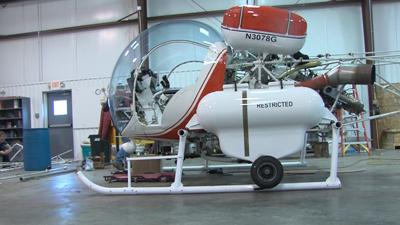
DELAWARE - Mosquito season may be coming a little earlier this year, and so Delaware authorities are starting their Larvicide treatments earlier as well. On Saturday morning, contracted pilots for The Delaware Division of Fish and Wildlife, are expected to aerially spray Larvicides over selected wooded areas statewide.
This process is happening a couple weeks early, due to an especially "mild winter," which has allowed mosquito larvae to develop at a faster pace than usual.
"I've been doing this for about 15 years now," said Paul Zarebicki, from DFW. "And this is the.. earliest I've seen the mosquito larvae at this size. And in the life-stage that they are right at this period of time. On average they're about two weeks later than this."
Zarebicki said that the warmer temperature has heated up the water, in which eggs are laying dormant, and that process has caused the larvae to develop faster.
"This long term warm trend has just brought everything moving faster," he said.
Zarebicki said two helicopters and an airplane are expected to be out on Saturday, although the process may be canceled if adverse weather conditions get in the way. He said that the aerial spraying will continue over the next couple weeks.
Meanwhile in Maryland, Daniel Schamberger, from the Department of Agriculture, said that the agency is preparing to start their aerial spraying in the next two weeks. He said that they have already started some limited spraying, across the state. He said the agency is also inspecting woodland areas to monitor the population.
The trend has created an increase in business for Ernie Gaudioso, from Mosquito Authority. Gaudioso said that the Rehoboth Beach company did not book any treatments until May in 2015. This year, he said the company has already treated approximately 10 lawns.
Gaudioso said that fear over the Zika Virus has likely generated more attention toward mosquito removal services like his.
"Usually on March 18th," he said. "We're still bundled up in coats and jackets - shoveling snow from our driveways. This year we're actively treating mosquitoes."