
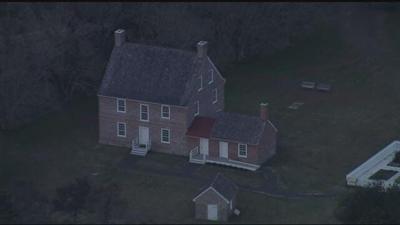
BERLIN, Md.- Researchers are taking a closer look at a historical house in Worcester County.
The Rackliffe Plantation House near Assateague Island was built during the 1700s and researchers believe there's more to the property than what can be seen with the naked eye.
Archaeologist Dr. Tim Horsely examined the grounds of the Rackliffe plantation on Thursday afternoon.
He used a magnetic piece of equipment to get a better sense of what the grounds looked like in the 1700s.
"We're hoping that we can see evidence of former structures that might have been here, anything else that would have been in the ground or disturb the ground so things like wells, and even cemeteries," says Horsely.
Members from the Rackliffe House Trust say the land was once used as a plantation, where slaves grew tobacco, wheat, and corn.
Edward Phillips, president of the Rackliffe House Trust, says the Rackliffe House is the only historical house open to the public in the Mid-Atlantic region.
Phillips says the research will help them teach visitors more about life during the 18th century.
"We want to understand the lay of the land and the buildings that may have existed throughout the centuries. We can explain to visitors what exactly was on this sight," says Phillips.
A piece of Delmarva's history, researchers are looking to preserve.
Researchers say it'll take them about two weeks to fully sift through this week's findings.
Once they do, the trust says it will start developing a plan on how to preserve what's found underground.