

If one knows anything about the history of Broadway musicals, then one has heard the names Rodgers and Hammerstein. They are Richard Rodgers who was an American composer and Oscar Hammerstein II who was an American lyricist. They worked together to create theater productions that are now considered to be some of the greatest Broadway shows in 20th century history. Richard Rodgers is particularly notable because he's won so many awards. Rodgers is the first entertainer in fact to have won the EGOT, which is where someone gets all four of the top entertainment-industry prizes, that of the Emmy, Grammy, Oscar, and Tony Awards, which Rodgers accomplished in 1962. His first honor was the Oscar for Best Song at the 18th Academy Awards in 1945.
However, Rodgers had been working in musical theater since after World War I. He had known about Hammerstein since the 1920's, if not before then, but Rodgers and Hammerstein didn't officially become a duo until their collaboration on Oklahoma! (1943), which would earn them a Pulitzer Prize and would become one of the most successful musicals of that time, an absolute hit. This film is set on the night of that show's premiere, that of March 31, 1943. While one might think this film would be about Rodgers and Hammerstein, it's actually about the lyricist with whom Rodgers worked before Hammerstein.

Ethan Hawke (Boyhood and Training Day) stars as Lorenz Hart, pronounced LAURENCE, aka "Larry," the aforementioned, American lyricist who worked with Rodgers from the end of World War I to the start of World War II, for over 20 years. The pair were known as Rodgers and Hart, and together they created over 20 musicals and 100's of songs. Many of those songs were very successful and were recorded by popular artists like Frank Sinatra and Elvis Presley. However, as a duo, Rodgers and Hart never took off as much as Rodgers and Hammerstein. Rodgers and Hart broke up as a professional pair and the opening of Oklahoma! was a pivotal point, so depicting that opening night where both Rodgers and Hart encountered each other, likely for the last time, is the entirety of this film.
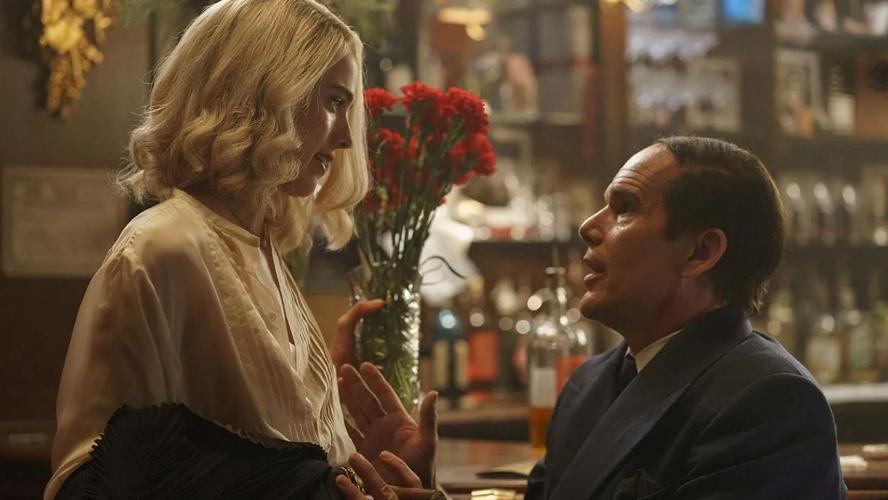
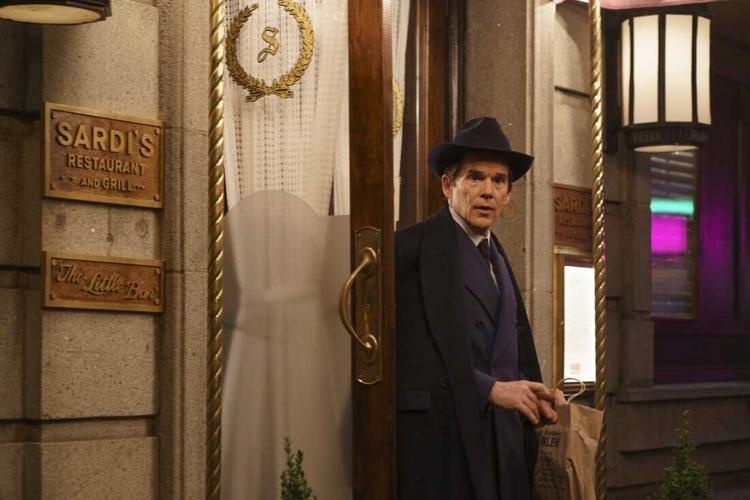
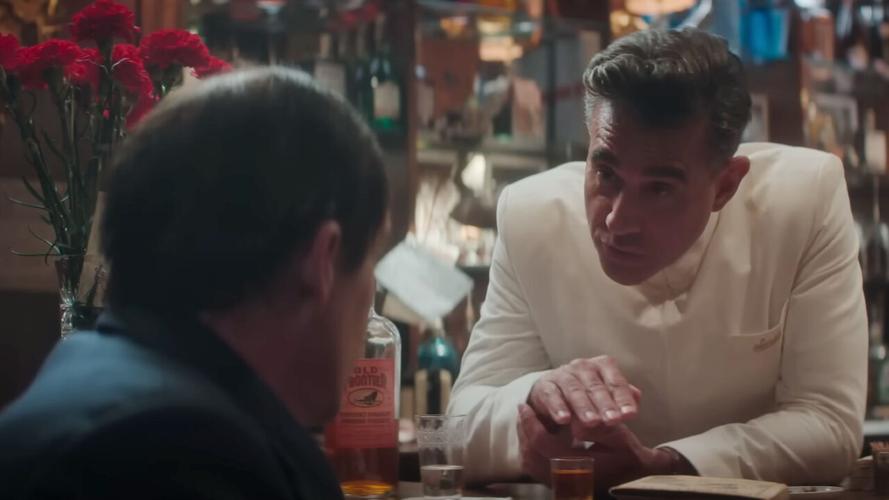
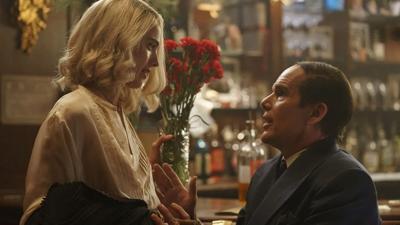
The narrative almost takes place in real time, but it only depicts what might have occurred on the night of March 31, 1943, when the cast and crew of Oklahoma! gathered at Sardi's restaurant and grill to celebrate the premiere. It starts with Larry leaving the St. James Theatre and walking to Sardi's, which is basically next door to the theater in the heart of Broadway. The film ends when Sardi's closes for the night. We see Larry interacting mainly with the bartender at Sardi's, as he waits for the people from Oklahoma! to arrive.

Bobby Cannavale (Boardwalk Empire and Will & Grace) co-stars as Eddie, the bartender at Sardi's. He feels like he's been friends with Larry for a while. He's not as artsy-fartsy. He works at a restaurant in the heart of Broadway, so he probably has an interest, given the clientele who probably frequent, but he doesn't seem to intellectualize theater as much as Larry. He doesn't deconstruct it like Larry does. There's dialogue, but most of the first half of this film feels like a monologue. The first half is mainly Larry talking almost non-stop where he's intellectualizing and deconstructing the art of writing, theater, and storytelling, which has essentially been his job as a lyricist. A lot of his monologues center on critiquing the work of Oklahoma!, which becomes clear Larry hates. It's not necessarily that Larry hates it. He simply feels that it's departure from what he prefers or what his work tends to be. Without diving too deep, Larry prefers more intellectual and complicated stories, as opposed to Oklahoma!, which he calls "cornpone," or unsophisticated. It's the struggle to do something that has mainstream appeal versus something niche and artsy-fartsy, as it were.
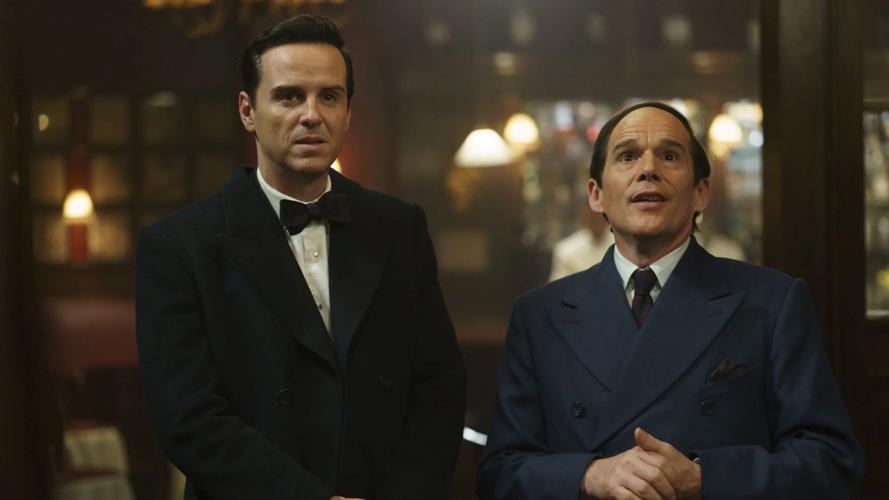
Andrew Scott (Ripley and Sherlock) also co-stars as Richard Rodgers aka "Dick." At this point, Dick is more on the side of doing cornpone or mainstream entertainment. He doesn't want to do artsy-fartsy or niche work. He doesn't want to do the kind of work that Larry wants to do. It's not as if he thinks that Larry isn't talented and a great lyricist. Dick has merely reached a breaking point in their relationship where he wants to go a different direction. A scene where Larry and Dick talk on the stairwell reveals why he's reached that breaking point and is the best scene in the film.

Hawke was nominated for the Oscar for Best Actor at the 98th Academy Awards, and this one scene on the stairwell demonstrates why that honor was bestowed. The range of emotions he displays in just that one scene is extensive, deep and brilliant. He goes from apologetic to desperate, to charming and funny, to sad, and even bitter, all in the span of one scene. It's such range that he nails so perfectly. It helps that the script gives him so much with which to work. Robert Kaplow is the script writer and he too was nominated for Best Original Screenplay at the 98th Oscars, and his work here is a perfect recognition and acknowledgment of an artistic genius often overlooked in a style and manner that the genius himself would've appreciated.
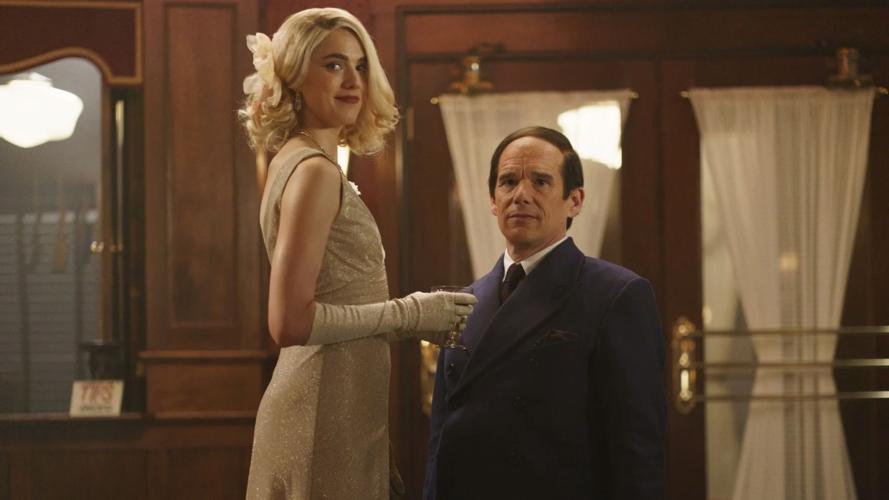
Margaret Qualley (The Substance and Poor Things) rounds out the cast as Elizabeth Weiland, an aspiring writer and set designer who is a protégé of Larry. She's a 20-year-old college student for whom Larry has fallen in love. This confuses people because most people assume Larry is gay. He describes himself as "omnisexual," which some might consider as him being bisexual, pansexual or fluid. Her relationship with Larry underscores a point that he makes early taking a quote from Casablanca (1942). That quote is, "Nobody ever loved me that much." Here, it goes to Larry's insecurities despite having talent and creativity.

Rated R for language and sexual references.
Running Time: 1 hr. and 40 mins.
Available on Netflix.