






Hayley Kiyoko was a child star. She basically began producing music and acting at the age of 8. She did work for Nickelodeon and Disney Channel. She signed a record deal around the age of 16. She performed as part of a band on Justin Bieber's world tour. She did more films and television, as well as started releasing music as a solo artist. In the summer of 2015, she put out a song called "Girls Like Girls," which became a hit, possibly her biggest hit, certified Gold. In 2023, she adapted that song into a YA novel, which became number-one on the New York Times best seller list and stayed on the list for seven weeks. Her getting a film deal to direct and co-write this feature makes sense.
A lot of films have taken song titles as their own, but only a handful of theatrical or even made-for-television productions have been rather direct adaptations of a song, other than being a music video. One example is Earth Girls Are Easy (1988), which was based on a song by Julie Brown. Another is Dolly Parton's Coat of Many Colors (2015), which was based on the hit Dolly Parton song. A more recent example is Last Christmas (2019), which was based on a song by Wham!, George Michael's band. What also makes this film unique or standout though is that it's a romance and coming-of-age story centering on a queer woman, particularly a lesbian.

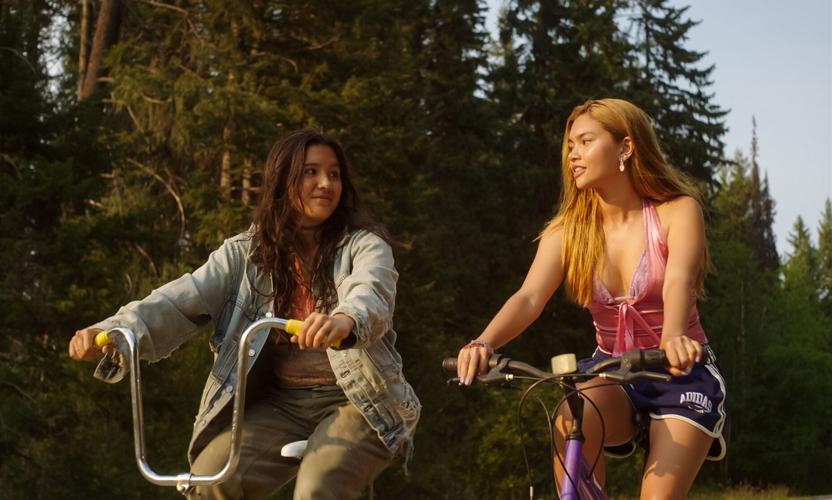
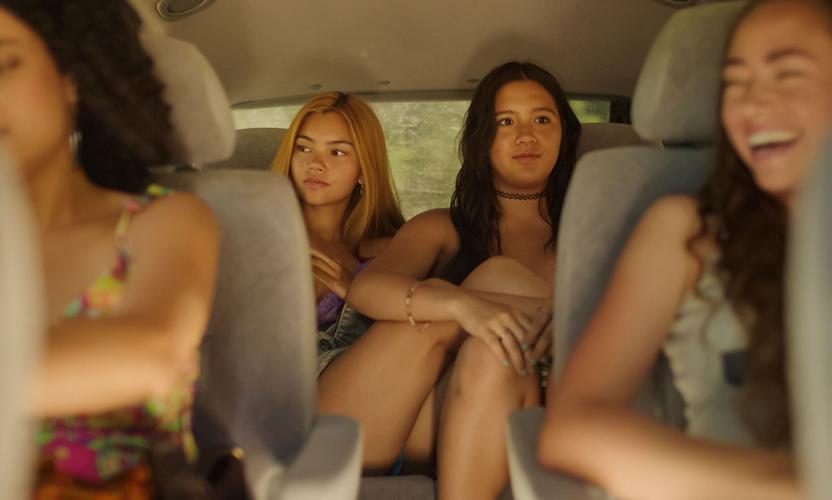
Maya da Costa (Descendants: Wicked Wonderland and Under the Bridge) stars as Nicole aka "Coley," a teen girl in 2006 who moves from San Diego to live with her father in the Pacific Northwest, after the death of her mother. She's the new girl in a small town. She's not really feeling social due to depression from the grief of losing her mother. She rides her bike through town and hangs out at a local diner. One day, some teenagers in the diner reach out and invite her to join them. She's shy and apprehensive, but eventually she does join them, mainly to spend time with one of the teenagers in particular.
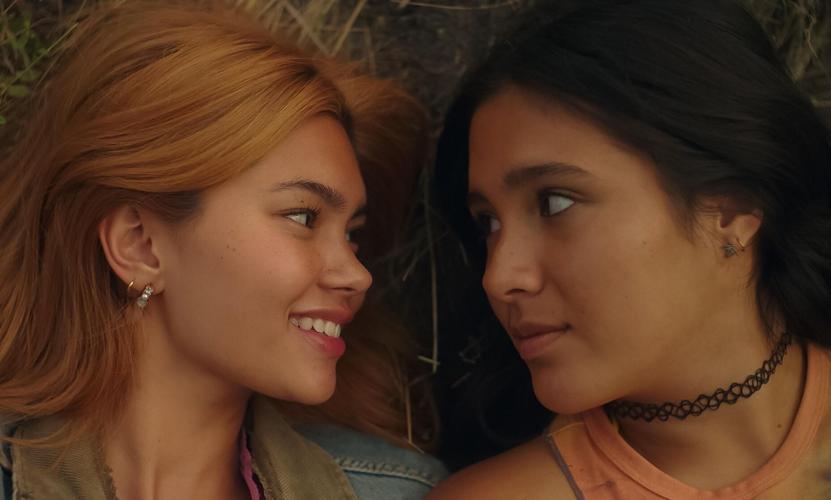
Myra Molloy (He's All That and The Bold Type) co-stars as Sonya, one of the teenagers in particular who catches Coley's eye. Sonya is more forward. She's not shy or apprehensive at all. She essentially pursues Coley. Sonya comes from a more privileged background. Her family is apparently wealthier. She's rather popular, having lived in the town for pretty much her whole life. Yet, it's 2006, the era of Windows XP and AOL Messenger, known as AIM. It's before the legalization of same-sex marriage in the United States and still the era of George W. Bush, so Sonya having an interest in Coley that goes beyond friendship is something to which some people might object. It doesn't stop Sonya's attraction to Coley who has reciprocal feelings.
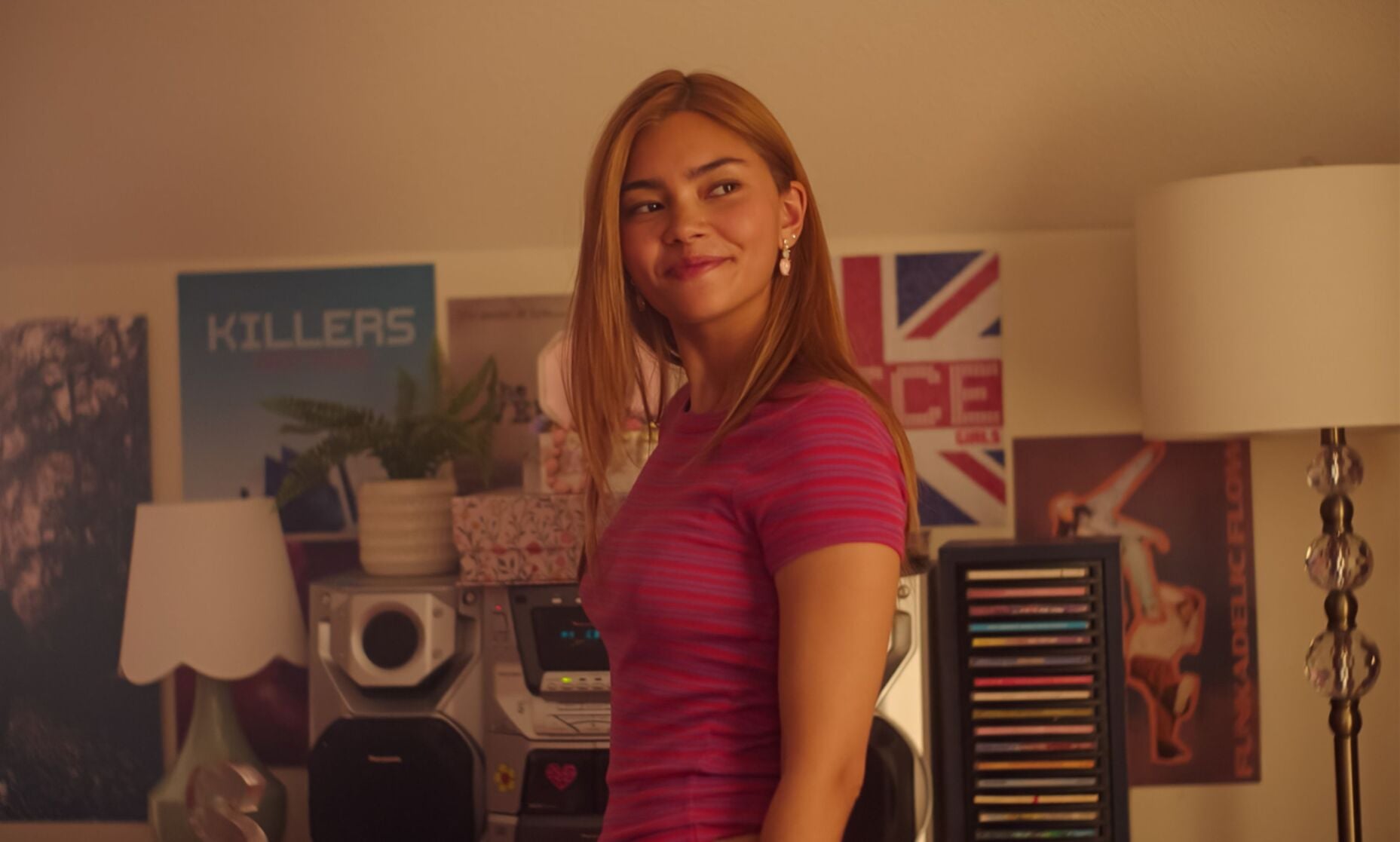
Kiyoko's film doesn't dwell too much in the external homophobia that might split up Coley and Sonya. It's more about the internal homophobia, as it's revealed that Sonya struggles with her sexuality. She also worries about what people might think, which is perceived homophobia, rather than actual homophobia. There are some teens that make comments, but the film really emphasizes that the issue is more internal, more psychological than physical. Kiyoko's film doesn't do much to set up that struggle within Sonya. One moment, she's into Coley. The next moment, she's not. The whiplash is intentional to underscore what Coley experiences. Yet, it doesn't make for a more in-depth study of Sonya as a character.
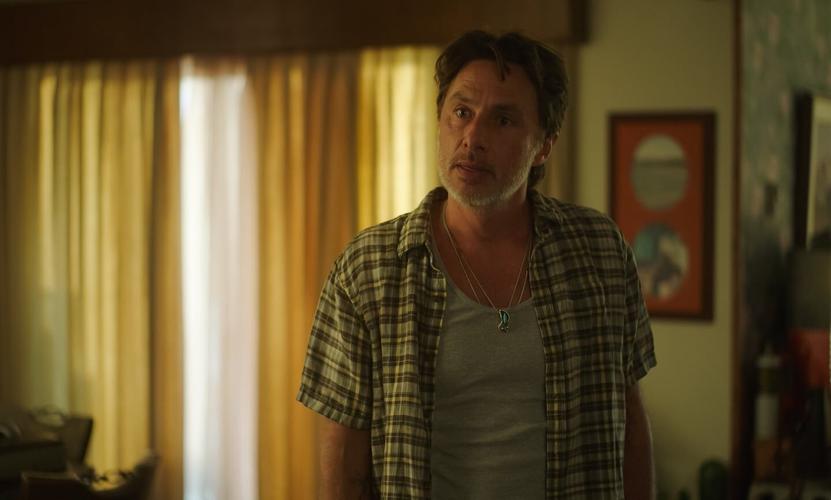
One of the other main issues involves Coley's trauma. She's still dealing with her mother's death, and her conflict with her father, Curtis, played by Zach Braff (Scrubs and The Broken Hearts Club: A Romantic Comedy). The film hints at what happened in terms of the past that caused the separation between Coley and Curtis. Yet, it's rendered as very subtle here. The performances help to carry it more than anything. It could just be generic father-daughter drama. It's meant to be a B-plot for the romance. This B-plot though felt wholly unnecessary. It also felt like a dead parent trope that is real for sure, but still a trope.

The romance is the main focus. There's a lot of sweet moments and even borderline sexy ones. For young queer women in search of representation, this one will likely resonate. I would put this one on the same level as Aitch Alberto's Aristotle and Dante Discover the Secrets of the Universe (2023). In terms of coming of age dramas, this one is comparable to Sean Wang's Dìdi (2024), although I wasn't as swept up in the emotion of the story here as I was in Alberto and Wang's films.
Rated R for teen alcohol and drug use, and some language.
Running Time: 1 hr. and 35 mins.
Available on Peacock.