

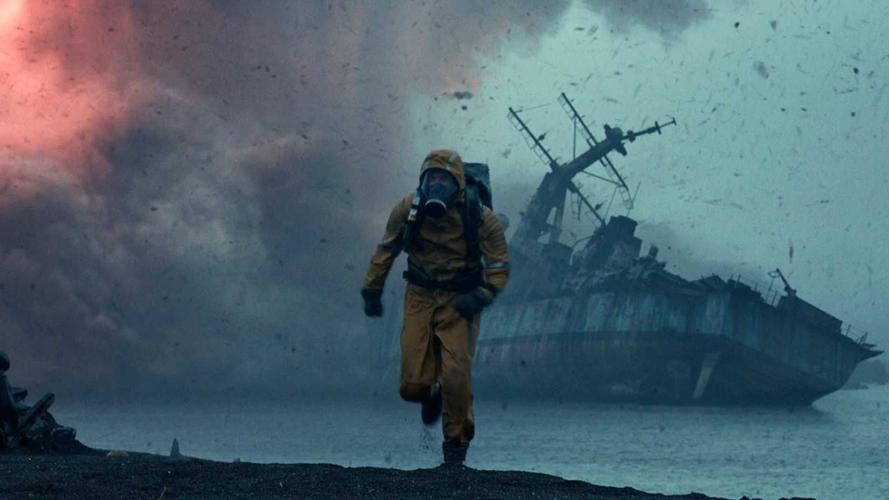

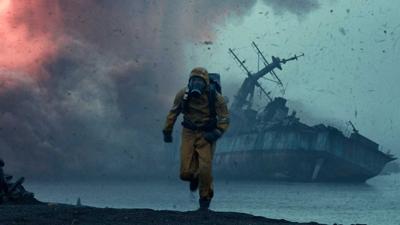
The territory of Greenland has been in the news this year because the Trump administration has made comments and overtures to purchase the place from Denmark, which currently owns it. This film has nothing to do with those geopolitics and international affairs. This film is the sequel to the 2020 disaster flick, which was about a comet that was set to crash on Earth and one of the safe places was Thule Air Base in Greenland. The majority of the film was about the protagonist and his family trying to make it to Greenland. It was never about the actual territory. It simply represented hope for human salvation from an apocalyptic and believed to be extinction-level event. Mainly, it was about the journey and the thrill ride of trying to overcome the obstacles and difficulties to get from one place to another under the premise of filmmaker Ric Roman Waugh who went from stuntman to director. One could argue that it was about survivor's guilt and how some people get to live only due to some hierarchical system, as well as how that might be unfair and how dog-eat-dog an environment can be created from such a system.
However, that 2020 film ended on a positive note and presented no need for a sequel. In order for this one to be what it is, it essentially has to undo the happy ending from the last one. The opening here in fact regresses things, so that the main characters are back to the hopelessness that they had for the majority of the previous film. The ending of the 2020 film gave them hope, but this sequel takes it away. Instead of them having to go on a journey to get to Greenland, they embark on one that takes them away from Greenland. The film makes Greenland no longer habitable. Ironically, given that the majority of the Earth is now barren, brown and rocky with no signs of life, the characters' goal is to get to a place that isn't Greenland but where the land is in fact green.

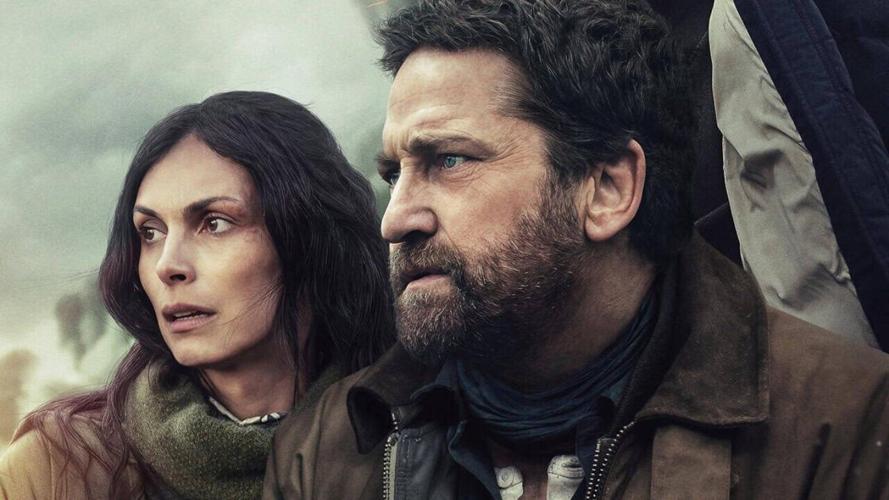
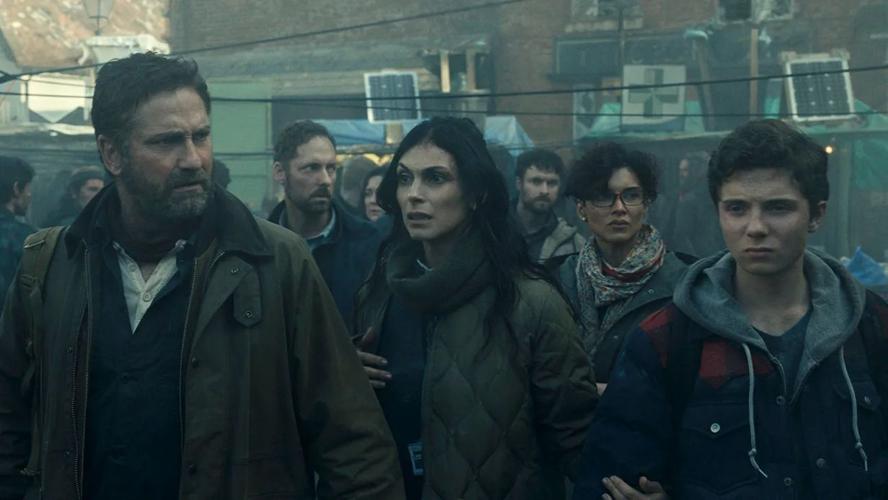
Gerard Butler (How To Train Your Dragon and 300) stars as John Garrity, an engineer who was chosen to be one of the survivors of the comet. He was chosen to be someone who should be protected from the pending destruction. Things didn't go as planned and so he and his family ended up in Thule Air Base in Greenland. After the comet, known as the Clarke Comet, hit the Earth and wiped out 75-percent or more of it, John and his family along with hundreds more remained in the base's underground bunker for 5 years. They did so because of radioactive storms that covered the planet, making the atmosphere poisonous if exposed to it for any length of time. However, fragments from the comet broke up in space and continue to hit the ground, causing earthquakes and other issues.
It's revealed that the crater where the Clarke Comet hit is ironically the only safe place where the environment isn't poisonous and is in fact thriving with life again. John and his family make a plan to go there to confirm for themselves if it's true and to live there permanently. Even though I don't think that this film is really comparable in terms of quality, Waugh's sequel did remind me of Alfonso Cuarón's Children of Men (2006), which will celebrate its 20th anniversary this year. That Oscar-nominated adventure was also about a man in a post-apocalyptic Earth trying to get his so-called family through a desolate and even war-ravaged place to safe haven where they can live in peace and flourish. Waugh's film has that same setup, but it's not wrestling with the same issues, delving into themes and giving incredible cinematography as Cuarón did.

Cuarón's film might have been episodic and structured in a parallel way as this one, but it didn't feel episodic. Waugh's film does. It feels like we get the same scene over and over without getting any additional characterization or depth, as one might want or need in this kind of narrative. What we get over and over is John and his family in some kind of vehicle. That vehicle breaks down or is under siege. They are attacked and have to flee, eventually getting rescued by some random person who just happens to be there and who happens to be nice enough to take them in. This simply happens over and over, as they make their way from Greenland to France. What we gather is that this group is incredibly lucky. Otherwise, the trip feels very contrived.
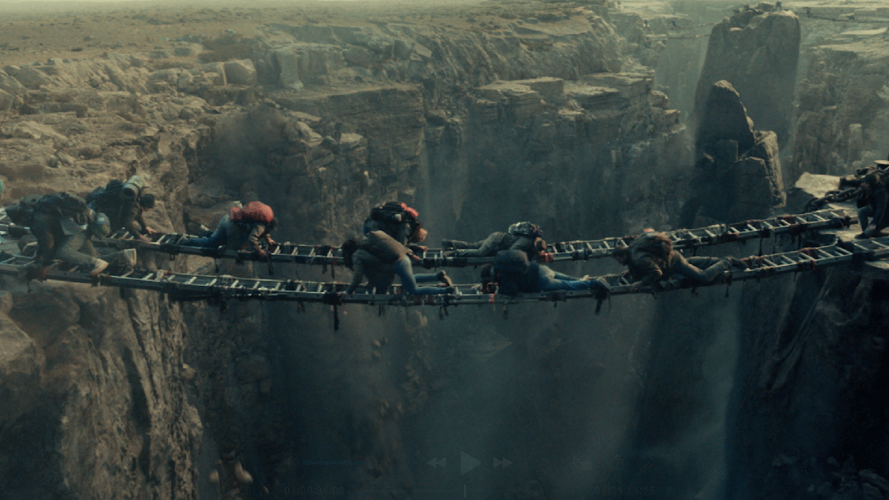
There are some set-pieces here that are thrilling or had the potential to be more than they were. The set-pieces from the previous film have already been forgotten. The set-pieces here are being quickly forgotten. The only one that is sticking somewhat is one involving a rope bridge and a ladder bridge. Yet, when it comes to a scene involving a rope bridge, this one still doesn't top the classic version in Steven Spielberg's Indiana Jones and the Temple of Doom (1984). I'm not sure Waugh put as much thought into his rope bridge scene as Spielberg did, so I doubt I'll ever think about it again.

Chris Sparling's screenplay might have been not fully translated, but there feels like a lack of characterizations for many of the people here, including John's son, Nathan, played by Roman Griffin Davis (The Long Walk and Jojo Rabbit). He's with his father, John, every step of the way, but he feels like such a nothing presence here. It was established in the previous film that he was diabetic and needed insulin medicine. That aspect is virtually abandoned and forgotten here. Whole scenes go by and Nathan feels like he's not even there.
Rated PG-13 for some strong violence, bloody images and action.
Running Time: 1 hr. and 38 mins.
In theaters.