




This film won the People's Choice Award at the 50th Annual Toronto International Film Festival (TIFF). Those within the Hollywood industry or who are connected to it know that any film that is up for that TIFF Award or any film that wins will either be nominated for an Academy Award or even take home that specific gold. The director and co-writer, Chloé Zhao has won the People's Choice Award before. She won five years ago at the 45th TIFF with her feature, Nomadland (2021). That picture ended up getting six Oscar nominations at the 93rd Academy Awards. It won three, including Best Actress, Best Director and Best Picture. Because this current film won at TIFF and because it's currently up for six Golden Globes, including Best Performer by a Female Actor, Best Director and Best Motion Picture - Drama, the predictions are this film will have a similar path, even though most believe it won't take home all the same awards as Nomadland.
Some have also compared this film to another Oscar winner, that of Shakespeare in Love (1998), which tells the story of how the English playwright created the iconic play, Romeo and Juliet (1597). It did so by suggesting that things that Shakespeare was experiencing in his own life, namely a personal romance, was the inspiration or strongly factored into the making of that play. Or, things that happened in the play were echoed in Shakespeare's life. That 1998 Oscar winner was a comedy, a frothy rom-com. Zhao's film is instead a drama and is more befitting of the tragedy, which is at the center here. Zhao's film is ostensibily about Shakespeare's Hamlet (1599) and the making of that play. Yet, it does the same thing as the 1998 feature by suggesting that things in Hamlet came from Shakespeare's life or are echoes and reflections of his life.

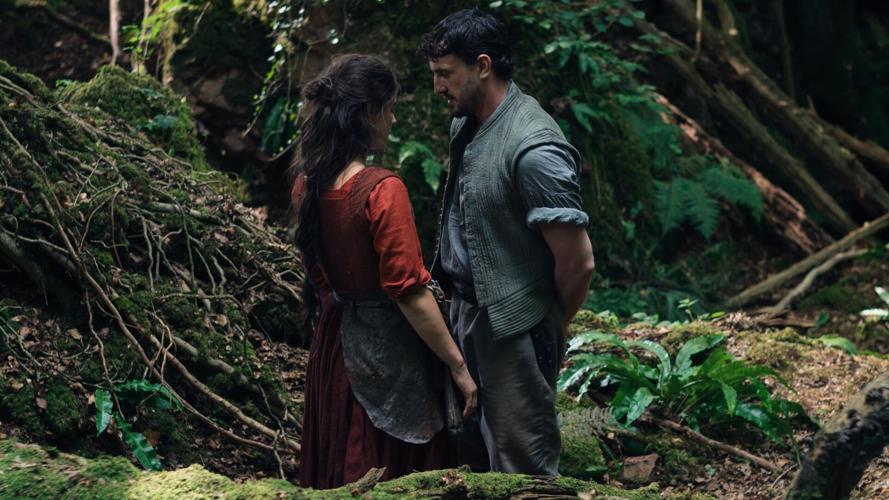
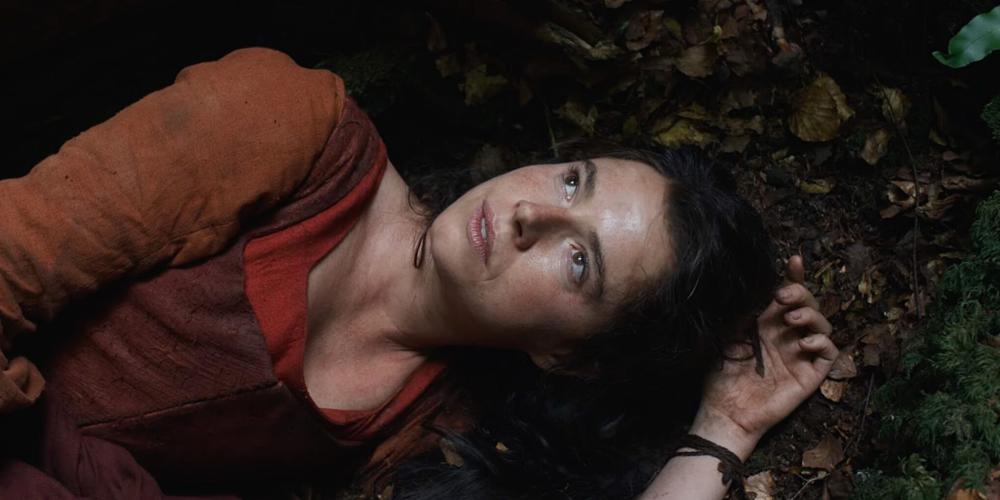
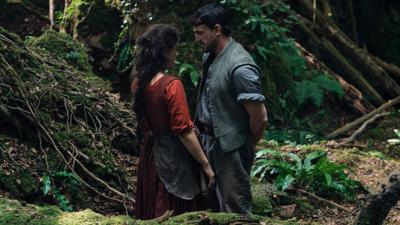
Jessie Buckley (Women Talking and The Lost Daughter) stars as Agnes, the woman who would come to be Shakespeare's wife and mother to his three children. She is referred to as a "forest witch." She's a woman who enjoys being in the forest. The film opens with her asleep in the woods. She is very much in tune with nature, the trees and the plants. She might not have a formal education, but she knows the names of every green thing that grows in those woods and what they do. She also has befriended a hawk that she regularly feeds and will fly to her without fear. She has no problem living the rest of her life in that rural and wooded area.
This is in opposition to her husband who doesn't want to spend the rest of his life confined to this rural and wooded area. At least, that's the assumption. After Shakespeare marries her, he starts to get frustrated and restless. The only thing that will pacify or make him happy is if he leaves to go to London and live life in the big city, pursuing his art. Zhao's film basically becomes about an absentee husband and absentee father, and how Agnes has to deal with or handle that. Agnes allows Shakespeare to leave. She doesn't fight it at first, so he leaves and is gone for large chunks of time. She seems fine with it, but when troubles arise and he's not there, then it becomes an issue.

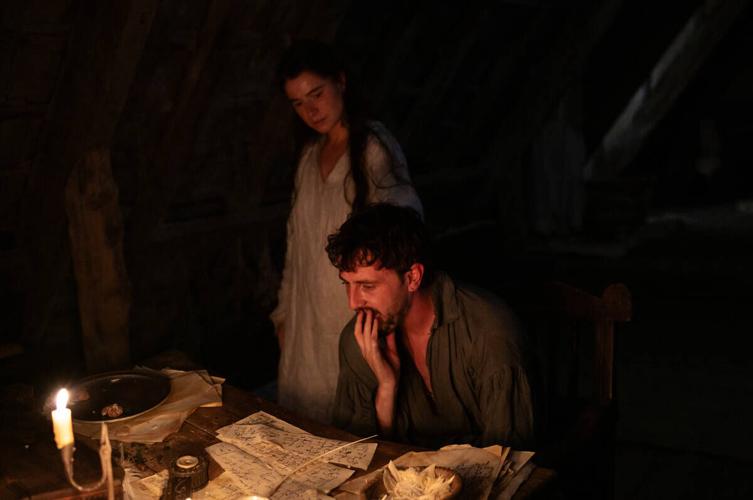
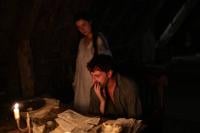
Paul Mescal (Gladiator II and The Lost Daughter) co-stars as William Shakespeare, the aforementioned English playwright in the late 1500's. He's the son of a glove-maker and his father makes him work as a glove-maker too, which William hates. His father bullies him because he knows that William doesn't want to follow in that glove-making trade. He knows that William would rather be a writer. William's father is in debt, so William gets a second job as a Latin tutor, which his father resents. If only to get away from his dad, it's understandable why William wants to leave. One scene underscores his work as a writer, but I'm not sure Zhao's film truly conveys why his draw to the theater is such a draw for him.
If anything, I compare this film to a recent work that will probably be up for awards at the upcoming 98th Academy Awards, along side this one. I compare this film to Clint Bentley's Train Dreams (2025), which is also basically about an absentee husband and absentee father. That film was told from the perspective of the man, but even if it wasn't, it's pretty understandable why the man was absent. He's trying to earn money to support his family, given that he's an orphan, and has no other monetary support. That's not the case here. William isn't financially struggling or desperate to support his family. His family is pretty secure and doesn't need much materially. The question becomes why does William keep going away to London and abandoning his wife and children, particularly when they need him the most? One can assume the answer to that question, but it's not clear that the film actually answers that question definitively. This is purposeful at first because the film is mainly told through Agnes' point-of-view, but this film is not exclusively told from her perspective, not like Train Dreams, which is exclusively the man's P.O.V.

Therefore, it would make sense that we get the answer, but I'm not sure it does. One can assume that William's love and passion for the theater superseded his need to stay home and be with his children. That assumption makes Shakespeare seem rather heartless. One can also assume that the reason William kept going back to London is for the same reason as in Shakespeare in Love, and that reason was him having an affair with someone else. The 1998 film depicts Shakespeare as having an affair with a woman. However, there are those who suspect, based on his Sonnets, that Shakespeare might have been bisexual and had same-sex attraction to another man. That theory is not commented upon here, but, given that his wife was resistant to relocate, one could argue that their relationship was doomed whether William was having an affair or not. The film doesn't really have or show him struggling with the decision to leave. He simply leaves and there's never a reckoning with that.
The ending is about the power of theater to reckon with difficult things, but it's not about reckoning with William's decision to leave. It's reckoning with another tragedy. That tragedy sucks up all the oxygen in the room. That tragedy underlines the problem of William constantly leaving, but the film pivots to become about dealing with that specific tragedy. The only point where it lands is that art can be a kind of therapy to help people deal with tragedy or trauma, which is a great point to make. Yet, because the problem of William leaving his wife and children isn't properly addressed, I was left feeling unsatisfied once it was all done.

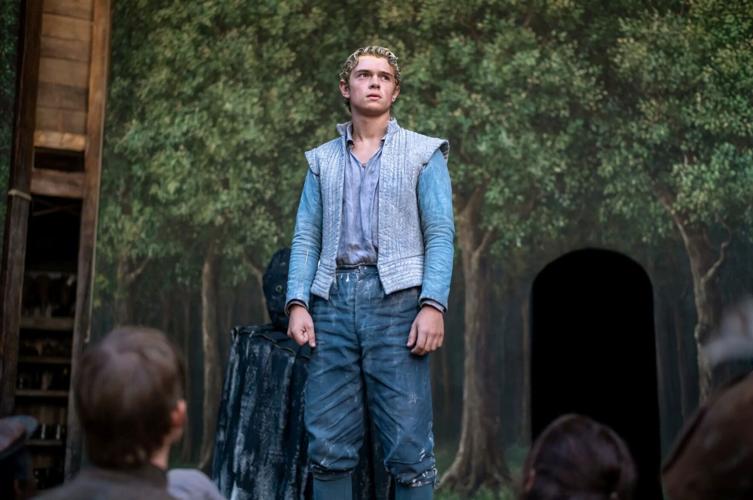
Noah Jupe (Ford v Ferrari and A Quiet Place) rounds out the cast as an actor who William hires to play Hamlet in the stage production. Simply as an actor playing that iconic role, Jupe is great, but what's really incredible is that Jupe's real-life younger brother, Jacobi is also in this film playing the titular role, that of William's one and only son. Jacobi is also great as this 10 or 11-year-old boy who seems to aspire to be an actor or work in the theater like his father. Both Jupe brothers are very talented here.
Rated PG-13 for thematic content, strong sexuality and partial nudity.
Running Time: 2 hrs. and 5 mins.
In theaters.