




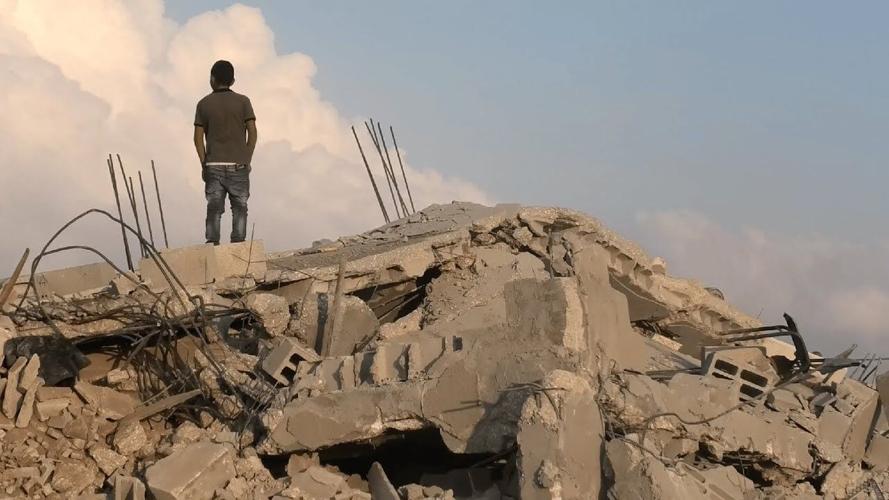


Nominated for Best Documentary Feature at the 97th Academy Awards, this film depicts the demolition of Masafer Yatta, which is a collection of about 20 Palestinian villages in what's known as the West Bank. The West Bank has been a place where Palestinian or Arab people have lived for hundreds of years. Jewish and Arab conflicts in that region intensified after World War I. Eventually, the State of Israel was formed in 1948. A war between Israel and neighboring Arab countries resulted in Israel occupying the West Bank in 1967. Israel began building settlements in the West Bank, which according to international law is illegal. Israel has also been accused of apartheid, which is racial segregation and discrimination, going as far as people arguing that Israel is attempting to remove the Palestinians from their lands, so Israel can have total control. The demolition of Masafer Yatta is seen as a blatant example.
In a lot of ways, this film feels like the title that won the Oscar for Best Documentary Feature at the 96th Academy Awards. It feels like Mstyslav Chernov's 20 Days in Mariupol (2023). There's no narration. There's no talking head interviews. For the most part, it's what could be described as news footage of the various demolitions in Masafer Yatta that occur from the summer of 2019 to the fall of 2023. It could be described as such because like Chernov, the person capturing these events in part identifies as a journalist. Yuval Abraham is that journalist. He's an Israeli who disagrees with what his government is doing, and he gets backlash from both Jewish people who thinks he's a traitor and from Palestinian people who thinks he's naive.

Basel Adra is the other "journalist" documenting these demolitions. In fact, he's probably the main person documenting them. It's not everyday, but it happens a lot. Every time he hears about a demolition, he grabs his digital camera and runs to film it. This puts him in danger because the Israeli military and the Israeli settlers don't like being filmed, especially since Basel often posts his videos on social media with commentary speaking out against the government. In that regard, Basel wouldn't call himself a journalist, as he would an activist. He wants to end the Israeli occupation of the West Bank.
This is probably because Basel is the son of activists, particularly his father. When Basel was a little boy, his father would protest the Israeli settlements and the so-called apartheid. Video of Basel as a boy and his father are dispersed throughout this film. This separates the film from 20 Days in Mariupol, which only uses present-day footage. Basel Adra, who is a co-director on this non-fiction feature, inserts what are essentially his activist father's home movies. It makes this film a lot more personal than Chernov's, which just depicts the raw horror of the War in Ukraine.

There is a kind of raw horror here. It might seem numbing simply seeing what might look like flimsy homes being destroyed, but the film definitely underscores the danger and deadly nature here. At one point, the film captures a protest march with people carrying a banner that reads, "Palestinian Lives Matter." It echoes the Black Lives Matter or BLM protests in the United States. This isn't done glibly. BLM protests spotlight how unarmed African Americans are shot and killed by police or other authorities. What Basel and Yuval's cameras catch here are tantamount to the same.
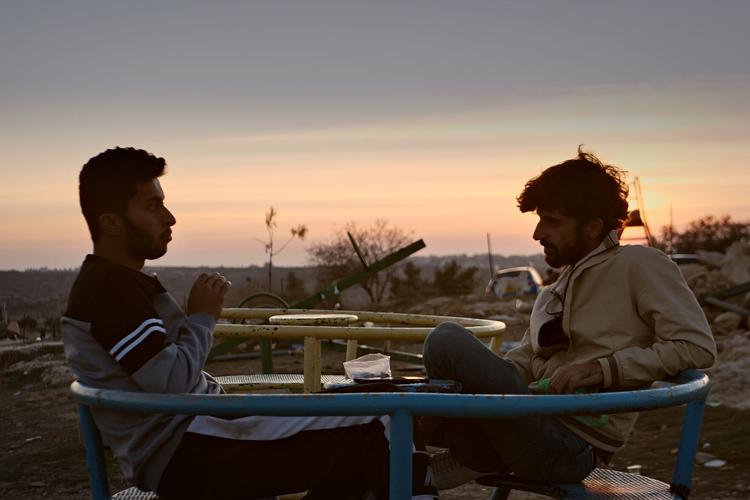
In addition, what truly is striking is the friendship between Basel and Yuval. The footage they capture is powerful in and of itself here, but there are quieter moments where we see Basel and Yuval sitting and talking, often in chairs in front of Basel's family's house or self-made gas station. Instead of getting lost or even swept up in the death and destruction, this film takes the time to show the caring and compassion between these two young men. It also allows for insight into how their lives are different, as well as the difficulty and discrimination befalling Basel and other Palestinians.

Not Rated but for mature audiences.
Running Time: 1 hr. and 32 mins.
In select theaters.