






Nominated for two Gotham Awards and four Spirit Awards, including Best Feature and Outstanding Lead Performance, this film from writer-director Ira Sachs won Best Actor at the New York Film Critics Circle for Franz Rogowski. Most of Sachs' films have appeared at the Spirit Awards. The critical acclaim might suggest this film could break through into the Oscars, but probably not. This film is in effect too small. It's not small in terms of its budget or length. It's small in terms of its scope or thematic reach. This is only Sachs' eighth feature as director, but most of his work has touched upon, if not fully tackled, larger, social issues. For example, Little Men (2016) addresses gentrification. Love Is Strange (2014) grapples with financial instability among the elderly and Keep the Lights On (2012) is about drug addiction. It's difficult to see what the larger issue is here, if there is one. If there isn't, that's fine. This film could simply be a character study about a man and his romantic life, but I'm not sure this film is even successful in that regard.
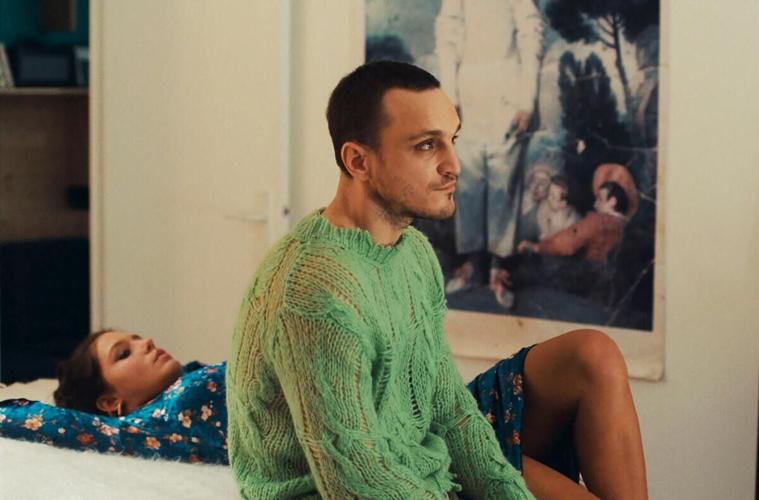
Rogowski (Great Freedom and A Hidden Life) stars as Tomas, a German filmmaker who is working on a project in Paris, France. The only sense of him as a director and person is the beginning, which shows Tomas directing a scene. His behavior is tough and temperamental. He almost comes across as unreasonably demanding and singularly concerned with what he wants without much regard for the feelings of others. Simply put, he seems selfish and not very empathetic. He has a husband, but it's not clear how long they've been married or even how long they've been together.

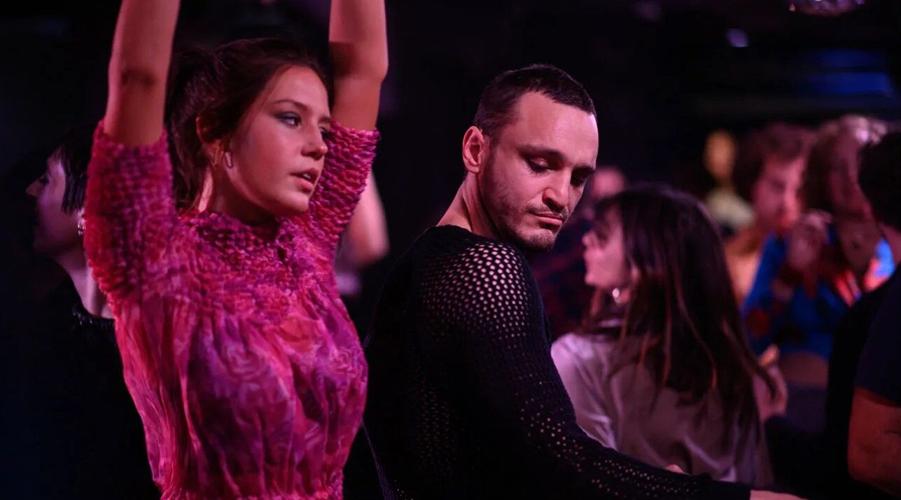
Adèle Exarchopoulos (Blue Is the Warmest Colour) co-stars as Agathe, a woman who seems to be working on the same film project as Tomas. She's at a party that might be a wrap party for the film. She's also present in the office where Tomas is editing the film, but it's not clear if she's simply a guest in both locations or if she's there serving some work function. The film never clarifies her job role. Therefore, the film never delves into what Tomas and Agathe's relationship was prior. Agathe knows Tomas is married, but she easily has an affair with Tomas. This might simply be a thing in French culture, but we never get what Agathe wanted out of her affair with him, or where she thought it would go.
Sachs though ultimately treats Agathe as a pawn that exists more to test the relationship between Tomas and his husband than anything else. Sachs is himself a gay filmmaker and same-sex relations have been a mainstay in his work. International gay couples are also a mainstay in Sachs' work. His films will frequently center on men from different countries in a romance. This trend started with Sachs' debut, The Delta (1996), but if this film takes its queue from any of Sachs' previous entries, it's Keep the Lights On.

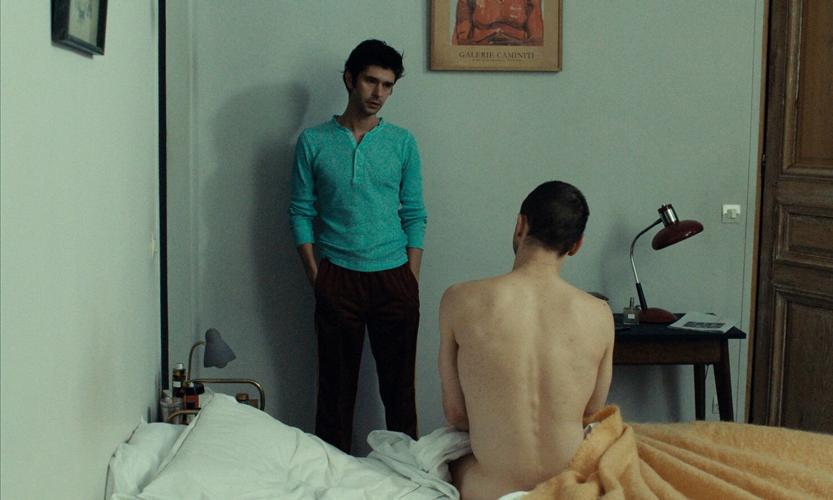
Ben Whishaw (No Time to Die and Paddington) also co-stars as Martin, the husband of Tomas. Again, it's not clear how long the two have been married or even been together as a couple. Martin does love Tomas. However, Tomas' affair pushes him over the line. It's similar to how Thure Lindhardt's character is pushed over the line in Keep the Lights On. Martin tries to move on, but Tomas becomes akin to a stalker who won't let go. There is an interesting angle here. Tomas' affair does provide an opportunity for Martin, which he seizes. Namely, it's the idea of a family, maybe not one that he had envisioned, but one that he can immediately have. It's a great angle, but the film skips over this idea to advance to the next plot point rather quickly.
Instead, Sachs' film is more about watching Tomas bounce back-and-forth like a ping pong ball, as he desperately scrambles to be with either Agathe or Martin. One might assume this film is a take on poly-amorous relationships and how they could not work or easily fall apart if not tended property. Tomas is such a toxic person that it's almost comical and making a mockery of even the concept of polyamory. Just on a basic level, I'm not even sure why Tomas is even pursuing Agathe. Sachs could argue that Tomas' reason for pursuing her doesn't matter, but then I would argue as to why should we care about him, if his reasoning doesn't matter?

Not Rated but contains full-frontal male nudity, intense sexuality and language.
Running Time: 1 hr. and 31 mins.
Available on VOD via MUBI.