
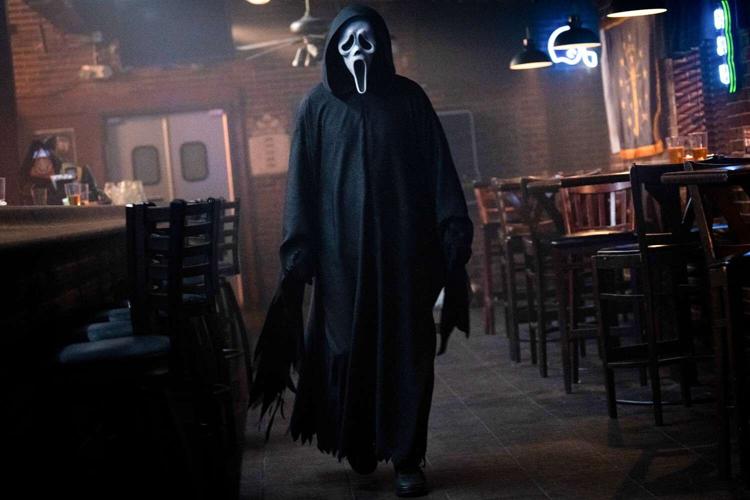

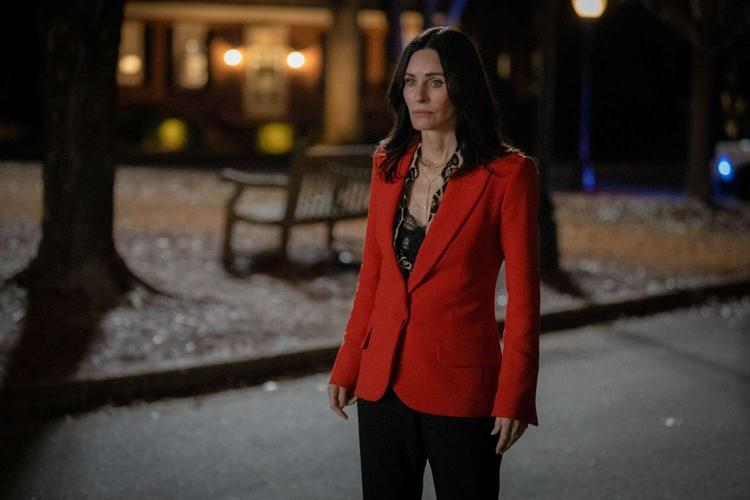




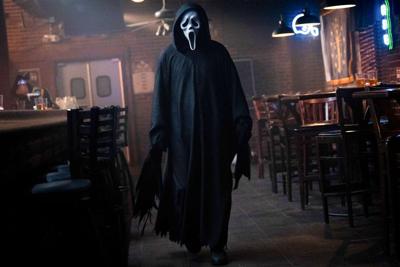
Kevin Williamson made a name for himself as the screenwriter for Scream (1996), which was a satirical slasher film that was very popular, so popular that it spawned a horror franchise of now six sequels, a TV series and a series of comedy spoofs by the Wayans brothers. In fact, Williamson dominated the 90's with his horror in cinema. He wrote the script for I Know What You Did Last Summer (1997), which also became a franchise that had a legacy sequel in 2025. Williamson has mainly been a writer. He tried directing with Teaching Mrs. Tingle (1999), but the majority and the first four Scream films were directed by Wes Craven. Craven's last film was Scream 4 (2011). Unfortunately, Craven died in 2015. The fifth installment came in 2022, as a legacy sequel and was directed by a pair of filmmakers known as "Radio Silence." After the sixth installment in 2023, behind-the-scenes issues resulted in Radio Silence, as well as some of the new cast, being fired or quitting this seventh project. As a result, Williamson was tasked with taking over or taking back the franchise, which feels like Craven doing Wes Craven's New Nightmare (1994), which was him taking back the franchise he created that had been handed over to others over the years.
The difference is that New Nightmare felt like a fresh and new interpretation of his concept. Craven created a fantasy horror film that had its own story line and backstory. New Nightmare turned that whole story line on its head and made it a meta-commentary. Williamson's original 1996 film was already incredibly meta-commentary. It was also very much based in the real-world. Like a lot of slasher sequels like Craven's A Nightmare on Elm Street (1984) or even John Carpenter's Halloween (1978), which is a franchise on which Williamson also worked in the late 90's, the Scream films have never dealt with the supernatural or this idea of the killer coming back from the dead over and over in sequel after sequel. In this film, Williamson teases the possibility of the supernatural. He also teases the possibility of artificial intelligence or A.I. being the killer or behind the killings this time, which would have been a new direction for this franchise.
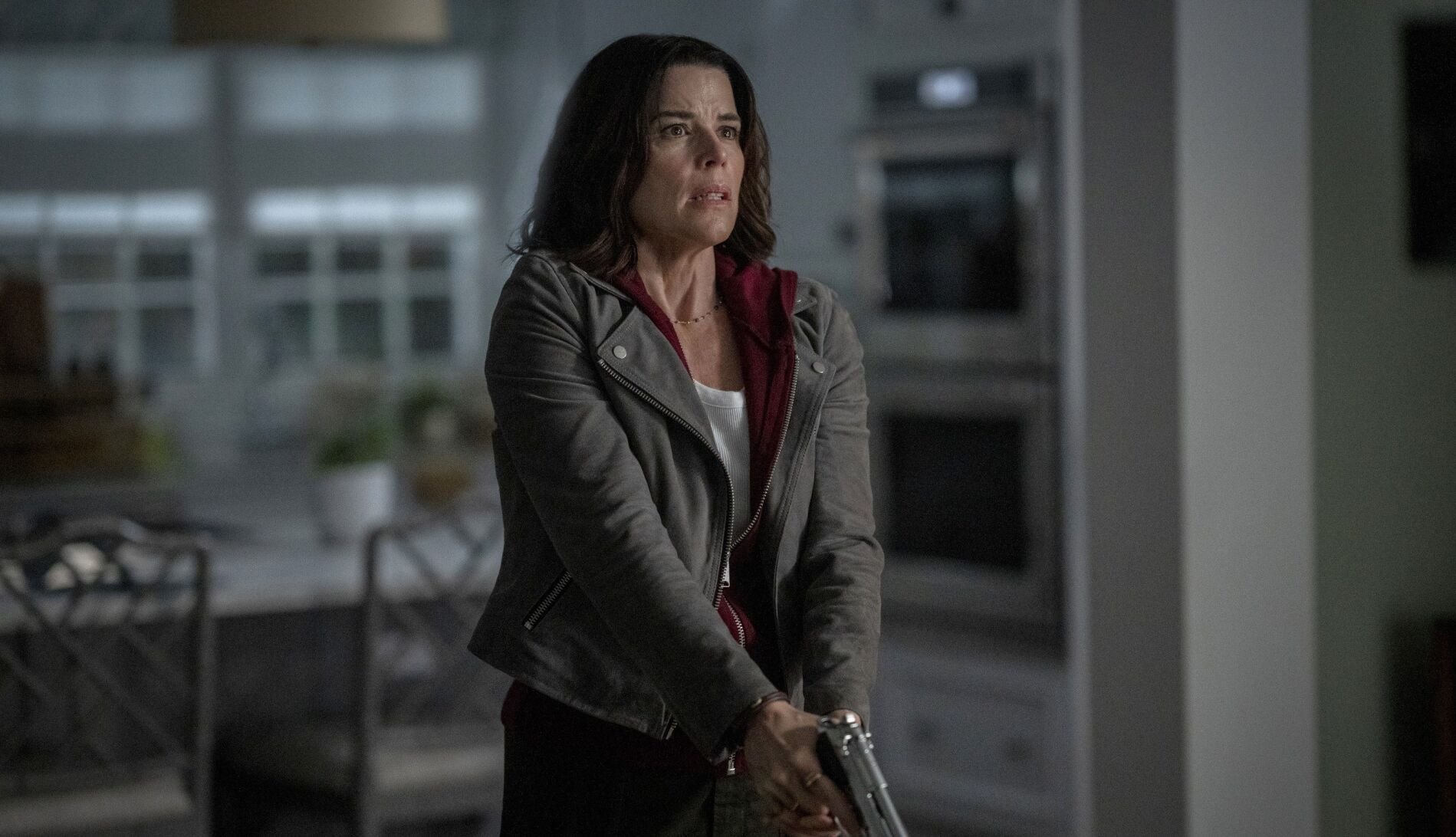
Neve Campbell (The Lincoln Lawyer and House of Cards) reprises her role of Sidney Prescott who goes by the name of Ms. Evans. She's married with three children. She lives in a small town called Pine Groove. It's been thirty years since she was attacked at 17 in Woodsboro, California, by her boyfriend who turned out to be a serial killer who was aided by his best friend. She survived that attack, only to be attacked a couple of years later in college by her boyfriend's mother who was out for revenge. She was then attacked again a couple of years later by her half-brother who also wanted revenge. She wrote a book about her experiences. A reporter who also lived in Woodsboro back then wrote a book, which was turned into major motion pictures that were very popular and spawned a lot of fans, as well as a lot of copycat killers. Because of which, Sidney has become an overprotective mother of her children. In fact, her husband is the police chief, which also reflects her overprotective nature.
Much in the way that David Gordon Green's Halloween (2018) and his trilogy, Williamson grapples with the idea of generational trauma or how trauma can be passed down from parent to child and even further. There's a question of parenting and what's the best way to parent. Does a parent like a mother try to shield her child from the bad things from her past? Or, does the mom share everything from her past and work to prepare her child? Does the parent train their child to avoid dangers or train their child to fight those dangers? Some might argue that training people to fight is the best option and the obvious one, but the previous films in this franchise teased the idea that passing along that kind of violence could bring in darkness or corrupt the soul of the child, which could traumatize the child in unforeseen ways. Williamson's film doesn't really delve into that too deeply, but it is acknowledged.

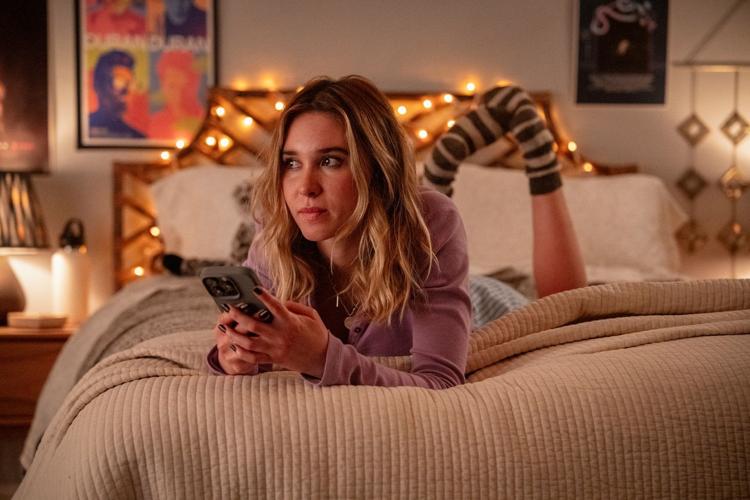
Isabel May (1923 and Young Sheldon) co-stars as Tatum Evans, the 17-year-old daughter of Sidney Prescott. She's a stunning blonde who has to deal with her mom being a celebrity. Yet, her mom is a celebrity connected to infamous incidents, specifically horrific murders and serial killers. She recognizes that talking about her mom's past is triggering for Sidney, but, at the same time, Tatum is highly curious about it. She wants to ask her mom questions about it, but it results in awkward or tense moments where her mom clams up. Tatum perhaps doesn't feel as connected to her mother because of the wall that Sidney puts up, as well as her mom's overprotective nature. It predictably makes Tatum rebel in small ways. She's also upset at her mom because Tatum doesn't feel like she's prepared when danger comes.
Like with most slasher films though, people don't often care about whatever drama is being presented that makes for good characterization or that would bolster the storytelling and the empathy. Most people come to slasher flicks for the depiction of the murders. The crazier and more bloody kills usually are what excites and satisfies horror audiences. Throughout the franchise, the Scream films have done a good job with concocting interesting set-pieces and crazy ways for people to die. I'm not a fan of horror flicks. Going back to the 70's, there's a long history splatter films of which people like Wes Craven were a part, so there's probably nothing in this narrative that's as crazy as the exploitation films or grindhouse titles that marked that era in the 20th century. Yet, there are some gnarly moments here. As usual, those gnarly moments are only possible due to characters making very dumb decisions. For example, literally a character is protected inside an impenetrable room. This character even has a cell phone. Yet, instead of calling the police and waiting for help, this character leaves the safe room to traipse about unprotected. It's dumb, but that's par for the course with horror films.

A lot of those moments are empty because characterization here is lacking because it's clear that a lot of young people are introduced, only to be fodder or to have a high body count. As sadistic as it may sound, the murders are more impacting when the audience cares about the people being killed. Good characterization makes you care, but that's lacking here. The opening of the original 1996 film was the death of Casey Becker, famously played by Drew Barrymore. Technically, there wasn't much characterization for her, but that character being played by Drew Barrymore helped because Barrymore was such a well-known celebrity. Plus, the rest of that 1996 film was about building empathy for that character and understanding her death even more. The young people here are picked off and not much more is said or done about them, so empathy for them is supremely low. The film doesn't even give space to mourn them.
Discounting the films directed by Radio Silence, most of the murders make sense in terms of the motives of the killers. Since Radio Silence took over the franchise, a lot of the murders were basically random and made no sense. For a lot of it, it was murders for murder's sake. There was of course a purpose in those Radio Silence films and motives for the killers, but the murders in the Radio Silence era felt less and less personal and more about making some grander philosophical or meta-commentary point. Here, Williamson tries to make the motives in this film veer back toward the personal. Arguably, the motives of the killers in the Radio Silence films were rather weak or lame. Those motives made a grander philosophical or meta-commentary point that spoke to the deconstruction of Hollywood output lately. That's not really the case here.

When the truth about the murders was revealed in this film, it felt like an extreme letdown. It was literally like the air had been let out of the balloon, not a loud pop or bang, but a slow deflation like a long fart. The motives of the person responsible felt very, very weak and lame. It didn't echo what felt like the major theme of generational trauma or conflicted, overprotective parenting. It didn't relate at all and out of all the possible personal connections or reasons that the killer could have had, this felt the most tangential and seriously the most random. Say what you want about the original Scream, but its killers had very strong, personal motives for each person they killed. For this film, I cannot say the same. However, after not having Neve Campbell in the previous film, or having her be such a side character in the fifth Scream film, it felt so good having her back at the helm.
Rated R for strong bloody violence, gore and language.
Running Time: 1 hr. and 54 mins.
In theaters.