
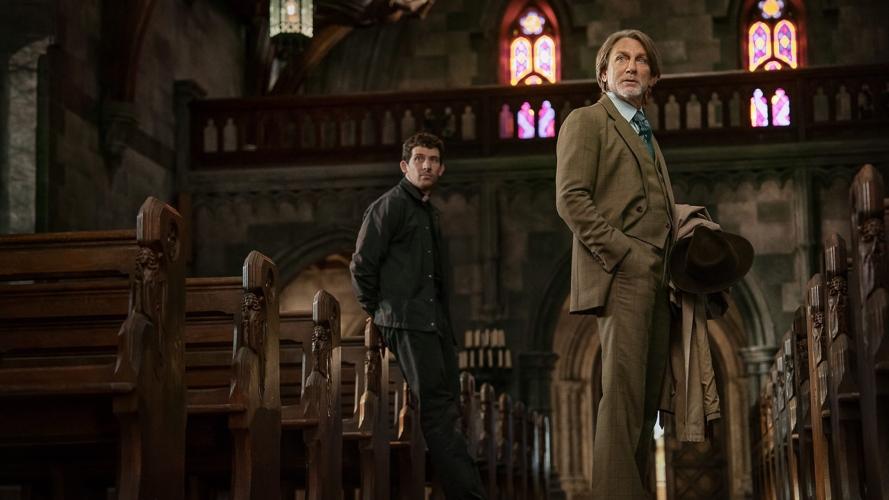
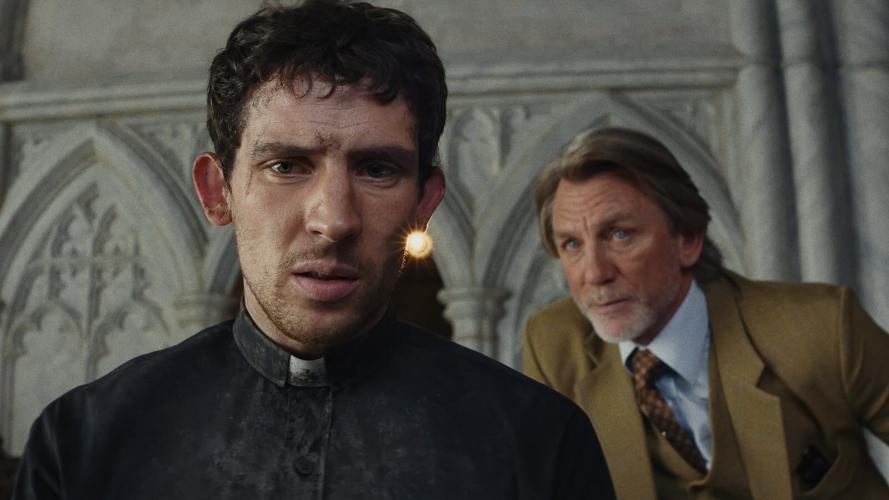

This is the third in the film series that began with Knives Out (2019), which introduced the private detective and super sleuth, known as Benoit Blanc, played by Daniel Craig (Logan Lucky and Casino Royale). The previous two films earned filmmaker Rian Johnson nominations at the 92nd Academy Awards for Best Original Screenplay and at the 95th Academy Awards for Best Adapted Screenplay. Johnson's scripts are murder mysteries done in the style of Agatha Christie. People enjoy the ensemble performances, including Craig's over-the-top character that has been in general fun. However, the structure of his scripts usually focus on a person in the center of the ensemble who Benoit either investigates or exonerates. That person interacts with the ensemble the most and often feels like the protagonist and not Benoit Blanc.
This film feels like that even more so than the previous ones. In fact, Benoit doesn't show up in this film till 40 minutes into it. In the first and second films, Benoit appears within the initial 10 minutes of both. Watching this film, one almost forgets that this is a Benoit Blanc story. Yet, that's perhaps not accurate. We learn nothing about Benoit. The second film revealed that Benoit is gay, but Johnson subsequently does nothing with that. In adaptations of Agatha Christie books, like the recent ones by Kenneth Branagh, more insight or more characterization was given to the private detective, Hercules Poirot. Even in Johnson's murder-mystery, TV show, Poker Face (2023), there's more insight or more about the personal life of the super sleuth. Yet, here, that's not the case.

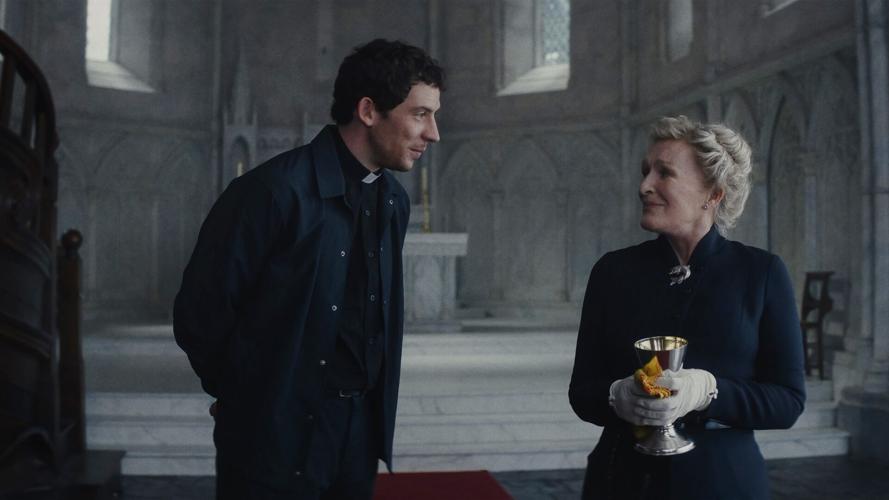
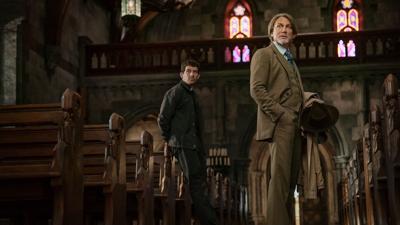
Josh O'Connor (Challengers and The Crown) co-stars as Jud Duplenticy, a former boxer who now works as a priest. That career change has a story behind it. He's originally established in Albany, New York, but after an incident, a violent one, he's sent to a place called Chimney Rock, which is also a place in New York. He's sent to be the second in command at a church called Our Lady of Perpetual Fortitude. He's sent there to try to reform it because its attendance is waning. Jud's job is try to increase the number of people who go there. Because he's second in command, it mainly becomes about him addressing issues with the first in command.
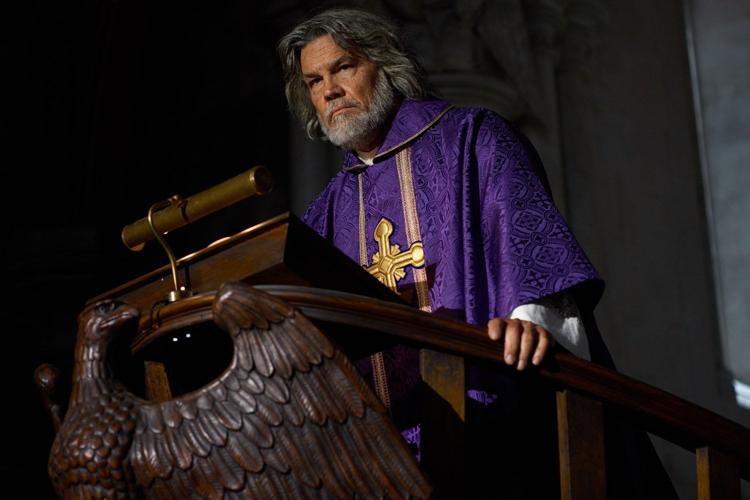
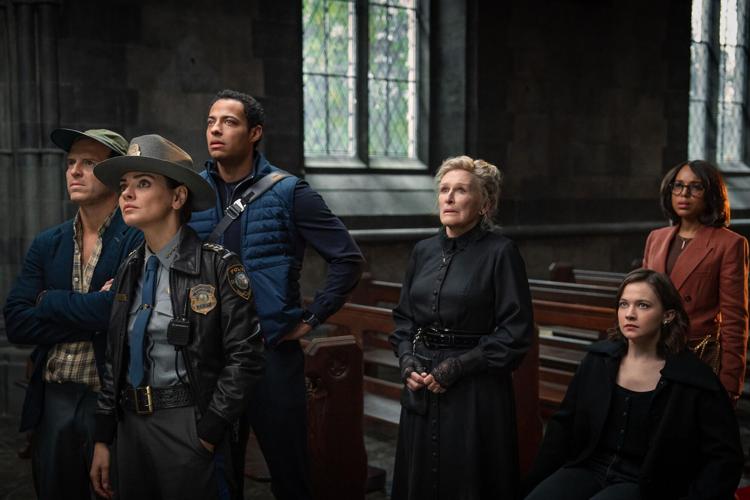
Josh Brolin (Avengers: Infinity War and No Country for Old Men) also co-stars as Jefferson Wicks, the monsignor of that aforementioned church. The reason for attendance issues is due to Wicks being a very right-wing and hardcore conservative who takes a very aggressive stance on his positions. He alienates a lot of people by what he says from the pulpit. The only people who still show up in the pews are a dedicated flock of six people. Part of that 40-minute opening is dedicated to running through introductions and brief sketches of these six people. The majority of it though centers on Jud's dilemma with Jefferson.

Like any Agatha Christie film, it's obvious that those six people will become the list of suspects once the murder happens. What strengthens the mystery usually comes in how much we get to know those various suspects. It's a different situation in the previous films because the first film had a list of suspects that were members of a family. In the second, the list of suspects was a group of people on a secluded island. Each of the last films had people who basically were trapped or confined to a single place, forced to interact. This film is different in that the potential suspects aren't trapped or confined to one place. They all meet up at the church, but it's not as if they're all unable to leave. They all live in Chimney Rock, but it seems like a regular sized town. Each of the six people have their own homes, so they're not forced to interact. They all can and do go their separate ways. We can't get to know them in a way that we could in the previous entries.
I wasn't necessarily all that impressed with the characterizations in those previous entries, but somehow they feel even lesser here. I think not structuring this where the characters are confined to one spot hurt the narrative. There's simply not enough opportunities to get to know these people, beyond the superficial and one-note introductions that we are given. Some of the more famous actors in that ensemble feel like they get wasted. The one exception is Glenn Close (Fatal Attraction and The Big Chill) who gets some intriguing moments throughout and an even more climactic moment to shine.

It's funny that this film has been released so close to Christmas because this film isn't about Jesus' birthday. It's about and literally is set during the time of Jesus' resurrection or so-called resurrection, which the title references. There's this idea that Benoit who is an atheist is going to have his beliefs challenged and perhaps be put into a position where he has to consider the existence of God or the reality of miracles. I'm not sure that this angle is as well fleshed out. There's also an angle that's more about Jud questioning, not necessarily his faith in God, but his faith in himself to handle things in the Christian way that he believes is best. Yet, I'm not sure that this angle is all that effective either. The elements are there, but I wasn't that moved by Jud's story in the end.
Rated PG-13 for violent content, bloody images, language, crude sexual material and smoking.
Running Time: 2 hrs. and 26 mins.
Available on Netflix.
