







Earlier this year, the comic book series Wonder Man (2026) received an Emmy nomination. It's one of the few super-hero shows to center on an African American lead character. When it comes to live-action adaptations of comic books, some critics complain about how the shows don't utilize the full powers of the characters. One example is Smallville (2001), which was about the character of Superman but it made the character a teenager who couldn't do all the things that the comic book creation could do, like fly. Other shows have done similar things where the super-hero in question can't do as incredible or as fantastical things as on the pages, mainly due to limitations in production budgets. If the show does decide to have its titular character do incredible or fantastical things, it's usually reserved for one or two episodes in the series and typically at the end, if the show only has 13 episodes or less. Such was the case with Wonder Man, which spent most of the time with its protagonist not being super-powered or being a regular human being. The problem is that any show about regular humans can be made. If you make a show about super-heroes, then you want to see super-heroes.
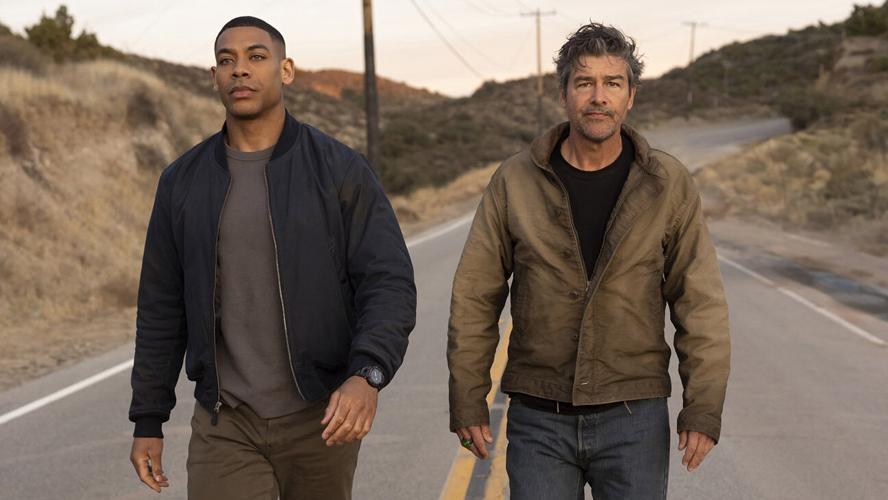
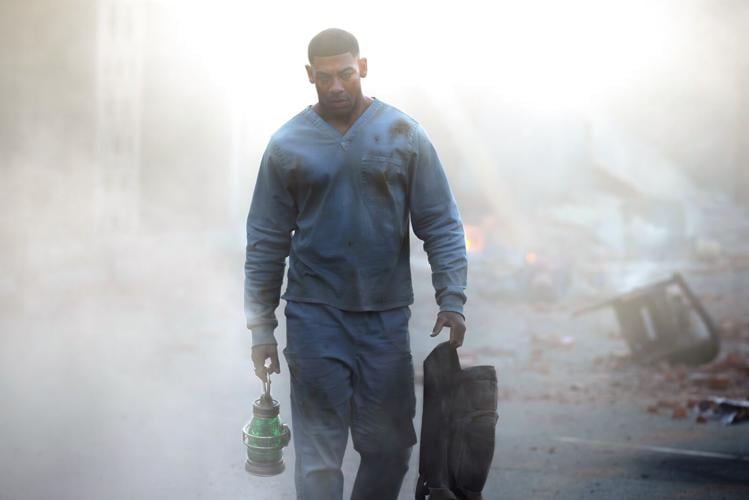
Aaron Pierre (Genius and Krypton) stars as John Stewart, aka the "Green Lantern," a super-hero who has a power ring, a ring that has cosmic energy, which can be controlled by whoever wears it. The ring can be used to create things like force fields, lasers, or even physical objects, either big or small, that can be wielded as weapons, manipulated through the wearer's mind. Whoever wears the ring can be given the ability to fly and even be protected by a force field, which can act as a space suit or even a deep-sea suit. The first episode is a hour, which is more than enough time to see John using the ring and accessing these powers. However, the first episode doesn't really do that. Its explanation is that John isn't a full-time Green Lantern. He's a Green Lantern in training. The show disappoints fans from the very beginning and it will continue to do so.

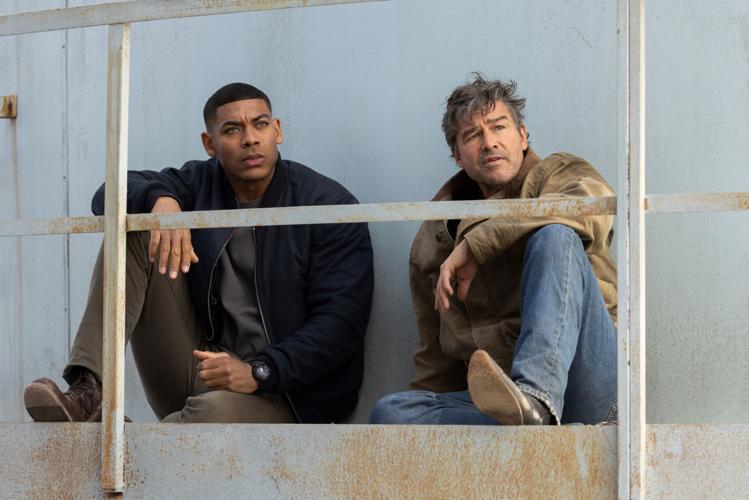
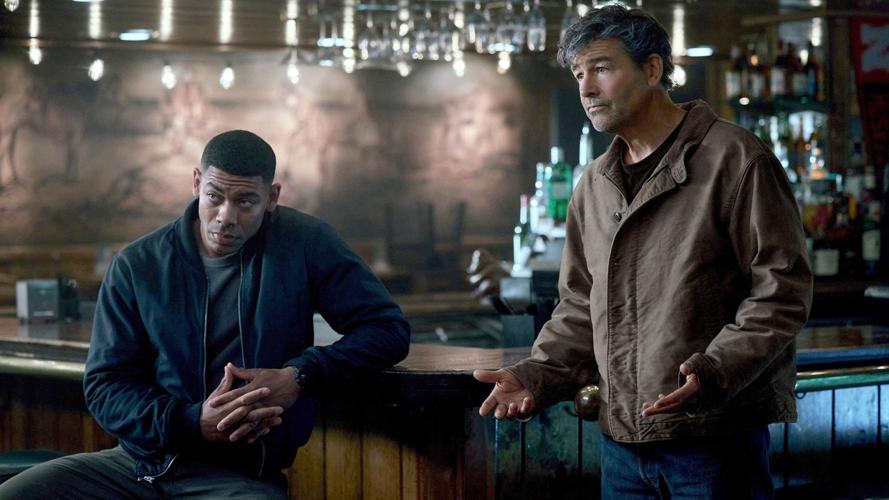
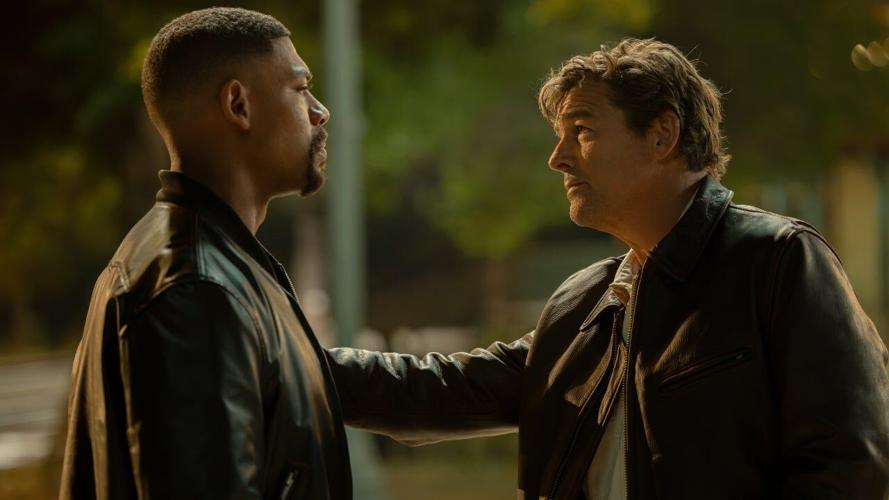
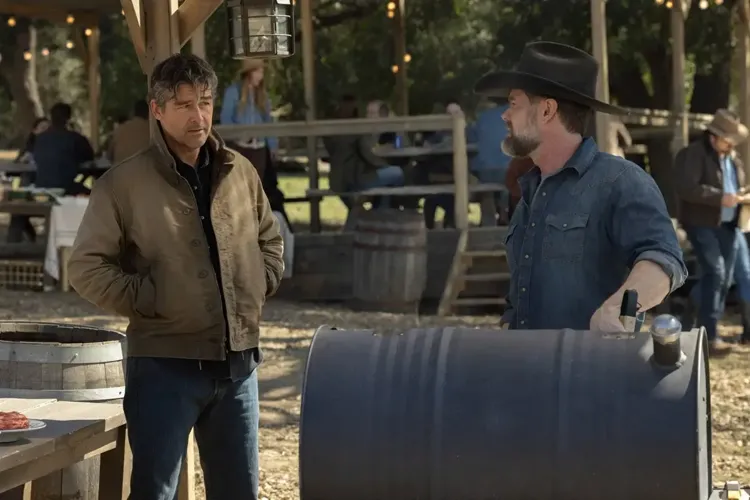
Kyle Chandler (Bloodline and Friday Night Lights) co-stars as Hal Jordan, the previous, Green Lantern on Earth. He was an Air Force test pilot who was given the power ring from an alien species that act as an intergalactic police force called the "Guardians." One Green Lantern is assigned to a certain sector of space, but only one is allowed to be responsible for that sector at a time. When that Green Lantern dies, their ring is passed along to another person who is deemed worthy or honorable for that responsibility. In the comic book or even in animated features, the next person to get the ring usually isn't given forewarning. In this series, John is given a lot of forewarning. Hal is in fact training John, so that John is fully prepared. However, in the feature, Green Lantern: Beware My Power (2022), John can talk to the ring itself because the ring is like artificial intelligence that can educate its wearer on how to use it and what his responsibilities are.
Having this premise of Hal training John is fine, if it involved Hal showing John how to use the ring and demonstrating its power. There is a moment where we see Hal take off and fly. There's another where he creates a small object with the ring, but it's more of a parlor trick. It's lame and not the incredible or fantastical thing that we know the character can do. There's even a moment when Hal identifies a suspect in a serious crime and John goes running after the suspect. Instead of using his ability to fly or manifest force fields, Hal does nothing. Later, it's revealed that Hal's hesitation puts lives in danger. The ring needs to be recharged and Hal forgets to bring his charger, which is a rookie move. Hal is portrayed as not the greatest in his actions as a Green Lantern. Hal's hesitation doesn't speak well of him as a Lantern, but it does speak to something else.

From the Black Lives Matter movement, which put a spotlight on police abusing their power, specifically against African Americans, to even the recent protests against ICE agents who have abused their power under President Trump's administration in places like Minnesota, having Hal or even John using their extrajudicial powers when they claim to be "cops" of a sort and not do things without the approval of proper legal channels or courts are good things. In James Gunn's Superman (2025), a similar conversation was had about how a superhero should exercise their powers without it being extrajudicial or at least vigilantism, which should not be encouraged. There's also a conversation here about how to deal with aliens, aliens from outer space, as opposed to aliens who immigrate to the United States from another country. This is relevant to the conversations had this past year about ICE under the Trump administration, so it's a good conversation for this series to have. Unfortunately, the final episode undermines all of that.
Yet, this is a superhero series. Gunn's Superman was able to have those conversations, while still allowing Superman to do incredible and fantastical things that only Superman could do. This series wants to have those conversations minus the depiction of incredible and fantastical things, which I understand that due to budgetary reasons might not be practical or feasible for every episode. Without all that fantastical stuff, this series becomes not too much distinguishable from other crime dramas on HBO like the recent Task (2025), which was also nominated for Emmy Awards, along side Wonder Man. This show is basically Task but with some sci-fi lore sprinkled in, emphasis on sprinkled.

Reportedly, HBO's True Detective (2014) was also an inspiration or north star for the makers of this show. Crime dramas like Task or True Detective always involve corrupt police forces and sometimes a protagonist having to work outside the law or beyond it. Pierre recently starred in the Emmy-winning Rebel Ridge (2024), which had a lot of those elements in it. Pierre was great in that feature and he's great here, very well placed. It's just sad that it's a watered down superhero series or True Detective with some slight supernatural elements sprinkled in.
The third episode brings up issues regarding racism. The aliens who chose Hal who is a white man were going to ask John's father, a Black man, but in order to be chosen, the aliens ask if he were afraid, John's father said he was and was denied getting the ring. There's this suggestion that in order to be a Green Lantern, one has to be fearless. This idea makes no sense. Everybody has fear. The question is how they handle it. I understand the point that the the creators of this show, and specifically writer Vanessa Baden Kelly, were trying to make. They were trying to make a distinction about how Black people, specifically how Black men, are perceived and the opportunities they are afforded as opposed to white men, but I simply think it was expressed and explored in an inartful way. Reducing it down to whether the potential candidate of a Green Lantern ring has fear or not is not sufficient to make that point without rendering a whole bunch of confusing questions.

For example, John's father when asked said he had fear, but what if he lied? There must be or there should be a longer way of evaluating these candidates or other criteria. I appreciate that this Black man named John Stewart gets the opportunity to wear the ring and have this cosmic power, but, from a personality standpoint, John comes across as a bit of a robot in his behavior. A lot of it probably comes from him being a marine and the third episode does a lot to distance him from his siblings and the idea of friendships. He also comes across as a man who experiences little joy. It's a shame because so many shows and even films depict Black trauma and suffering without counterbalancing it with the joy. Yes, there's a scene where we see John have sex, but that scene almost felt perfunctory due to a plot point later, but are there really no other qualifications needed to be a Green Lantern? Arguably, a serial killer has no fear. A sociopath has no fear. If having no fear is the only qualification, then any mass murderer could be a Green Lantern.
Of all the episodes, Episode 4, titled "The Weenie," is probably the best episode because it's the one episode where we see Hal and John working together, and using the ring to investigate the mystery. Speaking of mass murder, Garret Dillahunt (Raising Hope and Deadwood) plays Will Macon, a wealthy rancher who is presumed to be an alien or harboring an alien that is accused of mass murder. Will Macon is a no-nonsense guy who is an amazing foil, opposite both Hal and John. What Hal and John learn is that there is an alien, known as the "man-hunter" who is hiding on Earth and is capable of mass murder. Another group of aliens are trying to find this man-hunter and they'll kill anyone or anything that stands in their way. These aliens have the ability to self-implode with the force to take out an entire city block. The aliens are basically suicide bombers. However, the small, rural town where the man-hunter is hiding has several people protecting the man-hunter, so it's Hal and John's job to determine who the man-hunter is before the suicide bombers destroy the town and innocent people in it. Will Macon could be the man-hunter or someone protecting the man-hunter. That's the mystery. Yet, it's not the only mystery.

The first episode establishes that other, overarching mystery, which is the fact that Hal Jordan was himself murdered. Hal is killed in 2026. The majority of the series takes place ten years ago in 2016. The bulk of the man-hunter plot takes place in 2016, but, in 2026, Hal is shot dead. The question of who killed him and why become a lingering thread. The answer to those questions arrive at Episode 8, and, I agree with a lot of commenters who think that this episode, which is the season finale, didn't satisfy and was pretty lame or underwhelming. It wasn't exciting. It wasn't interesting. A lot of fans talked about how the series deviated from the comics, but, even if you knew nothing about the comics, this whole thing really ends with a whimper and not as rousing a way as one might hope.
Rated TV-MA.
Running Time: 1 hr. / 8 eps.
Sundays at 9 PM on HBO.