
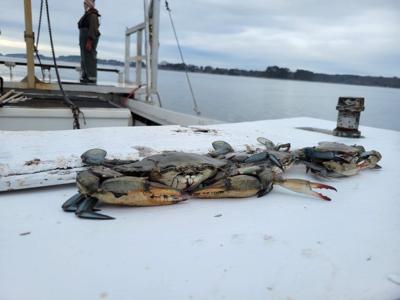

CHESAPEAKE BAY - Scientists say there is some encouraging news for Chesapeake Bay blue crabs this year after six consecutive years of below-average juvenile populations.
According to the 2026 Chesapeake Bay Blue Crab Winter Dredge Survey released Monday by the Maryland Department of Natural Resources and the Virginia Institute of Marine Science, both juvenile blue crab numbers and the overall blue crab population increased compared to last year’s survey.
The annual winter dredge survey is one of the primary tools scientists use to estimate the health of the Chesapeake Bay’s blue crab population. Researchers collect samples from across the Bay during the winter months, when crabs bury themselves in the mud, to estimate population trends.
According to the survey, a total of 228 million juvenile crabs were estimated in the Chesapeake for 2026, an increase of 121% over last year. Adult male crabs also increased, researchers say, with this year’s population estimated to be 43% higher than 2025. The survey found female crab populations had decreased by 25%, however.
The latest findings come after previous reporting highlighted growing concerns about the species. Earlier this month, WBOC reported on a separate stock assessment that found young blue crab survival, known as recruitment, had declined by nearly 50% between 2010 and 2023. Scientists involved in that assessment warned the Bay may not be producing young crabs at historic levels, although they stressed the species was not considered overfished under current management standards.
Last year’s winter dredge survey painted an especially concerning picture. The 2025 survey estimated the Bay’s blue crab population at 238 million, the second-lowest level recorded since the survey began in 1990. Juvenile crab numbers were also below average for a sixth straight year.
State officials say this year’s increase in juvenile crabs could be an important sign for the future because juvenile abundance often influences future adult populations and harvests.
“It’s very encouraging to see higher levels of blue crabs and juveniles, especially after a few years of lower juvenile recruitment,” Mandy Bromilow, DNR’s blue crab program manager, said. “However, we’ll still have to remain vigilant about the population, given that we have seen declines since 2011.”
Even with the improved numbers, scientists caution that blue crab populations naturally fluctuate from year to year and that long-term concerns remain about habitat loss, changing environmental conditions, predation from invasive species like blue catfish, and climate impacts affecting crab survival.
The survey results are expected to help guide future blue crab management decisions in Maryland and Virginia as researchers continue a broader stock assessment examining long-term trends in the Chesapeake Bay ecosystem