
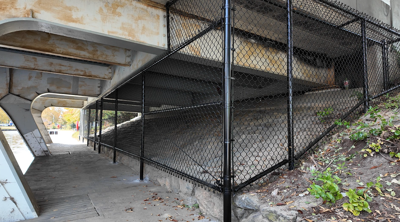
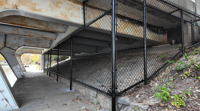

SALISBURY, Md. — The city of Salisbury has fenced off the area beneath the South Division Street bridge, closing a spot where homeless people had visited for years.
The city has put up fencing along both sides of the South Division Street bridge near the library. City officials say conditions under the bridge had become unsafe and unsanitary for both the people spending time there and for the city.
The city says encampments have existed under the bridge for eight to 10 years and gotten progressively worse. Mayor Randy Taylor said conditions reached a point where the city had to act.
“We were getting more and more reports from SPD, our police department,” Taylor said. “There were more and more activities coming from there. And on top of that, you know, we could see just by virtue, our office is right next to think. We can see that the population and the amount of trash and, you know, our folks that are cleaning it up.”
He also said people have fallen into the nearby river and that city crews were regularly cleaning up trash, clothing and human waste. The city provided portable toilets in the area, Taylor said, but some people did not use them.
Taylor said the closure took place last week, between Tuesday and Friday. People who had been under the bridge were told about the plans beforehand, he said, giving them about 48 hours. He said roughly half a dozen people were there at the time, though he said a different group visits each day.
Debra Rossi, executive director of H.O.P.E., a day shelter in Salisbury, said some of her clients lost medication and belongings during the sweep. H.O.P.E. helps clients replace both, she said.
Rossi said she understands why the city acted, but the larger problem of homelessness persists.
“Nobody said it should remain,” Rossi said. “What I'm saying is people are affected. There are actual consequences. Whether the action needs to take place or not is not what I'm commenting on. I'm commenting on the human side effects. So if we have areas in our community that are unseemly because people that have a lack of resources are there, just continuing to close them off is not addressing the problem. So yes, we solved a problem under the bridge that was unsafe. Where's the next one?”
Rossi also cautioned that not everyone who spent time under the bridge was homeless.
“The bridge had kind of become a place where, yes, some people were sleeping,” Rossi said. “Some of them are homeless and others, it was just an area where they were engaging in activities. We were noticing an increase in drug use, based on paraphernalia, and some other things.”
Taylor said Anne Street Village, the city’s shelter program, has been at full capacity, with 24 residents, since December. He said HALO ministry has extra capacity, but that “there are folks that don’t want to be housed,” citing mental health and drug issues. He said he believes city staff know where people from the bridge have gone.
“I think as a city we're doing more for, for housing and homelessness than most municipalities do,” Taylor said.
HALO Ministry in Salisbury has a shelter open every day. H.O.P.E. connects people with a men’s winter shelter, the Hands and Hearts cold-weather shelter, which opens Nov. 21 with 26 beds. Rossi said nearly 20 names are already on the list.
“We're just trying to create an environment where HALO can exist, folks that are looking for HALO type services can assist, but then people that are just simply going to the bank and going to the shopping shop for groceries can exist without feeling harassed,” Taylor said.
Rossi stressed that the homelessness outreach team within Wicomico County works hard to connect with people in the community who may be struggling.
“One thing I would like people to know is we have an outreach team here in Wicomico County that consists of multiple agencies, and they walk regularly,” Rossi said. “They do go to actual encampments. We encourage individuals that are facing homeless to seek services, be it my goal to have everyone have identification, which is certainly safer if they seek medical help or they need emergency services. And it is a starting point to a conversation. No, nobody wants you to show up in an encampment because you don't want someone coming into your home. We work really hard on those relationships, and people do deserve to have dignity regardless of their circumstances. So support agencies that you believe in, hopefully agencies like mine, get involved, don't just talk about the situation.”