
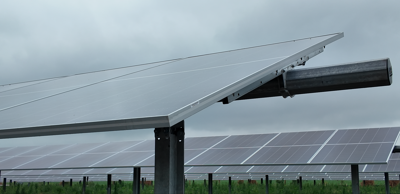

DOVER, Del. - As Delawareans continue to grapple with rising electricity costs, Governor Matt Meyer announced Tuesday that four new community solar projects have been accepted into the state's Jobs First Permitting Accelerator Program, a move the administration says will expand access to affordable energy while strengthening Delaware's power grid.
Speaking at ECA Power's solar facility in Dover, Meyer said the projects represent a significant step toward reducing energy costs and increasing in-state power generation.
"We're here first and foremost because Delawareans shouldn't have to choose between keeping lights on and putting food on the table," Meyer said.
The four projects — two in Seaford, one in Townsend and one in Clayton — are expected to generate more than 16 megawatts of solar energy and bring more than $73 million in clean energy investment to Delaware.
According to Meyer, the projects could provide electricity bill savings of 10% to 15% for more than 16,000 Delaware households through community solar subscriptions.
"Community solar, for me, in part, is about equity," Meyer said. "Many families do not own a home, and they deserve to get both the price benefit and environmental benefit that everybody else gets."
The projects are among the first to be accepted into the state's Permitting Accelerator Program, which was established through Executive Order 18 earlier this year. The program is designed to speed up reviews and approvals for projects that create jobs and increase energy generation.
Meyer said Delaware currently imports much of its electricity from outside the state, leaving residents vulnerable to market fluctuations and rising costs.
"Delaware imports too much of our energy from out of state," Meyer said. "That means we're at the mercy of markets and middlemen we cannot control."
The governor described the projects as part of an "all-of-the-above" energy strategy that includes solar, offshore wind, nuclear energy, battery storage and other technologies aimed at increasing reliability while lowering costs.
State officials say expanding local energy production will also help improve grid resilience and reduce pressure on Delaware's electric infrastructure.
"The cost of energy is on every Delawarean's mind, and this is another opportunity where the state has taken lead to make sure that there are multiple options for Delawareans to have more affordable energy," said Dayna Cobb, deputy secretary of the Delaware Department of Natural Resources and Environmental Control. "It's going to be more accessible, more affordable and that's just a win for all Delawareans."
Cobb said more than 65% of Delaware's energy is currently imported, making local generation an important part of the state's long-term energy strategy.
"The more in-state generation we can get, the easiest way is to go through solar," Cobb said. "It'll help us have an energy independence that we've been looking for."
ECA Solar leaders say one advantage of solar energy is its predictable cost compared to traditional fuel-based energy sources.
"One of my favorite things about solar is that we don't rely on any fuel to make energy," said Vincent Moschella, a leader with ECA Solar. "Regardless of what's going on nationally, regardless of what's going on globally, you can always count on solar to have a very consistent cost to it."
Moschella said the Permitting Accelerator Program allows state agencies to review projects simultaneously rather than waiting for one approval process to finish before another begins, helping projects move forward faster.
While he emphasized that solar alone will not solve Delaware's energy challenges, Moschella said it can play a major role in reducing demand during peak usage periods.
"When it's generating electricity at its peak is when people are using energy the most," Moschella said. "What solar really does is it helps bring down that peak load."
Residents who enroll in community solar programs will continue receiving electricity through Delmarva Power. Participants will see savings reflected directly on their monthly utility bills through credits generated by their subscription.
Meyer said the projects are part of a broader energy strategy that includes a forthcoming First State Energy-Solar Plan, expected to be announced later this summer.
"Today, we're here to say we're actually doing something about it," Meyer said. "Every single thing we're doing is about making sure every Delawarean gets a fair shot."