
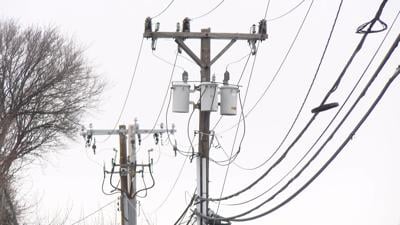

DOVER, DE- Delmarva Power customers in Delaware could soon see higher electric bills as the utility seeks a nearly $70 million increase to its base rate. While lawmakers agree that rate hikes could be problematic for many in the First State and that Delaware needs more energy, they remain divided on what’s driving the proposed increase and how to address it.
Delmarva Power & Light filed an application with the Delaware Public Service Commission on December 9 requesting a $67.8 million increase in base-rate revenue compared to rates approved in 2024, according to the Delaware Division of the Public Advocate. State officials say the request marks the utility's third base rate case in roughly five years.
Jameson Tweedie, Delaware's Public Advocate, said the proposed increase is concerning, particularly given rising living costs for families and businesses.
"This would increase a non-heating customer's bill by about $9.30, or about 16%. For a space-heating customer, that is closer to $15 per month, or 23 to 24%."
Under Delaware law, utilities can implement interim rates while a case is under review. If approved, Delmarva's new base rates could take effect July 9, 2026, subject to refund depending on the commission's final decision. Separate electric supply rate changes are already scheduled to take effect on June 1, 2026.
Tweedie said the timing could not be worse, with interim rates potentially taking effect just as summer electricity use rises.
"So after they've filed a rate case, they're allowed under state law to implement interim rates after seven months. When will those interim rates kick in? Right at the beginning of the summer, as people's air conditioning needs are going up, their electric bills are correspondingly going up."
The proposal also includes an 18% increase in the fixed monthly customer charge, raising it from $13.50 to $15.94, as well as Delmarva's request for a 10.5% return on equity — provisions that Democratic Sen. Russ Huxtable says place too much strain on families and businesses already facing financial pressure.
"I think it's a little tone deaf to come with the rate increase, such as the one they did, with a 10.5% return on equity for Delawareans. I do think it's a little bit tone-deaf at this particular juncture and time of year, when last year we had a spike in rates, but we had high usage rates because of the cold winter. And here we are in January again."
Republican Rep. Rich Collins said that while he never wants to see rate increases, higher bills are difficult for consumers and may be inevitable given Delaware's energy challenges.
"The power that we're having to import is not close by. That means you're going to end up paying dramatically more money for lines that are capable of carrying that to us. So I'm opposed to rate increases, but I'm a realist."
Collins says some of the main reasons for these constant rate increases are decades of green energy policies and government overregulation, which he believes have driven costs higher.
"Every virtually every piece of legislation we've actually passed probably for 20 years has had the effect of, in one way or another, raising energy costs. And I will promise you that it is going to continue and get worse until the day that legislators who understand this, which I will tell you, I'm very much opposed to this agenda, understand that it's only going to make things work for the citizens of Delaware."
Republican Rep. Bryan Shupe agreed with Collins, saying green energy mandates are driving unavoidable rate increases and limiting investments in local energy and grid modernization.
"The rate requests will keep coming, as long as we have those green energy mandates in place. It's not that the green energy isn`t something that we should move towards, but it's the actual mandates that require them to go against free market principles at a time where we need them to be investing in moderate modernization of the grid, and also in placing more production of energy here on Delmarva Peninsula."
Collins said Delaware's reliance on imported electricity highlights the need for long-term solutions, including nuclear small modular reactors and natural gas, to stabilize costs and improve reliability.
"In the long term, if you truly want to go green, that's the only realistic way to do it."
Huxtable agreed that Delaware needs more energy but said the state must also focus on solutions that deliver results sooner.
"I know we have a task force that is engaged on on the nuclear issue, but nuclear power is like ten plus years away from being a thing. My approach is like all of the above — wind, solar, nuclear, gas. All of it needs to be part of a balanced mix, and that's what we're all looking forward to doing responsibly."
In a statement to WBOC, a Delmarva Power spokesperson said, "We understand that costs are continuing to rise for families and businesses, and Delmarva Power is reinforcing our commitment to Delaware residents and businesses through our two most recent filings. The programs we are proposing and investments we are making in the grid are designed to support customer affordability while investing in critical infrastructure to meet Delaware's growing energy demands. These proposed programs and investments have been designed with our customers at the forefront, and to deliver the reliable energy they expect and deserve."
The proposal will now move through a formal review process, including hearings before a hearing examiner, before the Public Service Commission issues a final decision later this year.