
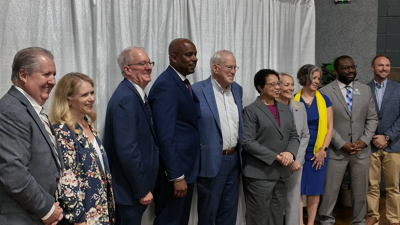


SALISBURY, Md. - Seven college and university presidents from across Delmarva gathered in Salisbury Thursday to discuss the future of higher education, with a focus on preparing students for the workforce and encouraging graduates to build their careers on the Eastern Shore.
The Salisbury Area Chamber of Commerce hosted the luncheon, bringing together leaders from Salisbury University, the University of Maryland Eastern Shore, Wor-Wic Community College, Delaware State University, the University of Delaware, Chesapeake College and Eastern Shore Community College in Virginia.
The panel was moderated by Dr. Brit Kirwan, former chancellor of the University System of Maryland, who emphasized the role higher education plays in strengthening local economies.
"We live in a knowledge economy," Kirwan said. "Communities will struggle to be successful if we don't have vibrant colleges and universities embedded in the community like we have here on Delmarva."
Kirwan also pointed to challenges facing colleges and universities nationwide, including enrollment declines, demographic changes and limited financial resources.
Despite those challenges, he said higher education remains essential to preparing students for an increasingly specialized workforce.
Preparing students for local jobs
Salisbury University President Dr. Carolyn Lepre said institutions must continue working with local employers to understand workforce shortages and develop programs that address those needs.
"We have to keep our pulse on the communities that we live in," Lepre said. "We have to tap into our networks like the Chamber of Commerce, talk to our local business owners and leaders, and think about what the needs of the community are."
Lepre pointed to Salisbury University's recently launched coastal engineering program as an example.
She said the program was developed after local engineering firms expressed difficulty finding workers with the specialized skills needed to address coastal issues.
The university is also working with health care providers, including TidalHealth, to identify workforce shortages and determine where existing programs could expand.
Keeping graduates on Delmarva
Beyond preparing students for employment, higher education leaders are also focused on encouraging graduates to remain on the Eastern Shore.
Lepre said Salisbury University is exploring ways to connect students with local employers through internships, clinical experiences and other hands-on opportunities.
"How do we get them into practice while they're here?" Lepre said, discussing the university's efforts to address rural health care needs.
She said giving students opportunities to work in local hospitals and doctors' offices could help them develop connections that encourage them to stay after graduation.
Salisbury Area Chamber of Commerce President Bill Chambers said the region also needs to do a better job promoting what it has to offer young professionals.
"We don't really sell ourselves the way we should on Delmarva," Chambers said.
He pointed to the region's higher education institutions, health care systems, quality of life and relatively affordable cost of living as selling points.
Chambers hopes Thursday's discussion will encourage graduates to consider opening businesses, finding employment and raising families on Delmarva.
He also emphasized the importance of adapting higher education to changing student needs, including expanding certifications, workforce training and dual enrollment opportunities.
Lepre said collaboration between institutions and local businesses will remain essential as workforce demands evolve.
"This is higher education's moment to think about how the world is changing around us," Lepre said.