

PITTSVILLE, Md. - In late summer, it's a sad, but not terribly unusual sight to see dead deer near ponds and lakes.
"They get a really high temperature," said Jonathan Trudeau with the Maryland Department of Natural Resources, describing the illness that these deer are getting. "So that's why you find them near water a lot of the time, because their temperature's spiking and they're trying to cool off."
These deer are victims of epizootic hemorrhagic disease, or "EHD." EHD is caused by a deadly virus transmitted by small biting flies.
In a typical year, outbreaks of EHD are isolated in area, affecting only small numbers of deer, and are not a cause for alarm.
This year isn't a typical year, though.
"It didn't raise red flags to me until about three weeks ago when I really started getting deep into the properties and I am now over fifty deer dead just on a few properties," said Christopher Bowden of Pittsville, Md.
Bowden owns Muddy Bottom Outfitters, which organizes deer hunting tours on several properties in Wicomico and Worcester Counties.
"I raise these deer, I feed these deer year round, I plant food plots for these deer, and they're gone," Bowden lamented.
Bowden is blaming long stretches of hot, dry weather for the increased die-off this year.
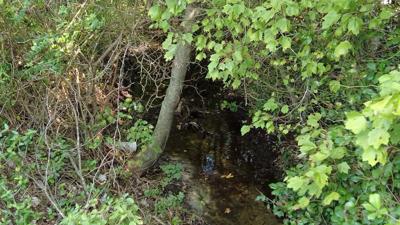
Many streams on his properties have dried up, leaving behind only small puddles, which are breeding grounds for the biting flies that transmit the virus to the deer.
The decrease in deer population is causing problems for his business, as some of his customers have already cancelled their tours.
There are no management strategies for EHD, as the disease is not normally a serious threat to the deer population at large, or for other species.
But Bowden wants to see communities more effectively come together to fight the disease when it does become are more serious problem.
"This is a matter that we need to work together to create a management plan as far as to get our herd back to what we're used to hunting and having," Bowden said.
EHD does not affect people, cats, or dogs, and is normally only a minor threat to livestock.
If you see a deer that may have died of EHD (they are often found in or near ponds), report it to the Maryland Department of Natural Resources Wildlife and Heritage Service Field Office:
Bel Air (410) 836-4552
Annapolis (410) 260-8540
Cumberland (301) 777-2136
Wye Mills 410-827-8612.